

More news on this day
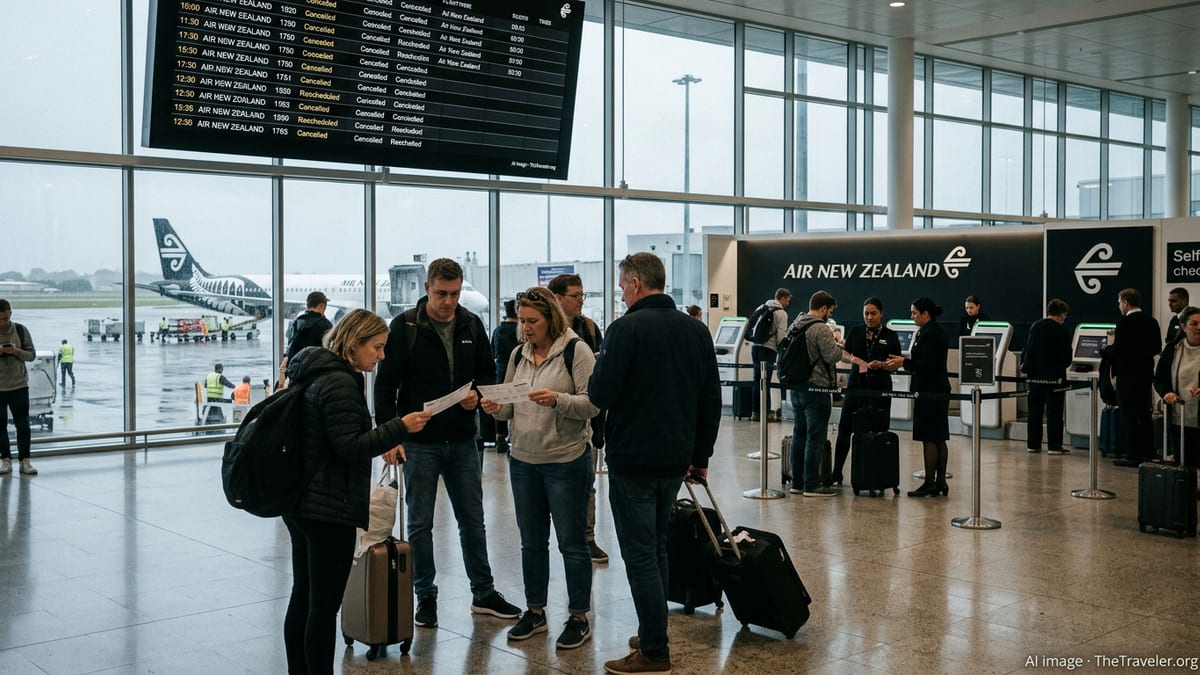
Air New Zealand’s decision to cancel around 1,100 flights and raise fares in response to a sharp spike in jet fuel costs linked to the Middle East conflict is sending shock waves through New Zealand’s travel market, stranding some passengers and forcing others to rethink plans for the coming autumn travel season.
Get the latest news straight to your inbox!
Middle East Conflict Triggers Jet Fuel Shock
The latest round of disruption stems from the Iran war and resulting turmoil in the Middle East, which have roiled global energy markets and pushed jet fuel prices sharply higher. Oil and refined product flows through the Strait of Hormuz, a vital chokepoint for global supply, have been curtailed, driving up costs for airlines worldwide.
Air New Zealand has described the surge in jet fuel prices as unprecedented, saying its planning assumptions from late February are now out of date. In recent days, the carrier has pointed to benchmark jet fuel prices jumping from roughly the mid‑US$80s per barrel to as high as US$150 to US$200, turning fuel into an acute pressure point for an airline that was already operating on thin margins.
With fuel typically its single largest operating expense, the airline has warned that the Iran conflict and Middle East instability will have a meaningful impact on earnings this financial year. Earlier this week, Air New Zealand suspended its profit guidance for the 2026 financial year, underscoring how quickly the fuel shock has upended its outlook.
The crisis is not limited to New Zealand skies. Airlines across Asia and Europe are being forced to reroute around closed or constrained Middle East airspace, lengthening flight times and burning more fuel just as prices spike, a combination that is feeding directly into higher fares and tighter capacity.
1,100 Flight Cancellations Hit 44,000 Passengers
Against that backdrop, Air New Zealand has confirmed it will scrap around 1,100 flights between mid‑March and early May, effectively trimming about 5 percent of its schedule over the period. The cuts will affect roughly 44,000 passengers, according to the airline’s chief executive, though no routes are being withdrawn entirely.
The cancellations will be spread across both domestic and international services, with the airline focusing on reducing frequencies on routes rather than cutting specific destinations. Many of the affected flights are off‑peak services, such as middle‑of‑the‑day or late‑evening rotations, which gives the airline more room to rebook customers onto nearby departures.
On key regional routes, including services to and from cities such as Tauranga, the impact will be visible in slightly fewer daily flights and busier remaining services. Local officials in regional centres have already expressed concern about connectivity, but the airline says preserving links to smaller communities remains a priority even as it pares back overall capacity.
For travellers, the immediate challenge is uncertainty. Some will be notified weeks ahead that their flight has been consolidated or moved, while others may face shorter‑notice schedule changes as the carrier continues to adjust its operations to volatile fuel markets over the coming months.
Soaring Fares Reshape Travel Demand
Alongside the cancellations, Air New Zealand has moved quickly to raise ticket prices. The airline has confirmed that base fares have increased across its network, and it has cautioned that further so‑called pricing action may be necessary if jet fuel remains elevated or becomes more volatile.
Travel agents in New Zealand report that customers shopping for flights in the April school holidays and into early winter are already encountering noticeably higher prices, particularly on popular domestic trunk routes and trans‑Tasman services. Some leisure travellers are downsizing plans, shortening trips or opting for off‑peak days in an effort to dodge the steepest fares.
Corporate travel managers are also reassessing budgets as airfares move higher across the Tasman and to long‑haul destinations. While business demand remains relatively resilient, there are signs that some companies are tightening approval processes for discretionary trips, especially to Europe and the Middle East, where reroutings have made journeys longer and more expensive.
The pressure on prices is not confined to Air New Zealand. Regional competitors such as Qantas and Jetstar have also announced fare increases tied directly to the fuel spike, reinforcing a broader trend in which airlines are seeking to pass at least part of the higher fuel bill on to passengers rather than absorb it in already stretched balance sheets.
What It Means for New Zealand Travelers
For many New Zealanders, the upheaval is uncomfortably reminiscent of the pandemic era, when sudden schedule cuts and price swings became commonplace. This time, however, the driver is not border closures but the cost of keeping aircraft fueled amid a global supply shock.
Passengers booked to travel with Air New Zealand between mid‑March and early May are being urged to keep a close eye on their booking details and email notifications. The airline is rebooking affected customers on alternative services where possible, prioritising those with imminent travel and essential journeys, but peak‑time options may be limited on some days.
Travel advisers say flexibility will be crucial over the coming weeks. Choosing slightly different departure times, travelling a day earlier or later, or considering nearby airports can improve the chances of securing workable alternatives if an original flight is cancelled. Those yet to book may find better value by avoiding peak holiday periods and being open to red‑eye or shoulder‑day services.
Consumer advocates are also reminding travellers to review the terms of their tickets and any travel insurance policies, particularly around schedule changes and fuel‑related disruptions. While airlines typically retain discretion to adjust timetables, passengers may have options to seek refunds or credits if the new itineraries no longer meet their needs.
A Glimpse of a More Volatile Travel Future
Industry analysts say the Air New Zealand cancellations are an early signal of how geopolitics in the Middle East can ripple quickly through a small, long‑haul‑dependent market like New Zealand’s. With few alternative fuel suppliers and limited competition on many routes, local travellers are especially exposed when global jet fuel prices spike.
The combination of capacity reductions and fare hikes is likely to cool some of the strong post‑pandemic rebound in outbound tourism, particularly for price‑sensitive segments such as student and family travel. Inbound tourism operators may also feel the impact if higher airfares and reduced seat availability make New Zealand a tougher sell for long‑haul visitors weighing up destinations.
At the same time, the fuel crisis is adding urgency to conversations about fleet efficiency and alternative fuels. Air New Zealand has invested in more fuel‑efficient aircraft and is exploring sustainable aviation fuels and zero‑emission regional concepts, but those initiatives remain years away from materially buffering the airline against sudden oil shocks.
For now, travellers are left navigating a more expensive and less predictable landscape. As the Iran war and Middle East fuel crisis continue to play out, the experience of Air New Zealand and its customers offers a stark reminder that global tensions can have very local consequences every time a ticket is booked or a boarding pass is issued.