

More news on this day
Air New Zealand will cancel around 1,100 flights between mid March and early May 2026, affecting roughly 44,000 passengers as surging jet fuel prices, disrupted energy supply routes and mounting financial pressures force the carrier to trim its schedule and rethink its outlook.
Get the latest news straight to your inbox!
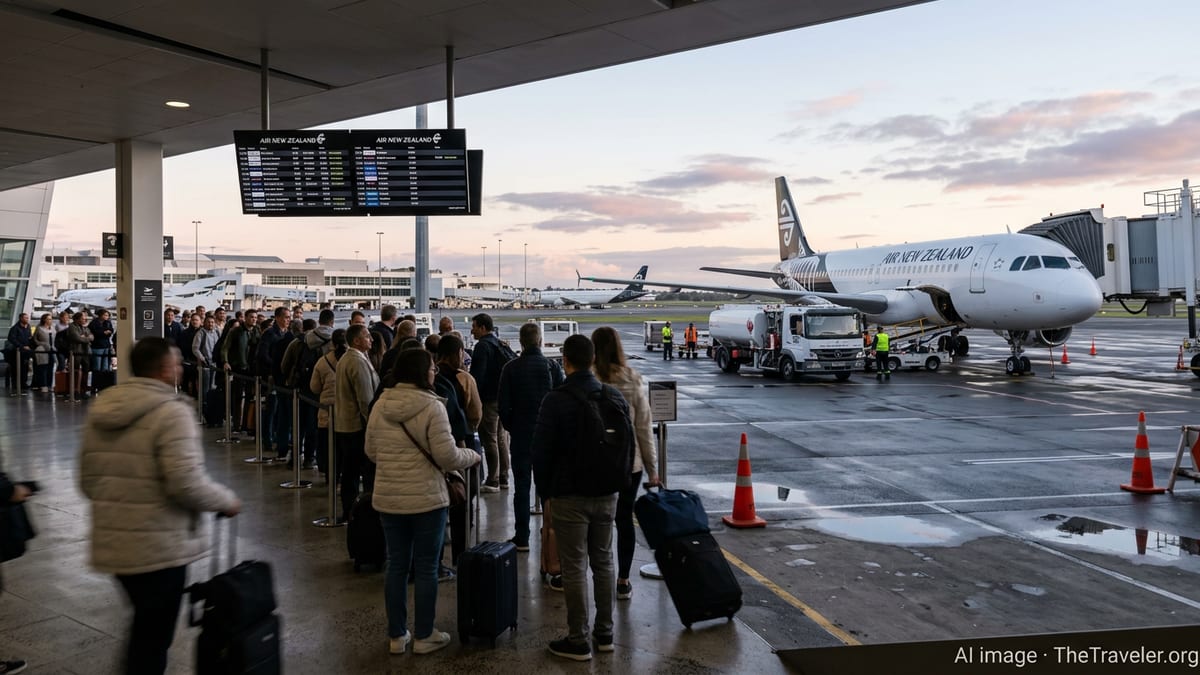
Scale of the Cancellations and Who Is Affected
The airline confirmed that about 5 percent of its total services over the next several weeks will be removed from the schedule, with most of the cuts focused on off peak domestic routes across New Zealand. Some regional centers will see fewer daily frequencies rather than a complete loss of service, as the carrier works to consolidate demand onto fuller flights.
Air New Zealand estimates that approximately 44,000 customers will be directly affected by the changes through to early May 2026. In the same period, the airline still expects to operate around 22,000 flights and carry close to 1.9 million passengers, underscoring that the cancellations, while significant, represent a targeted pullback rather than a broad shutdown of operations.
International services are expected to feel a lighter impact, though some trans Tasman and Pacific routes will see reduced frequencies. Flights between New Zealand and the United States are currently being maintained, helped by robust demand from travelers rerouting around the Middle East to reach Europe and North America.
Customers whose flights are cancelled will be rebooked where possible onto the closest available service. The airline is prioritizing same day options on busy trunk routes between major cities, while acknowledging that passengers in smaller regional markets may face longer delays or less convenient departure times.
Why Fuel Costs and Energy Disruptions Are Forcing Cuts
The immediate trigger for the schedule reductions is a sharp jump in jet fuel prices linked to the widening conflict in the Middle East and the effective closure or disruption of key oil export corridors. Airline executives say that benchmark jet fuel, which typically traded around 85 US dollars per barrel in recent years, has recently surged to roughly double that level as shipping lanes are threatened and refiners scramble to secure supply.
This spike has arrived on top of broader inflation in operating costs for airlines worldwide, from aircraft parts and maintenance to wages and airport fees. For Air New Zealand, fuel is traditionally its second largest expense after labor. Even before the latest crisis, the carrier reported hundreds of millions of dollars in fuel costs in its most recent financial results, and warned that volatility in energy markets was becoming harder to manage.
The disruption of supply routes has also put New Zealand’s own fuel security under the spotlight. Government officials have confirmed that the country holds only a few weeks of jet fuel reserves onshore, supplemented by shipments currently at sea, prompting authorities and industry to intensify monitoring of stock levels and logistics. Any further interruption to deliveries could force even more aggressive schedule adjustments by airlines operating in and out of the country.
Against that backdrop, Air New Zealand has opted to consolidate less profitable or lightly booked flights into fuller services to reduce total fuel burn. The airline argues that trimming frequencies now will help keep remaining fares as stable as possible and preserve capacity on routes seen as strategically vital for tourism, business travel and regional connectivity.
Financial Pressures and a Shift in 2026 Outlook
The flight cancellations come just weeks after Air New Zealand revealed a first half loss for its 2026 financial year and suspended its full year earnings guidance, explicitly citing uncertainty around jet fuel prices and foreign exchange movements. While demand for travel has broadly recovered since the pandemic, the carrier has been grappling with higher operating costs and lingering supply chain constraints, including engine availability issues that restrict how intensively it can use parts of its fleet.
In its latest interim report, the airline highlighted an increase in fuel expenses compared with the prior period, intensified by a weaker New Zealand dollar and additional environmental compliance costs. Management warned that if fuel prices remained elevated for a sustained period, the impact on profitability would be material, potentially forcing changes to its network, fleet planning and capital investments.
The 1,100 flight reduction is being framed internally as a defensive move designed to preserve cash and operational resilience during a period of exceptional volatility. By pulling back on marginal services and tightening load factors, Air New Zealand hopes to limit the need for more extreme measures later in the year, such as deeper route cuts or steeper fare rises across the board.
At the same time, the decision underscores how vulnerable mid sized national carriers can be to sudden energy shocks. Unlike some larger rivals with more diversified networks and hedging strategies, Air New Zealand has limited ability to redeploy aircraft to markets less exposed to the current crisis, making careful capacity management at home all the more critical.
What Affected Passengers Can Expect
Air New Zealand says customers whose flights are cancelled will be contacted directly, typically by email or text message, with details of new itineraries or options. In most cases, passengers will be rebooked at no additional cost onto the next available service on the same route, although departure times and, in some cases, travel dates may change.
Travelers who are unable or unwilling to accept the alternative arrangements may be eligible for credits or refunds under the airline’s existing fare rules and local consumer protections. However, the carrier is encouraging passengers who can be flexible to opt for rebooking, arguing that keeping seats filled on remaining services is vital to maintaining a viable network through the crisis.
For those with onward international connections, particularly from regional centers via Auckland, Wellington or Christchurch, the advice is to monitor bookings closely in the days before departure and allow extra time between domestic and long haul legs. Travel agents and corporate travel managers are also being urged to proactively review itineraries for the March to early May window to identify potential disruptions in advance.
Airport experiences may feel busier on some days as consolidated flights bring more passengers onto fewer services, and check in counters and security lanes handle a higher volume of travelers at peak times. At the same time, quieter times of day may see thinner schedules, particularly on shorter domestic hops.
Tips for Travelers Booking in 2026
For travelers planning new trips later in 2026, the current turmoil is a reminder to build flexibility into itineraries. Industry analysts recommend considering slightly earlier departures or arrivals when connecting to international services, and avoiding the last flight of the day on critical domestic legs where possible, as those can be hardest to rebook if disruptions occur.
Booking direct with the airline or through a reputable travel agent can make it easier to manage changes if schedules shift again. Passengers should also review fare conditions carefully, paying close attention to change fees, refund rules and the validity of credits, which can vary significantly between ticket types even on the same route.
Travel insurance that covers schedule disruptions, missed connections and unexpected additional accommodation costs is likely to become more important as fuel driven volatility ripples through the aviation sector. Policy details differ widely, so experts suggest checking not only what is covered but also the documentation required to make a claim if flights are altered or cancelled.
Finally, while the current round of cancellations is officially scheduled to run only through early May, the broader pressures of higher fuel costs and unstable energy supply routes mean that airlines in the region could adjust capacity again if conditions worsen. Travelers eyeing peak winter or year end holidays may want to book early, keep contact details up to date with carriers, and remain prepared for changes in what is shaping up to be another unpredictable year for global aviation.