


More news on this day
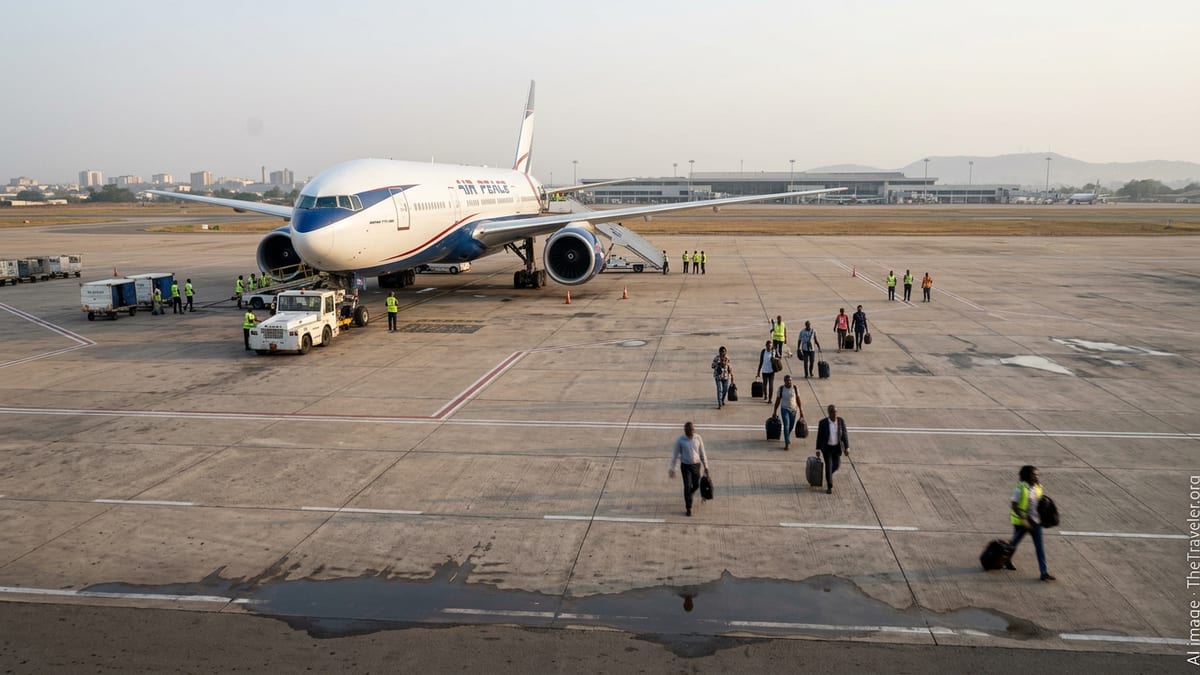
Air Peace has pushed back against Nigeria’s aviation regulator after widely circulated performance figures suggested the airline posted one of the country’s worst on-time records in August 2026, saying the underlying data and methodology misrepresent what actually happened and that only about 15% of its delayed flights were caused by factors within the airline’s control.
Get the latest news straight to your inbox!
What the NCAA’s August scorecard shows
Published coverage indicates the Nigeria Civil Aviation Authority (NCAA) released a “Summary of Domestic Airline Disruption Operations” for August 2026 in mid-September, presenting a carrier-by-carrier snapshot of delays and cancellations across Nigeria’s domestic market.
The summary has been widely reported as showing 7,961 total domestic flights operated during the month, with 4,765 flights delayed and 36 cancelled. In the same coverage, Air Peace is listed as operating 1,864 flights in August, with 1,330 recorded as delayed, translating to a 71.4% delay rate and the highest number of delayed flights among carriers included in the scorecard.
For travelers, the NCAA’s publication is part of a broader push toward transparency about flight disruption patterns, particularly in a market where schedule changes can have outsized consequences for same-day connections, hotel check-in times, and time-sensitive business trips.
Air Peace’s rebuttal: flight counts, delay attribution, and the “15%” claim
Air Peace’s response focuses on two central issues: the number of flights included in the regulator’s dataset and whether the reported “delay” totals reflect circumstances the airline could reasonably control. In published coverage of the airline’s statement, Air Peace says it operated 2,564 flights in August 2026, rather than the 1,864 shown in the NCAA’s table, arguing that an omission of more than 700 flights would inflate any percentage-based assessment.
The airline also argues that headline delay figures should be separated by cause. According to published coverage, Air Peace says an internal review found 391 delays, around 15% of the delays recorded, could be attributed to internal or carrier-driven factors, while the remainder were tied to external constraints.
That distinction matters for passenger understanding: a delay caused by aircraft availability, crew scheduling, or airline processes points to a different fix than one driven by airspace restrictions, airport congestion, weather, or operational limitations at terminals and runways.
Why delay metrics can be contentious in constrained operating environments
Punctuality data typically looks simple, but how it is compiled and categorized can shape public perception. Reports indicate Air Peace’s critique is partly about definitions: what qualifies as a delay, how delay minutes are recorded, and whether disruptions are categorized by root cause or just captured as a single “delayed” status.
Airline operations in Nigeria also contend with system-wide constraints that can ripple through an entire day’s schedule. When an early-morning departure slips because of congestion, weather, or late inbound aircraft, that delay can cascade into later flights even if the airline is ready to depart on time, especially when spare aircraft and reserve crews are limited.
In addition, passengers often experience disruption as a bundle: delays, equipment swaps, gate changes, and last-minute retiming. Even when the final outcome is a delayed departure rather than a cancellation, the impact on travelers can be similar, particularly on high-frequency routes such as Lagos to Abuja and other major domestic city pairs where many trips are planned around same-day arrivals.
What it means for travelers booking Air Peace and other Nigerian domestic airlines
For travelers, the headline dispute is less about which side “wins” and more about what the numbers signal for trip planning. Published reporting suggests the NCAA’s August summary depicts a domestic network where delays are widespread across carriers, not isolated to one airline, and where reliability remains a key pain point during peak periods.
Passengers taking domestic flights in Nigeria can reduce risk by building wider buffers around critical events, especially when an itinerary involves onward travel such as international departures, wedding events, medical appointments, or fixed-time meetings. In practice, that can mean arriving in a city the night before rather than attempting a same-day flight when there is limited fallback capacity if schedules slip.
Travelers should also keep documentation when disruptions occur, including boarding passes, booking confirmations, and notifications received, and should review the NCAA’s passenger-rights guidance, which outlines service expectations around disruptions and assistance. When disputes over delay cause arise, having a clear record of scheduled times, revised times, and any rebooking steps can help passengers pursue remedies available under applicable rules and airline policies.
What to watch next: audits, monthly reporting consistency, and clearer categories
Air Peace’s pushback may increase pressure for more consistent month-to-month publication and clearer definitions in the NCAA’s disruption summaries. Published coverage of the airline’s position suggests it wants an audit of the data-collection process and a more explicit separation between delays attributed to airline controllable factors and those driven by external constraints.
For the traveling public, the most useful outcome would be reporting that is both timely and comparable: consistent release schedules, standardized definitions, and categories that let passengers understand whether a carrier’s performance issues stem from its own operations or from broader infrastructure and airspace constraints.
Until that happens, Nigeria’s domestic flyers are likely to continue interpreting delay scorecards alongside lived experience at airports, where the practical question is often not who is at fault, but how quickly an airline can re-accommodate passengers, communicate revised departure times, and preserve the integrity of the day’s remaining schedule.