


More news on this day
As the United States prepares to move clocks back to standard time on November 1, 2026, several popular overseas destinations are keeping their clocks fixed year round, raising the risk of missed flights, late hotel arrivals, and confused meeting times for American travelers this winter.
Get the latest news straight to your inbox!
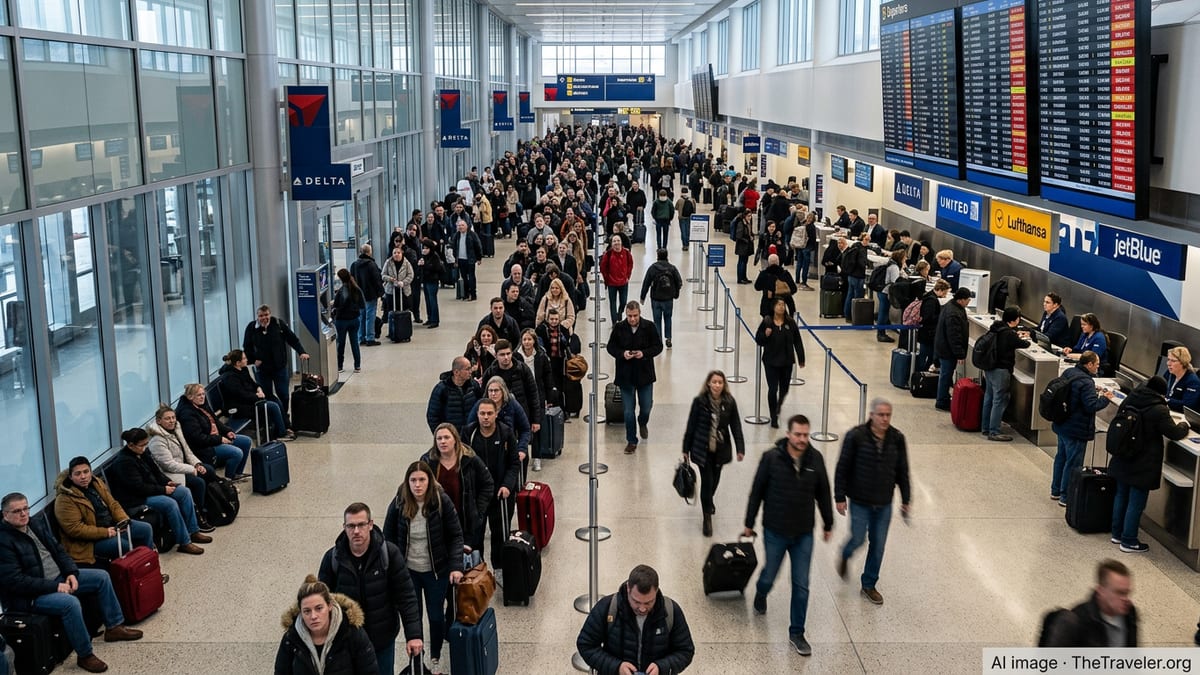
Clocks change at home, but not in parts of Mexico
While most of the United States will revert from daylight saving time to standard time in the early hours of November 1, 2026, Mexico’s key Caribbean resort state of Quintana Roo will not move its clocks at all. Public information from Mexico’s timekeeping authorities shows that Cancún and the rest of Quintana Roo remain on Eastern Standard Time (UTC minus 5) throughout the year, after the state abandoned seasonal clock changes in 2015 and joined a dedicated Southeast Zone time band.
The national government later eliminated daylight saving time in almost all of Mexico under a 2022 time zone law, but maintained fixed standard time in Quintana Roo and several other regions that had already opted out. As a result, Cancún now stays aligned with US Eastern Standard Time during the American winter, but it is one hour behind cities such as New York once the United States moves back onto daylight saving time in March.
For US travelers flying to Cancún in November and through the winter, this means that a 2 p.m. local hotel check-in will occur at the same clock time as 2 p.m. in Miami, even though flights may list departure and arrival times in different time conventions. Travel industry guides for Cancún highlight that there are no daylight saving shifts scheduled for 2024 or 2025, signaling that visitors should expect the same pattern to continue into the upcoming 2026 to 2027 high season unless Mexican law is changed again.
Passengers connecting through Mexico City or northern border hubs face a more complex picture. Border municipalities such as Tijuana and parts of Chihuahua still adjust clocks seasonally to stay in step with US cities across the line, while interior states remain fixed on standard time. Schedules that connect Cancún with those regions can straddle multiple regimes, increasing the chance of confusion when US clocks move but much of Mexico stays put.
Morocco’s return to GMT reshapes transatlantic timing
Morocco, another rapidly growing destination for American leisure and business travel, is heading into the northern winter with a new time policy that breaks with recent practice. Government notices issued in June 2026 state that the country is restoring legal time corresponding to Greenwich Mean Time, reversing an arrangement in place since 2018 that kept clocks on GMT plus 1 for most of the year and only shifted back during the month of Ramadan.
Publicly available guidance from Moroccan and international time services indicates that this decision effectively ends the long experiment with permanent daylight saving time and re-establishes GMT as the all-year standard. The move widens Morocco’s time gap with most of continental Europe in winter and alters its alignment with the United States when Americans enter and leave daylight saving time.
For US travelers, the practical impact is that Morocco will be five hours ahead of Eastern Standard Time once American clocks fall back on November 1, 2026, compared with the four-hour difference that often applied when Morocco operated on GMT plus 1. When the United States advances clocks again in March 2027, the gap will narrow to four hours. Tour operators’ country guides already note that the time difference between Morocco and major US cities shifts over the course of the year, and that this interaction has changed again following the 2026 reform.
Travelers connecting through European hubs to reach Casablanca, Marrakech, or Tangier could encounter additional complexity. Most European Union countries continue to operate a seasonal summer time system, moving clocks forward in late March and back in late October under EU coordination rules. Reports on European policy show that proposals to abolish these twice-yearly changes remain stalled, so Morocco’s new GMT policy will play out against a European landscape that is still shifting clocks around it.
Europe’s stalled reforms keep seasonal changes in place
Despite years of debate, the European Union has not yet implemented plans to abolish seasonal clock changes, leaving US visitors to manage an evolving but still familiar pattern. Official EU briefings on summertime arrangements confirm that member states are still required to advance clocks by one hour in spring and return to standard time in autumn, with the 2026 changeovers occurring in late March and late October.
The European Parliament voted in 2019 to support ending the biannual switch, and public consultations at the time recorded strong backing from citizens to stop changing clocks. Legislative analyses and later updates show, however, that member states have not agreed on whether to stick permanently with summer time or winter time, and the file has remained on the European Council’s agenda without a final decision.
For US travelers, the lack of reform means that the familiar pattern continues: London, Paris, Rome, and Berlin all observe summer time that aligns broadly with US daylight saving dates, though start and end weekends differ slightly. During the American winter of 2026 to 2027, most of Western and Central Europe will run five to six hours ahead of Eastern Standard Time, while that gap will shrink by one hour when the United States moves back onto daylight saving time in March.
The complication arises when this European regime interacts with nearby countries that have locked their clocks. Morocco’s fixed GMT, for example, will place Casablanca one hour behind Madrid and Paris in winter, whereas during previous years under permanent GMT plus 1 it sometimes matched or nearly matched Central European time. Travelers who route multi-stop itineraries through both the EU and North Africa will need to pay closer attention to connection times around the November and March shifts.
US clock debate contrasts with fixed-time destinations
Within the United States, the clock change itself is under intense scrutiny. Information from federal timekeeping agencies confirms that US daylight saving time runs from the second Sunday in March until the first Sunday in November, a rule that will put the 2026 end of daylight saving on November 1. At the same time, Congress has been weighing different proposals either to make daylight saving time permanent or to revert to permanent standard time, reflecting longstanding concerns over health, safety, and economic impacts.
News coverage in recent months notes that the House of Representatives has backed a shift to year-round daylight saving time, while the Senate has been more cautious amid memories of an unpopular experiment with permanent daylight time in the mid-1970s. In that earlier trial, darker winter mornings drew criticism from parents, educators, and road safety advocates, who argued that schoolchildren were heading out before sunrise.
Several US states have already chosen not to observe daylight saving time at all, staying permanently on standard time under current federal rules. Arizona, Hawaii, and parts of Indiana fall into this category, creating internal contrasts that resemble the differences Americans now encounter when traveling to Mexican or African destinations that have frozen their clocks.
The global pattern that affects US travelers is therefore one of divergence rather than convergence. Some countries and regions, like Quintana Roo and Morocco, are locking in fixed time regimes tailored to local tourism or social needs, while Europe continues to shift its clocks and the United States debates whether to do the same. The result is a patchwork of practices that can change the effective time difference between popular destinations from one season to the next.
Practical implications for winter and spring US trips
For travelers planning winter beach escapes or spring city breaks, the fixed clocks in certain hotspots translate into specific planning challenges. Airline schedules always display departure and arrival times in local time, but when one side of a route shifts clocks and the other does not, the apparent flight duration can suddenly appear longer or shorter in booking systems.
For example, a nonstop flight from New York to Cancún that leaves at 10 a.m. Eastern time and arrives at 1 p.m. local time in late October will still show an arrival at 1 p.m. local time in mid-November, even though the US has fallen back by one hour and Quintana Roo has not. The underlying journey length has not changed, but the time difference between origin and destination has, and that can affect how travelers plan ground transfers or same-day activities.
Similar issues arise with virtual meetings and remote work arrangements. As more US visitors combine leisure trips with online work, fixed local clocks in Morocco or Quintana Roo mean that the overlap with colleagues in New York, Chicago, or Los Angeles can expand or contract overnight when American daylight saving rules take effect. Without adjusting calendar settings or confirming time zones explicitly, it is easy to schedule calls that suddenly fall an hour earlier or later than intended.
Travel planners and timekeeping services advise that the safest approach is to verify the local time zone and any upcoming clock changes for each stop on an itinerary, especially around early November and mid-March. Given that several destinations are now breaking with the traditional pattern of synchronized daylight saving shifts, US travelers are being urged to treat time itself as one more variable to check carefully before departure.