


More news on this day
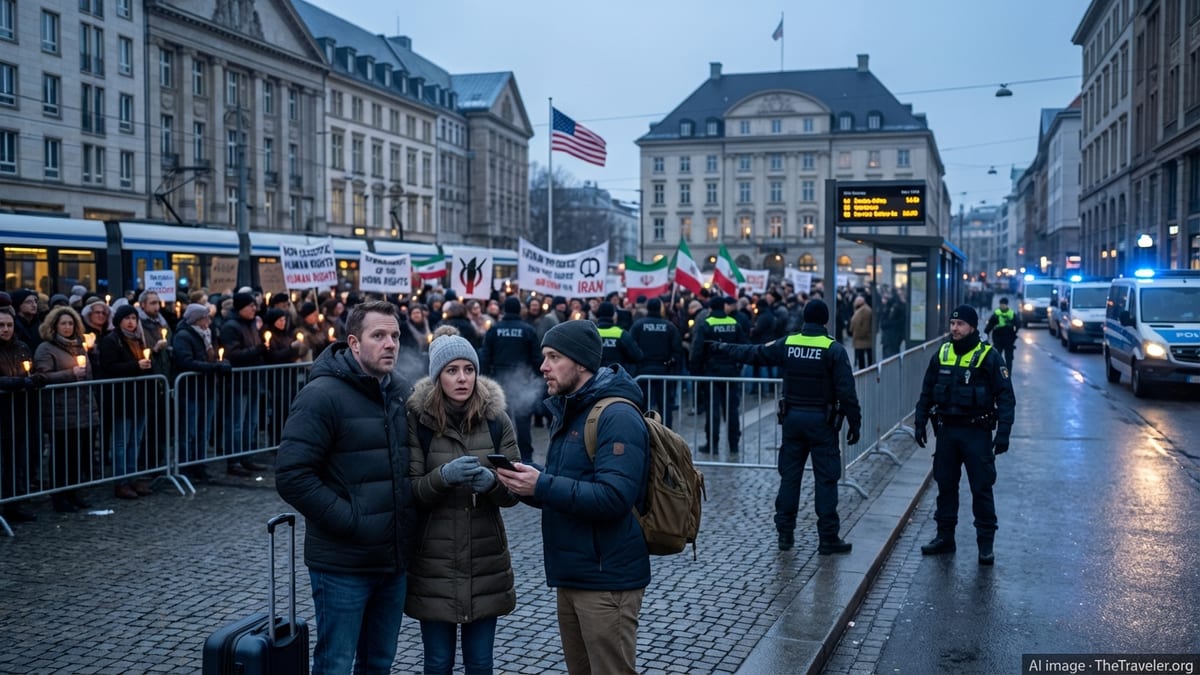
Escalating street protests over living costs, public services and politics across several European capitals are prompting new U.S. security alerts and forcing many American travelers to reassess plans for late‑autumn and winter visits.
Get the latest news straight to your inbox!
Fresh alerts for France as unrest turns violent
Recent guidance for Americans in France highlights how quickly otherwise peaceful demonstrations can shift, particularly in major cities. A security alert for France issued in early October advised U.S. citizens to avoid protest areas, expect travel delays and monitor local media, after several marches turned violent in central Paris. Travel industry coverage notes that a protest on Boulevard Saint‑Germain saw clashes with police and property damage as unrest intensified in the French capital.
Reports from local and international media describe days of rioting in mid‑October, with looting, curfews in some districts and thousands of arrests nationwide following large demonstrations tied to student grievances, living costs and broader social pressures. Publicly available information on France’s current advisory level indicates that the country as a whole remains at Level 2, meaning visitors are urged to exercise increased caution rather than cancel trips outright, but to stay well clear of protest flashpoints.
Foreign travel advice from other governments reinforces this picture. Updated guidance from countries such as Australia and Canada in late October cites “large‑scale demonstrations” and ongoing nationwide protest calls, with specific dates flagged for additional marches. That external messaging, viewed alongside U.S. alerts, underlines that the primary risk for visitors is being caught in or near a protest that escalates quickly, rather than facing targeted violence as tourists.
On the ground, most reports from travelers in Paris point to highly localized disruption: blocked boulevards, tear gas in certain neighborhoods, closures around plazas that usually host demonstrations and rolling changes to public transport. For visitors, this creates a planning problem more than a blanket no‑go situation, especially on days when large marches are announced in advance.
Cost‑of‑living protests spread beyond France
The unrest is no longer limited to France. A broader autumn protest wave linked to energy prices, rents and public‑service cuts has surfaced in Spain, Italy, Belgium, Portugal and parts of Germany, according to recent coverage from European and international news outlets. An analysis by a major global news agency in mid‑October described cities from Madrid to Tirana turning into “battlegrounds” on certain weekends as clashes erupted on the fringes of large rallies.
In Spain and Portugal, tent encampments over unaffordable housing have appeared in central squares, echoing earlier protest movements and drawing crowds that swell in the evenings and on weekends. In Italy, student and trade‑union groups have announced recurring Saturday demonstrations over energy prices and education funding, while Belgium has seen marches against austerity and public‑sector strikes that disrupted transport.
Travel‑risk consultancies and commercial insurance briefings published in 2026 point to a broader uptick in political violence and civil unrest events in Europe, including more frequent cost‑of‑living protests in major urban centers. These assessments highlight that protests often occur near government buildings, transport hubs and historic cores that attract tourists, raising the odds that visitors may encounter demonstrations even when they are not seeking them out.
Despite the scale of some marches, most advisories stress that protests are generally directed at domestic policies rather than foreign visitors. The risks for travelers arise from secondary effects: sudden closures of metro lines, temporary airport or rail‑station disruptions, confrontations between small groups of protesters and police, and the possibility of opportunistic crime when crowds are dense and security is stretched.
How U.S. advisories frame the risk for travelers
The U.S. Department of State has not issued a single Europe‑wide protest warning, but individual country advisories and embassy security alerts reference the current wave of demonstrations. The State Department’s four‑tier advisory system, accessible through its main travel‑advisory portal, allows users to select specific European destinations to see whether they are at Level 1 (Exercise Normal Precautions), Level 2 (Exercise Increased Caution), Level 3 (Reconsider Travel) or Level 4 (Do Not Travel). Many Western European countries currently fall under Level 1 or Level 2, with references to possible civil unrest and the need to avoid demonstrations.
Embassy‑level alerts are more granular. For example, recent messages to Americans in France describe planned nationwide protest dates, advise avoiding demonstration routes and note that local authorities may impose short‑notice curfews or transport restrictions in affected areas. Similar demonstration alerts have been issued periodically in Belgium, Italy and the Netherlands in connection with public‑sector strikes or cost‑of‑living rallies, often warning of road closures, disruptions to train services and heavier police presence near central squares.
Publicly available security briefings, including from overseas security councils and private intelligence providers that track global protest trends, have been flagging a multi‑year rise in demonstrations worldwide. These assessments recommend that travelers treat protests as dynamic events, where the environment can shift from calm to confrontational within minutes and where crowd psychology, police tactics and small groups of agitators can significantly change the risk profile without much warning.
For American travelers, the main practical takeaway from current U.S. messaging on Europe is to plan for the possibility of localized disruptions rather than widespread instability. That means building extra time into transfers on protest days, expecting some last‑minute museum or road closures and being prepared to reroute walking tours away from known gathering points if crowds begin to form.
Practical planning tips for upcoming Europe trips
For those with near‑term travel to France, Italy, Spain, Belgium or other protest‑affected countries, the most effective step is to check the State Department’s country‑specific advisory shortly before departure, then enroll in the Smart Traveler Enrollment Program so that security alerts can be delivered by email. Travelers can supplement that information by reviewing their airline and rail operator’s disruption notices and by scanning hotel communications for any mention of upcoming marches or local curfews.
On arrival, many security experts advise treating protest information the same way travelers treat severe weather warnings. That means monitoring local news outlets in the language you understand, watching for announcements of demonstrations in the neighborhoods you plan to visit and adjusting itineraries a day or two in advance when large rallies are publicized. In cities like Paris, Brussels or Madrid, protest routes are often announced ahead of time, allowing visitors to plan alternate sightseeing or day trips during the busiest hours.
Travelers can also make small, concrete choices that reduce exposure to unrest. Booking accommodation slightly away from main protest corridors such as government districts, large university clusters or traditional union rally points may limit late‑night noise and the chance of finding streets blocked at the hotel doorstep. When protests are expected, allowing additional time to reach airports or major train stations, avoiding rental cars in dense city centers and carrying printed copies of tickets in case mobile networks are disrupted can help trips run more smoothly.
Finally, published safety guidance emphasizes situational awareness if a demonstration is encountered unintentionally. Signs that a peaceful rally may be shifting include the arrival of riot‑control vehicles, the use of fireworks or improvised projectiles, or the appearance of heavily masked participants at the edges of the crowd. In such situations, most security advice recommends moving away along side streets, avoiding enclosed underpasses and metro entrances where crowd surges can occur, and regrouping in a quieter area to reassess transport options.
Balancing heightened caution with continued demand
Despite more visible unrest on European streets this autumn, travel demand from North America to major cities such as Paris, Rome, Barcelona and Berlin remains high, according to industry reporting. Airlines continue to operate full schedules on transatlantic routes, and there has been no broad move by U.S. carriers or tour operators to cancel programs solely due to protests, although some have adjusted excursion timings or substituted activities when marches intersect with planned sightseeing.
European tourism boards and city governments, while grappling with domestic political pressures, continue to promote cultural events, sporting fixtures and holiday markets that attract American visitors. A recent example is the decision to proceed with a high‑profile sporting event in Paris while acknowledging ongoing unrest, with security planning adjusted around protest dates rather than calling off the game. This approach reflects a broader European pattern of managing protests as part of urban life while keeping core visitor infrastructure functioning.
For travelers, the current moment demands a more informed and flexible style of trip planning rather than a wholesale retreat from Europe. With up‑to‑date advisory checks, realistic expectations about potential disruptions and a willingness to pivot plans when demonstrations flare, many visitors are still finding that European trips go ahead largely as intended, even as protest movements continue to evolve in the streets outside the usual tourist snapshots.