


More news on this day
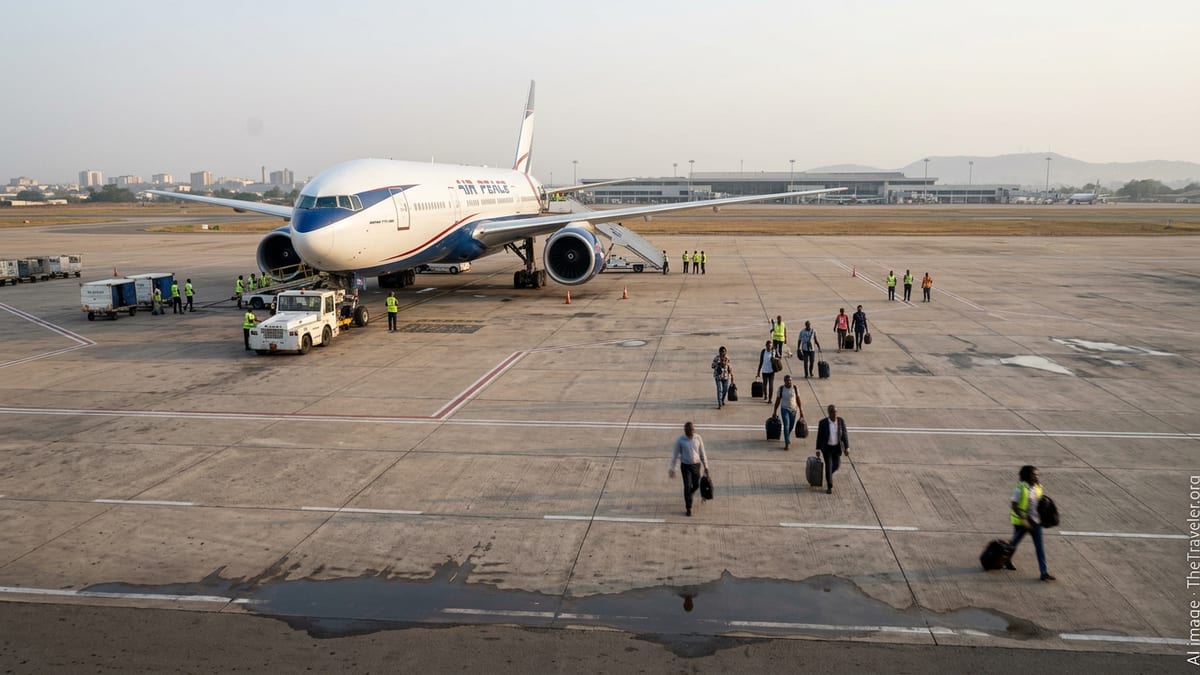
Three Nigerian carriers, Air Peace, United Nigeria Airlines, and ValueJet, are challenging the Nigerian Civil Aviation Authority’s (NCAA) latest monthly flight-disruption figures, setting up a fresh debate over how delays should be measured and how much responsibility airlines should bear for disruptions across the domestic network.
Get the latest news straight to your inbox!
What the NCAA’s August numbers show
Published coverage of the NCAA’s August 2026 operational summary describes a domestic market where delays were more common than on-time departures. Reports indicate the regulator recorded 4,765 delayed flights and 36 cancellations for the month, translating to an overall delay rate of about 59.9% for the airlines captured in the data.
In the same coverage, Air Peace was listed with the highest volume of delays, reflecting its large schedule. The NCAA figures as reported in the press put Air Peace at 1,330 delayed flights out of 1,864 operations for August, while United Nigeria recorded 943 delays out of 1,231 flights. ValueJet was also among the more disrupted carriers by the NCAA’s count, with 435 delays from 767 flights.
The report also underlined that disruption was not limited to one operator, with some smaller airlines recording high delay ratios even when their total flight counts were lower. In that context, the NCAA’s monthly bulletin has increasingly functioned as a consumer-facing snapshot of reliability, as well as a reputational scorecard for airlines competing for time-sensitive business and leisure travelers.
How the airlines are contesting the report
Air Peace’s dispute has focused on data completeness and how operational realities are reflected in the regulator’s tally. According to published coverage, the airline argued that the NCAA undercounted its August flight operations, stating it operated 2,564 flights during the month rather than the 1,864 reflected in the report, a difference that would also affect the interpretation of its delay rate.
United Nigeria and ValueJet have also faulted the way the figures are framed, with coverage describing complaints that the report does not distinguish between delays airlines can control and those driven by factors outside an operator’s direct influence. That distinction matters because passenger-facing statistics often collapse multiple disruption drivers into a single label, even when the corrective actions differ from case to case.
Across the responses reported in Nigerian media, the shared theme is not a denial that delays occurred, but a push for additional context. Airlines have argued that a single monthly percentage can mask whether disruptions were caused by weather, airport and airspace limitations, late inbound aircraft from earlier legs, or airline-specific issues such as aircraft availability and crew scheduling.
Why the definitional fight matters to travelers
For passengers, the argument over methodology can feel remote, but it has practical consequences. Delay statistics shape traveler decisions on which carrier to book, influence corporate travel policies, and can affect how early passengers choose to arrive at airports like Lagos, Abuja, Port Harcourt, Kano, and Enugu during peak periods.
They can also shape expectations around passenger welfare during long waits. Nigeria’s consumer-protection framework for aviation includes obligations around care and communication, and public attention tends to intensify when operational reports suggest a sustained trend of late departures across multiple airlines.
At the same time, a context-free delay rate can obscure whether delays are concentrated in certain routes, airports, or time bands such as early-morning departures, late-evening rotations, or weather-affected seasons. Travelers trying to manage connections or same-day return trips are often less interested in a monthly average than in reliability for a specific route and departure window.
Regulatory pressure is rising alongside the data
The dispute is unfolding against a backdrop of tougher language from the regulator on reliability and service delivery. Recent published coverage describes the NCAA warning airlines about the spate of delays, crew shortages, and passenger-welfare issues, with the regulator urging carriers to align schedules with available aircraft and crew resources.
That enforcement tone has put fresh attention on how airlines build buffers into schedules and how they manage aircraft-on-ground events. Publicly available reporting has described Air Peace outlining its operational planning in terms of serviceable aircraft and deliberate limits on daily flights to preserve resilience when disruptions occur.
For the NCAA, publishing monthly disruption summaries can be read as both transparency and leverage, creating a public benchmark that can push operators to justify performance. For airlines, the same publication can be viewed as a blunt instrument if it does not clearly separate mechanical or crew-related delays from broader network constraints.
What travelers can take away for near-term trip planning
With the August report and airline pushback circulating widely in Nigerian media in September 2026, the immediate message for travelers is that punctuality remains a significant challenge on many domestic routes. Even if the precise percentages are contested, the scale of disruption described across multiple outlets suggests passengers should plan for delays as a non-trivial possibility.
For time-sensitive itineraries, published coverage suggests a more defensive approach may help: choosing earlier departures to preserve daylight recovery time, avoiding extremely tight same-day connections, and monitoring airline notifications closely on travel day. Passengers may also want to keep documentation of schedule changes, especially when delays disrupt onward plans.
The broader question, highlighted by the airlines’ objections, is whether Nigeria’s monthly delay reporting will evolve toward more granular categories that travelers can interpret quickly, such as separating delays attributed to airline operations from those attributed to weather, air traffic flow management, airport limitations, or other external constraints. For now, the data and the disputes underline the same reality: reliability remains a central issue in Nigeria’s domestic aviation experience.