

More news on this day
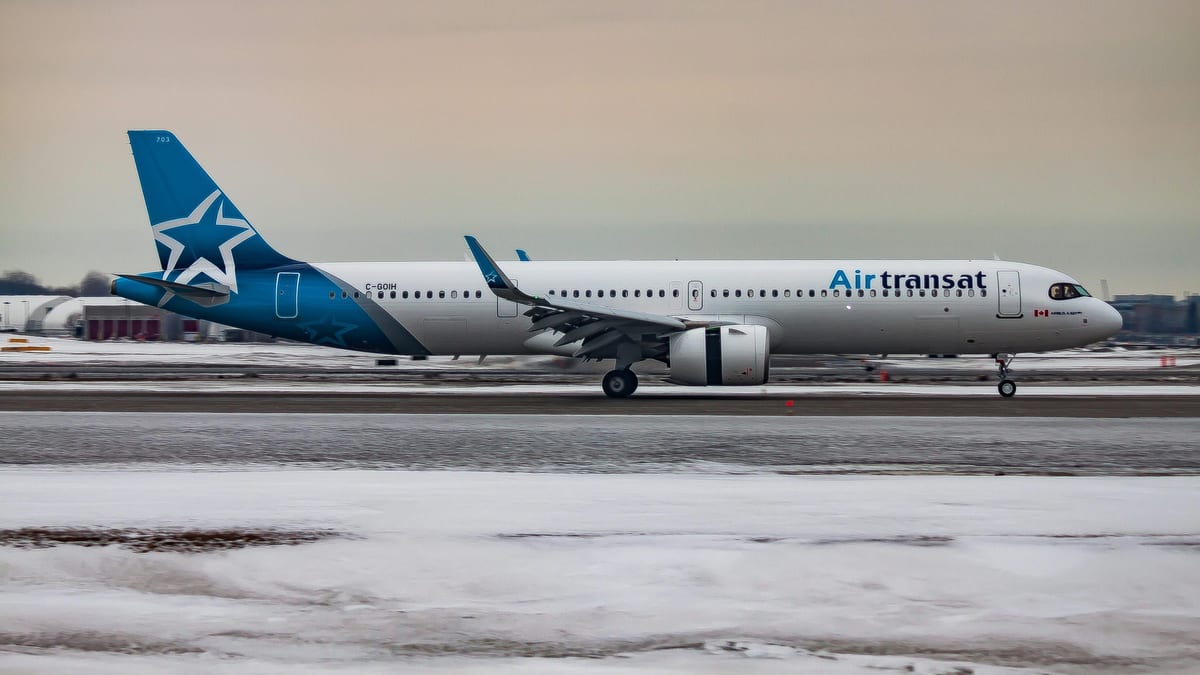
Air Transat passengers are facing fresh uncertainty in 2026 as the Canadian leisure carrier suspends Cuba flights, winds down its United States network and continues to adjust its schedule, leaving many travellers asking what happens to their money and their holiday plans when flights are cancelled.
Get the latest news straight to your inbox!
Route cuts, Cuba suspensions and a shifting 2026 schedule
Publicly available information shows that Air Transat is in the middle of a significant network reshaping for 2026. Industry coverage indicates the airline intends to end all scheduled flights to the continental United States by mid June 2026, withdrawing services such as Montreal to Orlando and Quebec City to Fort Lauderdale as the spring season progresses. Separate notices indicate that flights to Cuba have been temporarily halted through at least April 30 2026 due to fuel supply issues at Cuban airports, affecting routes from Canadian gateways to popular resort destinations.
The Cuba suspension has immediate implications for winter and early spring vacationers. Air Transat’s notice to travellers outlines a plan to repatriate customers already in the country and offers flexibility for those yet to depart, including options to change dates or destinations without penalty or to take travel credit equal to the value of the original booking. For passengers whose trips depended on these links to Cuba or to Florida, the combination of fuel constraints and strategic route cuts has turned firm plans into question marks just as the busy spring and summer travel seasons approach.
At the same time, schedule data for the northern summer 2026 season shows a reshuffling of European flying, with some routes gaining frequencies and others being trimmed. Although many of these are routine seasonal adjustments, they can still result in time changes or flight number changes that prompt confusion over whether a service has been cancelled outright or merely retimed.
For travellers, the patchwork of route withdrawals, temporary suspensions and schedule tweaks makes it essential to distinguish between a true cancellation of a flight and a simple modification. That distinction can determine whether they are offered a full refund, a chance to rebook on another Air Transat service, a travel credit, or only limited flexibility under existing fare rules.
Refunds when Air Transat cancels your flight
When an airline cancels a flight, refund rights generally hinge on whether the cancellation is initiated by the airline or by the passenger. Publicly available consumer guidance and reports of recent cases involving Air Transat show a consistent pattern. When the airline cancels a flight for operational or commercial reasons, customers are typically offered a full refund to the original form of payment or the option to accept rebooking on an alternative itinerary. This applies even to many non refundable fares that would not ordinarily allow a cash refund if the customer chose to cancel on their own.
For flights departing from European Union, United Kingdom or certain other European airports, Air Transat is subject to local passenger rights regulations. Under those rules, when a carrier cancels a flight near departure and the passenger chooses not to travel, they are generally entitled to a full refund of the unused ticket, regardless of fare type. In some circumstances, additional cash compensation may be available if the cancellation was within the airline’s control and sufficiently close to the departure date. Specialist passenger rights firms and advocacy groups have recently highlighted multiple Air Transat flights in early 2026 that appear to qualify for such claims.
Within Canada, the Air Passenger Protection Regulations create a different framework for cancellations. If a flight is cancelled for reasons within the airline’s control and not related to safety, travellers may be owed not only a refund but also compensation and assistance such as hotel accommodation or meal vouchers, depending on the length of delay and size of the carrier. If the cause is outside the airline’s control, such as a fuel shortage at a foreign airport or severe weather, travellers are typically entitled to a refund of the unused portion or rebooking but not additional cash compensation.
Recent online accounts from passengers affected by the Cuba suspension suggest that Air Transat is generally offering full refunds or credits when it proactively cancels package holidays or flight only bookings. However, some travellers describe delays in processing, confusion between credits and cash refunds, or difficulty reaching customer service channels. For those facing similar issues, consumer advocates recommend keeping detailed records of cancellation notices, booking confirmations and any written statements about refund eligibility.
Rebooking options and when to push for rerouting
While a refund may seem like the most straightforward solution, current discussions among frequent flyers and passenger rights advocates underline that rebooking can sometimes be the more valuable option, particularly during peak travel periods. If Air Transat cancels a flight within a short window of departure, regulations in several jurisdictions require the airline to offer rerouting at the earliest opportunity, which can include seats on other carriers when the airline’s own network cannot accommodate passengers within a reasonable time frame.
In online forums, some travellers report being offered quick refunds but little proactive assistance with new itineraries, especially on leisure routes where alternatives are scarce or more expensive. Consumer advocates argue that in such cases passengers should clearly state that they wish to be rebooked rather than refunded if reaching the destination within a certain timeframe is the priority. Once a passenger accepts a full refund, the airline’s obligations to provide transportation on another flight generally come to an end.
For the Cuba suspension, Air Transat’s notice emphasises flexibility instead of firm rerouting commitments, largely because the underlying issue is a shortage of aviation fuel at destination airports rather than a lack of aircraft or crew. Travellers who still wish to travel to the Caribbean may be able to switch their booking to another sun destination served by the carrier, with fare differences applying in some cases. Those who prefer to abandon their trip are more likely to be steered toward travel credits or refunds.
Rebooking dynamics are somewhat different on the soon to be discontinued United States routes. As Air Transat phases out its transborder services through May and June 2026, passengers booked after the final dates of operation will need either rerouting over remaining hubs or refunds. Travel media reports suggest that most of these changes are being communicated well in advance, which gives passengers time to shop for alternatives on other carriers if they do not receive a satisfactory replacement from Air Transat.
Voluntary cancellations, fare rules and travel credits
For travellers who choose to cancel even though their flight is still operating, Air Transat’s standard fare rules become more important than general passenger rights regulations. Published guidance for 2026 emphasises that many of the airline’s lowest economy fares remain non refundable, meaning passengers who cancel voluntarily may only receive partial refunds of taxes and fees or future travel credits, if anything at all. Higher priced flexible fares and options packages can allow for changes with reduced fees or full refunds under specific conditions.
Some third party agencies and travel information sites summarise these rules by noting that fully refundable tickets permit cancellations with minimal penalties, while non refundable fares generally restrict cash refunds unless the airline subsequently alters the schedule in a significant way. Additional flexibility products sold at the time of booking can add another layer of complexity, with terms that determine whether a traveller can cancel close to departure and still recover most of the trip value.
Recent posts on travel forums describe travellers being surprised to learn that a 24 hour free cancellation window may not apply if departure is less than a week away or if the booking was made through an intermediary rather than directly with the airline. Others recount that, when a medical or family emergency arises, documented circumstances and persistence sometimes result in exceptions to published policies, although these outcomes are not guaranteed and can take time to resolve.
For those now reconsidering trips affected by route cuts or geopolitical concerns, it is crucial to review the original fare conditions on the confirmation email or within the booking management tools. Passengers should check whether cancelling now yields a partial credit, a full credit, or no residual value, and weigh that against the likelihood that Air Transat might cancel the route later, at which point regulatory refund protections could apply.
Practical steps for affected passengers in 2026
As cancellations and schedule changes continue through 2026, travel advisers recommend that Air Transat customers adopt a methodical approach. The first step is to verify the current status of the flight using the airline’s booking management tools or airport departure boards, rather than relying solely on older confirmation messages. If the status shows cancelled, passengers should check whether an alternative itinerary has been automatically assigned and assess whether it meets their needs.
The next step is to document everything. Screenshots of cancellation notices, revised itineraries and any language about available remedies can later prove useful if a dispute arises over entitlements to refunds or compensation. Travellers are also encouraged to keep boarding passes, receipts for meals or hotels when they are forced to stay overnight, and records of attempts to reach customer service.
Passengers departing from or within jurisdictions with strong passenger rights frameworks, such as the European Union or Canada, may wish to consult those rules directly or through independent advocacy organisations. These sources can clarify whether a particular disruption qualifies for compensation in addition to a refund or rerouting. In the case of the Cuba fuel shortage or other events outside the airline’s control, travellers are generally steered toward refunds of unused portions and assistance with returning home, rather than cash compensation.
Finally, for upcoming trips later in 2026, especially to destinations where Air Transat is scaling back service, travellers may want to build in extra resilience. That can include purchasing travel insurance that covers supplier insolvency or significant schedule disruptions, choosing more flexible fare types when possible, and avoiding tight connection windows. With Air Transat’s network in flux and external factors such as fuel supply and labour negotiations still shifting, those steps can make the difference between a disrupted holiday and one that can be salvaged through timely rebooking or a prompt refund.