

More news on this day
Airline executives and aviation groups are intensifying pressure on Congress to create permanent safeguards that would keep air travel running during future US government shutdowns, after months of delays, reduced flight schedules and unpaid work for critical aviation staff highlighted how fragile the system can become when federal funding stalls.
Get the latest news straight to your inbox!
Shutdown Turmoil Puts Aviation System Under Scrutiny
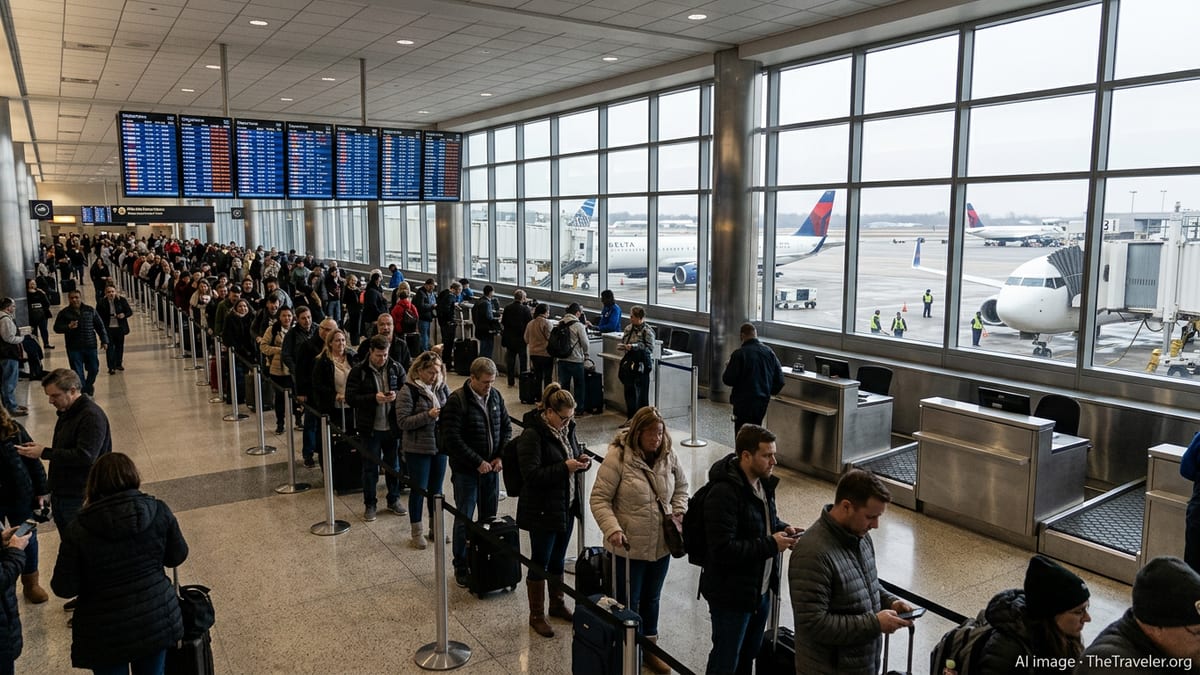
Recent coverage of the record 43 day federal shutdown and the weeks of partial closures that followed has documented widespread disruption across the US aviation system, from slashed flight schedules at major hubs to mounting strain on air traffic controllers and airport security officers. Publicly available information from the Federal Aviation Administration showed flight caps of several percent at dozens of large airports in late 2025, a move aimed at reducing workload as controller staffing became increasingly stretched.
Industry analyses indicate that those restrictions, combined with weather and normal operational challenges, triggered tens of thousands of delayed or canceled flights and upended travel plans for millions of passengers. Trade publications and business outlets reported that delays attributed to controller shortages surged into the mid-teens as a share of all flights during the height of the shutdown, compared with single digit levels earlier in the year.
Aviation unions have also described a growing safety concern when highly trained professionals such as air traffic controllers, aviation safety inspectors and Transportation Security Administration officers are required to work without pay for extended periods. Written statements from pilot associations and controller groups stressed that shutdowns erode safety margins and morale, even if the system avoids major accidents.
Airline Executives Call for Lasting Legislative Fixes
Against that backdrop, airline executives and their main trade group, Airlines for America, have shifted from simply urging an end to the latest funding impasse to demanding structural changes that would insulate aviation from future shutdown fights. In testimony submitted to a US Senate Commerce Committee hearing titled “Flying on Empty: How Shutdowns Threaten Air Safety, Travel, and the Economy,” Airlines for America’s leadership argued that shutdowns and stopgap spending deals are now directly undermining the reliability of the national airspace system.
According to that written testimony and subsequent public statements, executives want Congress to guarantee uninterrupted pay for air traffic controllers and key Federal Aviation Administration personnel during any future funding lapse. They contend that controllers and safety staff should not be used as leverage in political budget disputes, noting that the most recent shutdown saw thousands of these workers reporting to duty without paychecks while being asked to manage a system that handles more than 40,000 flights a day.
Airline chief executives have also linked the shutdown disruptions to broader concerns about the health of US air traffic control infrastructure. In a joint letter circulated in 2025, major carriers described the system as outdated and called on lawmakers to approve substantial investments in technology and staffing. That appeal has since been paired with a more urgent message: without predictable funding and protections from shutdowns, even new technology cannot fully shield passengers from cascading disruptions.
New Bills Target Pay Protections and Stable Funding
Lawmakers from both parties have begun to respond with targeted proposals that reflect the aviation industry’s demands. One bipartisan bill, highlighted in recent wire service coverage, would ensure that air traffic controllers continue to be paid during any future shutdown by tapping an existing but rarely used aviation fund. The measure would also support Federal Aviation Administration operating expenses during funding gaps, addressing a key concern raised by airlines and airport groups.
Separately, aviation stakeholders have endorsed the Aviation Funding Solvency Act and similar House and Senate proposals that would guarantee uninterrupted pay for controllers, aviation safety inspectors and other critical staff. A statement backed by business associations and carrier groups described such measures as essential to maintaining the reliability of the aviation system and preventing the need for emergency flight caps like those imposed in late 2025.
Congressional transportation and infrastructure leaders have promoted draft appropriations language that would treat core aviation safety functions as protected during funding lapses. Committee summaries suggest these provisions are designed to ensure that air traffic control and essential safety operations are not curtailed, even if broader government spending negotiations stall.
Coalitions Across the Industry Amplify the Message
The push in Washington is not limited to large passenger airlines. A wide array of aviation organizations, from regional carriers to business aviation groups and pilot unions, has coalesced around a common message that the air transport system must be shielded from shutdown politics. The Modern Skies Coalition, which includes airlines, manufacturers, airports and passenger advocacy groups, has issued multiple public letters urging Congress to guarantee that aviation never again becomes collateral damage in budget standoffs.
The Regional Airline Association, which represents carriers that serve smaller cities and rural communities, has warned that shutdown disruptions fall especially hard on communities with limited air service. In its public statements, the group argued that even modest schedule reductions or training delays can mean fewer flights, longer connections and lost economic opportunities for these regions.
Pilot unions including the Air Line Pilots Association and the Southwest Airlines Pilots Association have echoed concerns that repeated shutdown threats erode training pipelines and delay safety-critical initiatives such as air traffic control modernization and runway safety programs. Their joint letters emphasize that every pause in hiring, certification and system upgrades created by a shutdown can ripple through the network for months or years.
What Travelers Should Watch in the Months Ahead
For travelers, the flurry of activity in Congress and among industry groups raises practical questions about what might change before the next funding deadline in Washington. Aviation trade groups are urging lawmakers to act well in advance of any new spending standoff, arguing that clearly defined protections for pay and operations would help avoid a repeat of the 2025 flight caps that cut capacity at 40 major airports.
If legislators approve pay-protection bills for air traffic controllers and other essential staff, airlines suggest that future shutdowns would be less likely to trigger sudden schedule reductions or widespread delays, even if other parts of the federal government were affected. However, observers note that such measures would not completely eliminate the risk of disruption, because certification work, long term modernization projects and training programs could still be slowed without full funding.
Travelers are also watching how Congress handles broader aviation spending plans tied to air traffic control upgrades, hiring initiatives and airport infrastructure. Industry testimony has drawn a direct line between stable, multi year funding and the ability to manage growing demand without resorting to traffic caps or last minute schedule cuts.
Until lasting protections are enacted, analysts say US flyers remain vulnerable whenever a shutdown looms. The debate now unfolding on Capitol Hill, fueled by sustained pressure from airline executives and aviation coalitions, will determine whether the next funding showdown once again spills into airport departure boards or whether critical parts of the aviation system are finally insulated from Washington’s recurring budget battles.