

More news on this day
Recent aviation safety scares involving Alaska Airlines, FedEx, Delta Air Lines and American Airlines are amplifying traveler anxiety and triggering a visible wobble in booking confidence across key tourism markets in the United States, Spain and Greece.
Get the latest news straight to your inbox!
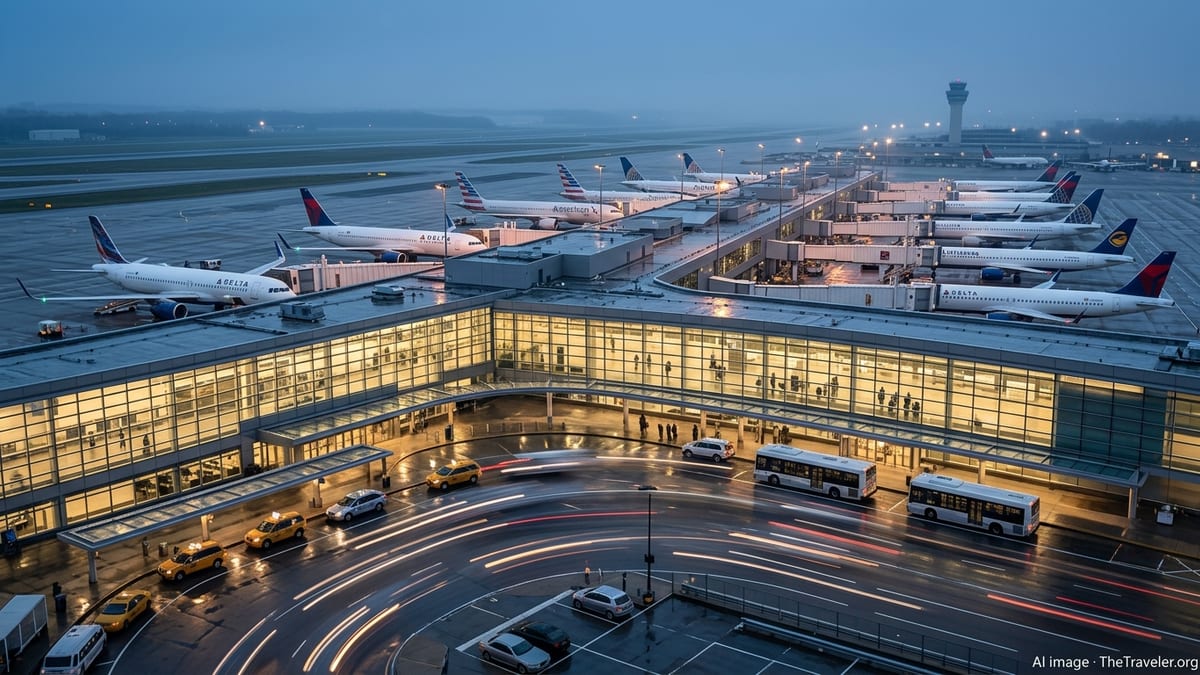
String of High-Profile Incidents Fuels Anxiety
The most recent jolt to public confidence came from a near miss at Newark Liberty International Airport, where an Alaska Airlines Boeing 737 was instructed to abort its landing as a FedEx Boeing 777 cargo aircraft approached an intersecting runway. Publicly available information indicates that the Alaska jet passed above the FedEx aircraft during the maneuver, an event now under federal investigation and widely circulated in mainstream news coverage.
The Newark episode follows a longer chain of high-visibility events that have kept safety at the forefront of air travel discussions. Alaska Airlines has been under intense scrutiny since the widely reported January 2024 incident in which a door plug panel detached from a 737 Max 9 shortly after departure from Portland, prompting emergency diversions, temporary groundings of similar aircraft and a detailed safety probe into manufacturing and oversight practices.
FedEx, while operating exclusively cargo services, has also been part of the recent headlines. In early February 2026, a FedEx Express Airbus A300 undergoing maintenance at Baltimore Washington International Thurgood Marshall Airport experienced a nose landing gear collapse while parked at a cargo area. Reports indicate that there were no injuries and no impact on commercial passenger movements, but images of the aircraft tilted forward circulated widely, reinforcing the perception of mechanical vulnerability in the wider fleet environment.
Travelers tracking airline performance have also been confronted with a mixed safety and reliability narrative around major passenger carriers. Industry datasets and recent coverage highlight operational strains at several large U.S. airlines, with American Airlines and Delta Air Lines both appearing frequently in discussions of cancellations, maintenance issues and operational disruptions, even as both carriers continue to emphasize strong overall safety records.
American and Delta Under the Microscope
American Airlines has faced a particularly sharp spotlight following a series of widely covered incidents and investigations. Public reports on the January 2025 midair collision over the Potomac River involving an American Eagle regional jet and a U.S. Army Black Hawk helicopter, which resulted in significant loss of life, reignited debate about airspace management near busy hubs and the safety margins around mixed civilian and military operations.
Additional episodes, such as an American Airlines flight that reported landing gear problems departing Denver in mid 2025, have kept the carrier’s name in safety-related news cycles. While these individual events remain statistically rare relative to the airline’s overall flight operations, the visibility of emergency slides, smoky cabins and diverted flights has a powerful effect on traveler perception that can linger long after investigations conclude.
Delta Air Lines, frequently cited in industry rankings for strong reliability and customer satisfaction, has not been immune to closer scrutiny. Comparative data for 2024 and 2025 show rising cancellation rates and a series of incidents that, while not resulting in major accidents, have nonetheless fed a narrative of mounting operational pressure. Commentary in aviation-focused outlets often contrasts Delta’s strong long-term safety record with a recognition that even top performers are operating in a more stressed environment.
For travelers, the distinction between mechanical failure, air traffic management issues and broader operational reliability is often blurred. When successive stories feature different brands in rapid succession, the result is a generalized sense of unease that affects not just individual airlines but the perceived safety of flying as a whole.
Ripple Effects on Tourism Demand in the U.S., Spain and Greece
Travel booking data providers and tour operators are beginning to report softer demand signals in the wake of the latest incidents, particularly on some long haul leisure routes. Publicly available commentary from industry analysts notes that safety headlines typically correlate with short term dips in search volumes and slower booking conversions for transatlantic travel, even when fares remain attractive.
Spain and Greece, which both rely heavily on inbound summer traffic from North America, are being watched closely for signs of hesitation. Early season indicators suggest that while overall interest remains high, a noticeable share of potential visitors are delaying firm commitments, especially for complex itineraries that require multiple connections on major U.S. carriers. Some Mediterranean hoteliers have indicated through trade-facing updates that lead times for bookings are shortening, a pattern commonly associated with more cautious consumer behavior.
Within the United States, domestic leisure travel remains resilient, but there are signals of route specific sensitivity. City pairs associated with recent incidents, such as New York area airports and Washington, D.C., are seeing more frequent queries about aircraft type, carrier safety records and schedule redundancy. Travel advisors report that some clients now request routings that avoid particular hubs perceived as congested or prone to operational issues.
Historically, aviation scares have not reversed long term growth in air travel, but they can alter booking patterns within a season. Travelers who might have chosen long haul trips to Europe or the Aegean may pivot to shorter flights or closer destinations, potentially reshaping demand curves for U.S., Spanish and Greek tourism businesses that have spent months planning around robust forecasts.
Hotels Face Jittery Booking Patterns and Shorter Lead Times
The most immediate impact for hotels in the affected markets is a shift in booking behavior rather than an outright collapse in demand. Industry updates aimed at investors and operators describe a pattern of “massive booking jitters” characterized by slower pickup, increased cancellations and a greater share of last minute reservations, particularly for upscale urban and resort properties tied closely to air arrivals.
In Spain, coastal resorts and city hotels in gateways such as Barcelona and Madrid are coping with a higher degree of volatility in their pacing curves compared with the same period a year earlier. Rooms may still eventually sell, but the booking window is narrowing, complicating revenue management strategies and staffing plans. For Greek island destinations, where seasonality is even more pronounced, the difference between firm bookings three to six months out and a flood of short notice stays can be the gap between a smooth season and operational strain.
U.S. hotels in major airline hubs and coastal leisure markets are experiencing similar uncertainty. Properties near airports associated with recent safety news, including New York and Washington, are adjusting their projections as corporate and group clients voice concern over traveler sentiment. Some meeting planners are reportedly building more flexible cancellation terms into contracts, reflecting a perceived need to hedge against participants deciding not to fly.
This jittery environment is also affecting smaller independent hotels that lack the global distribution and loyalty ecosystems of large chains. Without the cushion of repeat guests and corporate volume agreements, independent properties in secondary Spanish and Greek destinations may feel the impact of even modest dips in international arrivals more acutely.
Industry Response: Reassurance, Data and Flexible Policies
Airlines, tourism boards and hotel groups are responding by foregrounding safety statistics, transparency and flexibility. Public communications from major carriers emphasize that, despite recent tragedies and high profile close calls, commercial aviation remains among the safest forms of transport, with long term accident rates continuing to trend downward. Industry bodies and safety analysts point to extensive regulatory oversight, continuous monitoring and rapid implementation of technical recommendations following incidents.
Destination marketing organizations in the United States, Spain and Greece are leaning more heavily on messaging that focuses on travel confidence and ease of access. Campaigns and media briefings increasingly reference robust infrastructure, well established emergency protocols and the professionalism of aviation and hospitality workers, even as they avoid commenting directly on ongoing investigations.
On the accommodation side, leading hotel brands are expanding flexible booking and cancellation options to reduce friction for hesitant travelers. Many properties are adjusting cutoff dates for penalty free changes and highlighting refundable rates more prominently in their direct channels. This approach aims to reassure guests that they can adapt their plans if further safety stories emerge, without incurring substantial financial penalties.
At the same time, travel advisors are encouraging clients to balance understandable caution with perspective, recommending the use of travel insurance, careful routing choices and carrier research rather than abandoning trips altogether. For tourism economies in the United States, Spain and Greece, the hope is that a combination of clear communication, operational reliability and policy flexibility will be enough to steady booking trends as investigations into recent aviation incidents continue.