

More news on this day
Global airlines and cruise operators are racing to redraw routes, pricing and schedules as escalating conflict around Iran, renewed Red Sea threats and recent closures of key Middle East airspaces and sea lanes disrupt one of the world’s most critical travel corridors.
Get the latest news straight to your inbox!
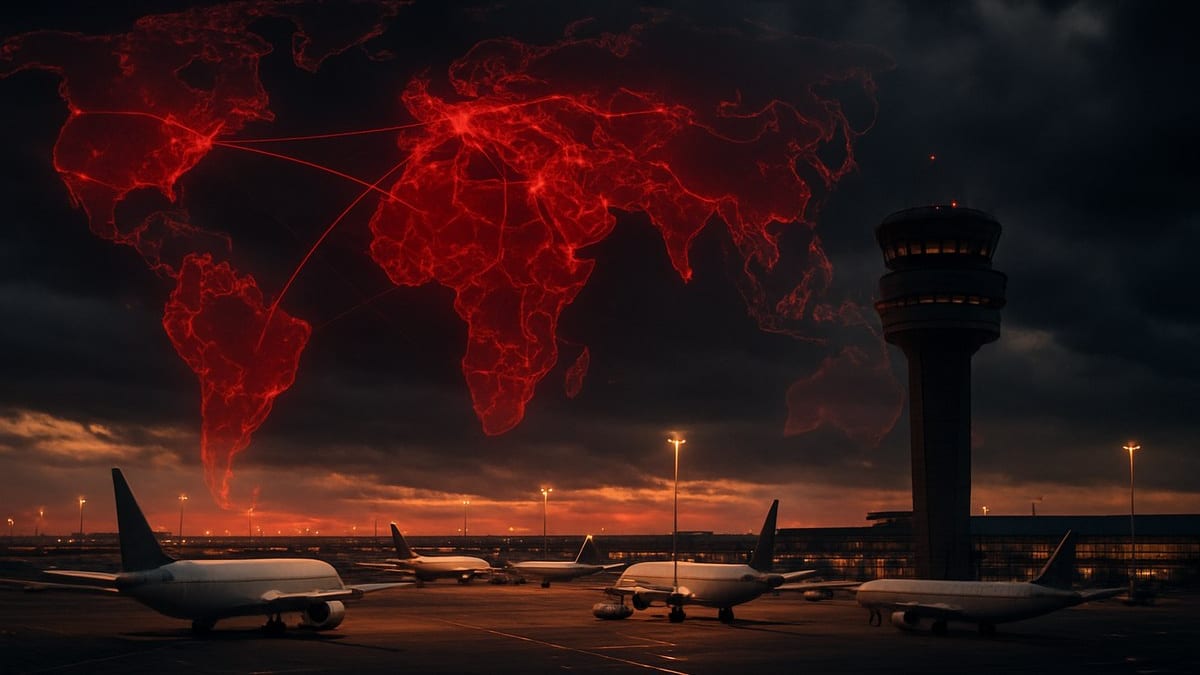
Wave of Airspace Closures Reshapes Global Flight Paths
Since late February 2026, the war involving Iran, the United States and Israel has triggered a cascade of airspace closures across the Middle East, forcing carriers on Europe–Asia and Africa–Asia routes into lengthy detours. Publicly available overflight data and industry briefings indicate that at various points Iran, Israel, Iraq, Jordan, Qatar, Bahrain, Kuwait and the United Arab Emirates have imposed total or partial shutdowns, effectively cutting through the heart of global aviation’s east–west bridge.
Specialist aviation advisories published in March described “largely closed” Iranian skies and heavily restricted corridors in neighboring states, with commercial airlines required to route around conflict zones or secure narrow, militarily coordinated transit windows. These restrictions coincided with temporary shutdowns or capacity limits at major hubs such as Dubai, Abu Dhabi and Doha, which collectively handle a substantial share of global long haul traffic.
As a temporary two week ceasefire between Washington and Tehran took effect on April 7, airspace over Iraq, Syria and Bahrain began to reopen and Israel eased wartime capacity caps at Tel Aviv’s Ben Gurion airport. Flight tracking analyses show long haul carriers gradually restoring more direct routings, but schedules remain thinned and many safety driven diversions are still in place while operators wait to see whether the fragile pause in fighting holds.
International airlines from Europe and Asia have continued broad suspensions of passenger services to Israel, parts of the Gulf and Iran. Carriers including Lufthansa Group brands, American Airlines and several Asian operators are maintaining travel alerts, flexible rebooking policies and refunds for itineraries touching the region, underscoring the uncertainty that persists even as some air corridors formally reopen.
Fuel Costs, Rerouting and a Jet Fuel Shock
The closure of airspace has collided with a second blow for airlines: disrupted energy flows through the Strait of Hormuz and the broader Gulf. Research notes from banks and aviation consultancies report that jet fuel prices nearly doubled by late March compared with pre conflict levels, as blocked or threatened shipping lanes complicated deliveries to key bunkering hubs that serve Europe, Asia and the Middle East.
Industry analyses suggest that fuel, which already accounts for roughly a quarter to two fifths of airline operating costs, has become the dominant pressure point for carriers reliant on Gulf crossings. Longer routings to skirt Iranian airspace and the northern Gulf have added flight time and fuel burn, amplifying the impact of higher wholesale prices. The combination has prompted warnings that airlines may need to trim capacity or push through sizeable fare increases into the northern summer season.
In Europe, financial market commentary highlights how legacy carriers and low cost rivals alike briefly benefited from substitution demand as travelers avoided itineraries touching the Middle East. At the same time, the spike in jet fuel and the loss of efficient Gulf hub connections have complicated network planning, particularly for routes linking Europe with South and Southeast Asia.
With the ceasefire prompting a conditional reopening of the Strait of Hormuz and some resumption of tanker flows, there are signs of moderate relief for fuel procurement. However, risk premia on transport and insurance remain elevated, and analysts caution that any renewed closure or attack on shipping near Hormuz or Bab el Mandeb could rapidly reverse the easing and lock in structurally higher airline costs.
Cruise Lines Reroute Away From the Red Sea and Suez
While airlines grapple with turbulent skies, cruise operators are contending with renewed security fears in waters that frame the Middle East. The Red Sea, Bab el Mandeb Strait and approaches to the Suez Canal had already been volatile following earlier rounds of Houthi attacks on commercial shipping. The latest escalation around Iran and concerns about copycat or opportunistic strikes have led many cruise planners to steer vessels away from the region.
Industry trade coverage shows that large brands have cancelled or radically reshaped repositioning voyages scheduled to transit the Red Sea in late 2025 and 2026. MSC Cruises, for example, has already scrapped a Grand Voyage that would have carried guests from the United Arab Emirates through the Red Sea and Suez Canal in April 2026, citing an inability to guarantee safe passage given ongoing geopolitical tensions.
Other global cruise companies are opting for the longer, more expensive route around the Cape of Good Hope for ship movements between Europe and Asia or the Indian Ocean. This shift adds days to sailing times and increases fuel and staffing costs, but operators appear to be judging that the commercial and reputational risk of a passenger ship caught in a risk zone outweighs the financial hit.
Port calls in the Gulf and Eastern Mediterranean are also under review, with itineraries featuring stops in Israel, Lebanon, Egypt and Gulf states frequently adjusted, replaced or postponed. Prospective passengers are being offered rebookings and credits, and travel agents report a preference shift toward itineraries focused on the Mediterranean west of Suez, northern Europe, the Caribbean and Alaska while security questions linger.
Travel Demand Adapts as Operators Test New Networks
Despite the turmoil, travel demand has not collapsed outright. Spending data compiled by financial institutions indicates that airline purchases in the United States remained higher year on year through March, a trend analysts attribute to strong underlying demand and rising fares rather than an expansion of available capacity. On key Europe–Asia corridors, fares have risen sharply as the loss of Middle East hub capacity has squeezed seats and pushed travelers onto longer alternative routings.
Reports from regional tourism boards and booking platforms suggest that leisure travelers are adjusting rather than cancelling outright. Some are swapping Israel, the Gulf or Red Sea ports for destinations in southern Europe, North Africa outside the immediate conflict zone, or long haul trips to the Americas and Asia that can avoid sensitive airspace through northern or southern detours.
For airlines based outside the Middle East, particularly in Europe and Asia, this creates both opportunities and risks. Carriers that can profitably operate longer flights that bypass closed corridors may gain temporary pricing power, but they also run the risk of being locked into uneconomic patterns if high fuel prices persist. Middle East carriers, meanwhile, face the challenge of defending their role as global connectors while much of the airspace around their hubs is subject to sudden security driven restrictions.
Cruise companies are experimenting with extended seasons in regions perceived as more stable, such as the western Mediterranean and northern Europe, and adding short notice sailings to capture displaced demand. However, planners caution that ships and port infrastructure are allocated years in advance, and that a prolonged crisis in Middle Eastern waters could force a more permanent reshaping of global cruise deployment.
Balancing Safety, Stability and the Global Travel Map
Across both aviation and cruising, the overriding priority remains the safety of passengers and crew. Publicly available advisories from international agencies and industry groups continue to warn of heightened risks around parts of the Middle East’s skies and seas, even as some airspaces and sea lanes are partially reopened under the ceasefire framework.
Executives are being pushed to balance that safety focus with the need to restore reliable networks. Airlines are weighing whether to reinstate hub connections that made one stop journeys between Europe, Asia and Africa routine, or to double down on alternative routings that reduce exposure to potential flashpoints. Cruise lines must decide how quickly, if at all, to bring back marquee itineraries that include the Suez Canal and Gulf ports that have long been marketed as bucket list experiences.
Analysts broadly agree that the current turmoil is testing the resilience of a travel system built around the Middle East as a crossroads. The outcome of the ceasefire, the durability of any agreement affecting the Strait of Hormuz, and the trajectory of militant activity in the Red Sea corridor will help determine whether the disruption proves temporary or begins to redraw the global map for long haul travel and cruise tourism.