

More news on this day
Major Asian airlines are signaling business as usual for flights into Beijing, Shanghai and Guangzhou even as China imposes an unusually long 40‑day airspace restriction over offshore zones near Shanghai, prompting questions from nervous travelers about potential disruption.
Get the latest news straight to your inbox!
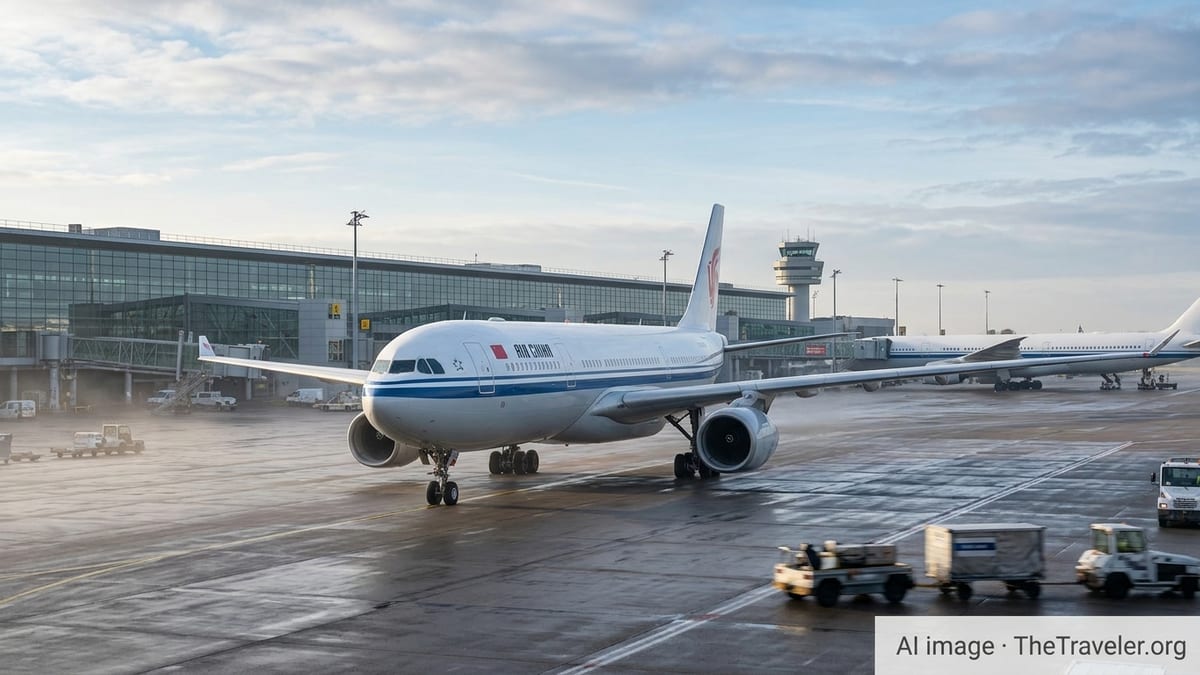
Unusual 40‑Day Airspace Restriction Sparks Global Attention
China has reserved a large section of offshore airspace near Shanghai for 40 days, in a move aviation analysts describe as highly atypical for both its geographic scope and duration. Notices to air missions published through international aviation channels indicate that the restricted zones lie over the Yellow Sea and East China Sea to the north and south of Shanghai, covering an area reported to be larger than Taiwan’s main island.
The notice, which runs for 40 days from late March into early May, applies to defined blocks of airspace rather than to specific airports. Reports indicate that civil aviation routes have been able to continue operating, but aircraft may need to coordinate with air traffic control to transit around or above the reserved areas. The absence of any publicly announced exercise or large‑scale drill linked to the restriction has fueled speculation among defense and aviation commentators.
For passengers, the headline implication is less about airports being closed and more about potential rerouting or minor schedule changes as airlines work with air navigation authorities to avoid restricted coordinates. That distinction has become critical as social media discussions and fragmented reports have led some travelers to conclude, incorrectly, that China’s primary international hubs could be shut to commercial traffic.
China Eastern Joins Regional Peers In Pledging Normal Operations
Against this backdrop, a cluster of Asia‑Pacific carriers has moved to clarify that their scheduled flights to mainland China’s biggest cities remain intact. Publicly available information and schedule checks show that Air China, China Eastern, China Southern, Cathay Pacific, Singapore Airlines, Korean Air and Malaysia Airlines continue to load and sell regular services into Beijing, Shanghai and Guangzhou during the 40‑day period.
China Eastern, which bases a large portion of its network at Shanghai’s Pudong and Hongqiao airports, is central to those assurances. The airline’s current schedules indicate continued high‑frequency service on trunk routes linking Shanghai with Beijing, Guangzhou and other major domestic and regional markets, supporting the broader message that the restriction is being managed as an en‑route airspace issue rather than an airport closure.
Other regional carriers with substantial China exposure are signalling similar continuity. Singapore Airlines continues to operate flights into both Beijing and Shanghai, while Korean Air and Malaysia Airlines are maintaining their China schedules according to their published timetables. Cathay Pacific, which relies heavily on traffic flows between its Hong Kong hub and mainland cities, also continues to list and operate flights into the three key markets.
These parallel signals from multiple airlines are notable because they reflect individual commercial assessments of risk, demand and regulatory guidance. For now, those assessments converge on a shared view that the restriction can be accommodated operationally without suspending passenger services to China’s core international gateways.
What The Airspace Move Means For Routes To Beijing, Shanghai And Guangzhou
For most travelers booked into Beijing Capital, Beijing Daxing, Shanghai Pudong, Shanghai Hongqiao or Guangzhou Baiyun, the practical impact of the 40‑day restriction is expected to be limited. The reserved zones sit offshore, and long‑haul and regional routes have a degree of flexibility to adjust routings while still using the same origin and destination airports.
Industry data and recent coverage of China’s civil aviation recovery show that the country’s three primary hubs have been steadily rebuilding international and domestic capacity, with Beijing, Shanghai and Guangzhou again handling more than half of China’s international passenger flights in the current scheduling seasons. That structural reliance on the three cities as international gateways gives airlines and regulators a strong incentive to preserve continuity of service even when surrounding airspace is constrained.
Operationally, airlines may opt to lengthen flight paths slightly, change entry and exit points into Chinese airspace or adjust cruising levels to remain clear of restricted coordinates. Such changes can add a modest amount of flight time and fuel burn, but they are a familiar part of airline operations in regions where military exercises, weather systems or geopolitical tensions periodically affect preferred routings.
Travelers are therefore more likely to notice small timetable tweaks or updated flight durations than wholesale cancellations tied directly to the offshore restriction. Where recent disruptions have occurred for Chinese carriers, reports generally link them to wider regional security concerns and weather‑related challenges rather than to the specific 40‑day notice near Shanghai.
Why Airlines Are Eager To Avoid Fresh Disruption In China
The cautious but steady messaging from airlines comes after several challenging years for Asia‑Pacific aviation, marked by pandemic shutdowns, capacity caps and more recent geopolitical shocks in other regions. China’s own aviation sector has been working to stabilize schedules and restore connectivity, particularly on high‑yield corridors linking the Beijing‑Tianjin‑Hebei region, the Yangtze River Delta around Shanghai and the Guangdong‑Hong Kong‑Macao Greater Bay Area centered on Guangzhou.
Published traffic data indicate that these three metropolitan clusters now account for a majority share of China’s international passenger movements. Airlines have invested heavily in aircraft, crews and marketing to rebuild these flows, and many have only recently added back frequencies or upgraded equipment on marquee routes. A broad suspension of services into Beijing, Shanghai or Guangzhou would therefore cut directly against hard‑won gains and undermine forward bookings for the summer travel season.
Carriers also operate within a dense web of bilateral agreements, slot allocations and seasonal schedule filings. Abruptly cancelling large numbers of flights can trigger knock‑on effects for airport coordination, codeshare partners and corporate travel contracts. As long as regulators allow safe workarounds for the offshore restricted zones, airlines have strong commercial reasons to preserve their existing China programs and to communicate that stance clearly to the market.
The 40‑day restriction also coincides with a period of heightened sensitivity around airspace closures elsewhere, notably in parts of the Middle East where multiple countries have imposed partial or near‑total shutdowns in response to security concerns. By comparison, the situation around Shanghai currently appears more constrained and manageable, which further encourages airlines to treat it as a technical routing challenge rather than a trigger for widespread cancellations.
Practical Guidance For Travelers With Upcoming China Flights
For passengers, the most important step is to verify booking details directly through airline or travel agency channels in the weeks and days before departure. While broad cancellations specifically tied to the 40‑day airspace restriction have not materialized for flights to Beijing, Shanghai and Guangzhou, normal operational risks such as weather, crew availability and congestion can still affect individual services.
Travelers should pay close attention to any schedule change notifications, which may include minor shifts in departure or arrival times as airlines adapt routings. Allowing slightly longer connection windows, where possible, can help buffer against unexpected delays, especially for itineraries that involve tight same‑day transfers between international and domestic segments within China.
It is also prudent for travelers to monitor general aviation news from reputable outlets during the restriction period. While publicly available information currently points to stable operations into China’s main hubs, the underlying security and geopolitical context remains fluid, and both airlines and regulators can adjust their posture if risk assessments change.
For now, however, the collective message from China Eastern, Air China, China Southern and their regional counterparts is that flights to Beijing, Shanghai and Guangzhou will continue to operate, offering reassurance to travelers planning trips into some of Asia’s busiest and most strategically important aviation hubs.