

More news on this day
A deepening fuel shock triggered by the Strait of Hormuz crisis is forcing airlines across Europe, Asia and the United States to slash flights, raise surcharges and rethink summer schedules, as jet fuel prices soar to record levels and supply warnings grow more urgent.
Get the latest news straight to your inbox!
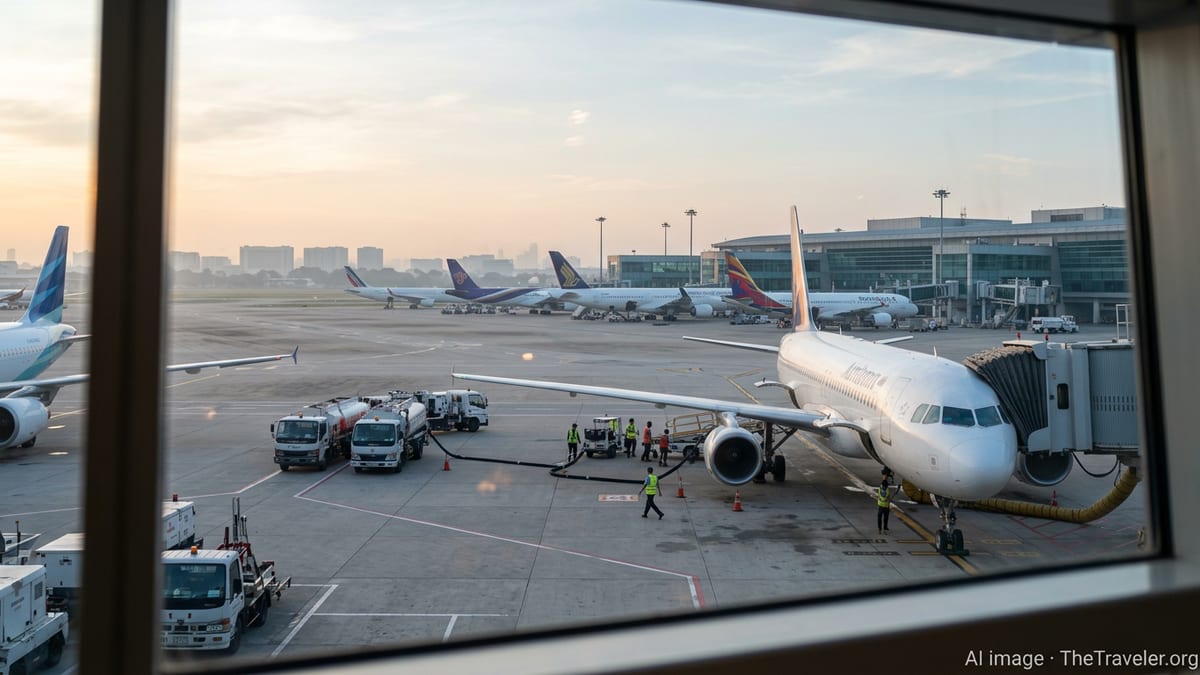
Strait of Hormuz Crisis Sparks Record Jet Fuel Surge
The closure and partial blockade of the Strait of Hormuz since March 2026 has created one of the most severe supply shocks in modern energy and aviation history. The strategic waterway normally carries roughly a fifth of the world’s oil and a significant share of refined jet fuel, and its disruption has driven crude benchmarks back above 100 dollars a barrel and pushed jet fuel prices to more than double typical levels.
Industry analysis indicates that the Middle East conflict and associated shipping restrictions have not only choked crude exports but also cut off key jet fuel flows to Europe and Asia. Airports Council International Europe has warned that European airports could face a “systemic shortage” of jet fuel within weeks if traffic through Hormuz is not restored, raising the prospect of more aggressive schedule cuts just as the peak summer season approaches.
Economic assessments of the wider Iran war suggest that kerosene-based products such as jet fuel have risen faster than crude because refineries lack the specific grades of oil normally sourced from the Gulf. As a result, airlines are dealing simultaneously with higher prices, tighter physical supply and longer flight routings around closed airspace, all of which feed directly into operating costs.
United, Delta and US Carriers Move to Cut Capacity
Major US airlines are reacting with a mix of flight reductions and higher charges. Publicly available information shows that United Airlines has begun cutting about 5 percent of its planned schedule in the near term, focusing on less profitable routes, certain redeye flights and services on traditionally weaker travel days. The carrier is also preparing further “capacity adjustments” on transatlantic and transpacific routes as fuel markets remain volatile.
Delta Air Lines, which has already warned that its jet fuel bill for the June quarter will be billions of dollars higher than a year earlier, is trimming growth plans rather than expanding as originally intended. The airline has pulled back on planned seat additions, leaving its summer capacity several percentage points below earlier forecasts, and is leaning more heavily on fare increases and baggage fee hikes to offset fuel expenses.
Low cost and ultra-low cost airlines in the United States, many of which rely on high aircraft utilization and thin margins, are widely expected to feel the crunch most acutely. Analysts note that large network carriers such as United and Delta have more room to reshape schedules, swap aircraft types and apply dynamic pricing, while discount operators have less flexibility and may be forced into sharper route cuts if fuel prices remain elevated.
Air France, Ryanair and European Networks Under Strain
In Europe, the fuel shock is colliding with heavy reliance on Gulf supply. Industry data cited by sector groups shows that roughly a quarter to nearly a third of Europe’s jet fuel demand is normally sourced from the Persian Gulf, making the continent especially vulnerable to a protracted Hormuz disruption.
Flag carrier group Air France KLM has introduced new long haul fuel surcharges as jet fuel costs surge, with additional amounts applied across economy and premium cabins on intercontinental routes. Reports indicate that these surcharges layer on top of previously higher base fares, pushing up total ticket prices even for bookings made months in advance.
Budget giant Ryanair, despite extensive fuel hedging in earlier years, is no longer insulated from the spike. Coverage in European business media and the specialist travel press indicates that Ryanair is cutting around 10 percent of its summer 2026 flights, concentrating reductions on intra European routes where alternative ground transport exists. The carrier is also adjusting its fare strategy, seeking to protect margins while trying not to suppress demand completely during the peak holiday window.
Airports across the region are starting to report tighter fuel allocations and, in some cases, the need for more complex refuelling logistics. Airport and airline executives are warning that if supply to European hubs does not normalize within a matter of weeks, airlines may have little choice but to cancel additional services, prioritize higher yielding routes and defer some aircraft utilization.
Cathay Pacific, Air India and Asia Pacific Cutbacks Intensify
Across Asia Pacific, the Hormuz shock is feeding into what was already one of the world’s most fuel dependent aviation regions. Analysts point out that leading importers such as China, India, Japan and South Korea collectively account for the majority of Gulf oil exports, so any disruption in the Strait of Hormuz quickly spills into regional jet fuel markets.
Hong Kong based Cathay Pacific has now joined a growing group of carriers that are significantly reducing flight schedules in response to surging fuel bills. Travel industry reports describe cuts across a range of medium and long haul services, with the airline prioritizing routes with strong premium demand and cargo revenue. Jet fuel prices referenced by these reports have climbed from approximately 127 dollars per barrel in February to well above 260 dollars in April, a jump that few carriers can absorb without reshaping their networks.
In India, Air India has implemented a tiered fuel surcharge on both domestic and international sectors since early April, with higher bands attached to longer routes. The airline is also selectively trimming frequencies on lower demand city pairs while preserving key long haul connections to North America and Europe. Other regional operators, including Vietnam Airlines and Air New Zealand, have announced cancellations of less profitable flights and, in some cases, additional refuelling stops to manage around patchy fuel supplies.
Market observers in the region warn that if the fuel shock persists into late 2026, Asia Pacific’s recovery from the pandemic era slowdown could stall. Airlines that had been rebuilding capacity toward pre crisis levels are instead revisiting fleet deployment, reconsidering marginal long haul routes and delaying planned capacity increases.
Passengers Face Higher Fares, New Surcharges and Thinner Networks
For travelers, the immediate consequences of the Strait of Hormuz fuel shock are becoming clearer: higher prices, more surcharges and fewer flight options. Publicly available data and airline announcements show that United, Delta, Air France, Air India, Ryanair, Cathay Pacific and several Gulf and Asia Pacific carriers have introduced or increased fuel surcharges on many routes, particularly long haul services between Europe, Asia and North America.
On top of base fare and surcharge increases, passengers are encountering higher ancillary fees, from checked baggage to seat selection, as airlines scramble to recover sharply higher operating costs. Some carriers are also reducing the number of weekly frequencies on certain city pairs and consolidating flights into larger aircraft, a strategy that can preserve overall seat capacity but reduce scheduling flexibility.
Travel industry analysts advise that peak summer and holiday periods are likely to see the steepest pricing pressures as airlines concentrate limited capacity on the most profitable routes. Budget conscious travelers may find that traditional shoulder season bargains are less generous than in previous years, while last minute deals become rarer due to tighter supply.
While there are tentative diplomatic efforts aimed at easing tensions and restoring safer passage through Hormuz, aviation bodies caution that even a full reopening of the strait would not deliver instant relief. Jet fuel supply chains and refining operations could take months to normalize, suggesting that today’s schedule cuts, surcharges and reshaped networks may linger well into the second half of 2026.