


More news on this day
A Qantas flight from Canberra to Perth made an unscheduled diversion to Adelaide after an unusual smell was reported in the cabin, prompting a precautionary landing and raising new questions about how airlines manage in-flight odour and fume events.
Get the latest news straight to your inbox!
What Happened on Qantas Flight QF857
According to multiple aviation reports, Qantas flight QF857, a Boeing 737 service from Canberra to Perth, was diverted to Adelaide late on Friday, 11 April 2026, after crew and passengers noticed a smell in the cabin. The odour was described in some coverage as mechanical, prompting the pilots to seek a priority landing at the nearest suitable airport.
Publicly available flight-tracking data indicates that the aircraft departed Canberra on time and was cruising across southern Australia when it turned toward Adelaide rather than continuing west to Perth. The aircraft then landed safely at Adelaide Airport, where it was met by standard ground services.
Subsequent reporting suggests that some passengers began to feel unwell after the smell developed, which reinforced the decision to divert. There have been no public reports of serious injuries, and passengers were able to disembark via normal procedures at Adelaide.
Qantas statements cited in news coverage characterize the diversion as precautionary, consistent with airline protocols that prioritise landing when an unexplained odour or potential fumes are detected on board.
Safety Protocols When Odours Are Detected In Flight
Commercial airlines operate under strict safety procedures whenever unusual smells or potential fumes appear in the cabin or flight deck. Industry guidance generally calls for crews to treat unexplained odours as potential indicators of smoke, electrical issues, fluid leaks, or other mechanical faults, even if no visible smoke is present.
Pilots are trained to run through checklists that assess possible sources, monitor cockpit instruments, and communicate with cabin crew about what is being experienced in different parts of the aircraft. If there is any doubt, crews are expected to divert to the nearest suitable airport where specialist ground support and emergency services are available.
Reports on the QF857 incident indicate that these standard measures were followed, with the crew opting to land at Adelaide rather than continue the transcontinental sector to Perth. Aviation safety specialists often point out that such diversions frequently end with no serious fault being identified, yet they remain an essential part of a conservative safety culture.
Once on the ground, engineers typically inspect electrical systems, air conditioning packs, galley equipment, and other possible sources of smells. If no obvious defect is found, the aircraft may be returned to service only after technical checks are completed and signed off under regulatory maintenance requirements.
Impact on Passengers and Travel Plans
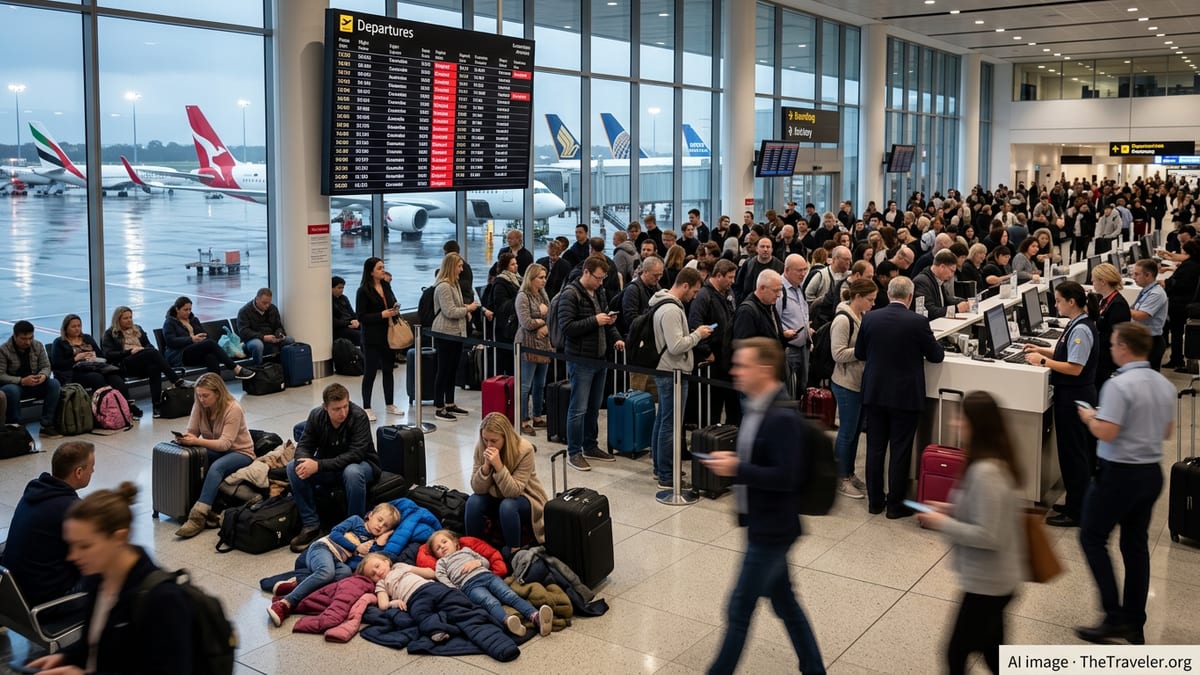
For those on board QF857, the diversion meant a significant disruption on what is already one of Australia’s longer domestic routes. Instead of a continuous evening flight to Perth, passengers disembarked in Adelaide while the aircraft was examined, and onward travel arrangements were reorganised.
Published coverage indicates that travellers were rebooked on later services where possible. Depending on connection times and seat availability, some Perth-bound passengers may have faced late-night or next-day arrivals. Those with onward international connections from Perth were likely among the most affected.
Events like this highlight the importance of allowing buffer time for tight domestic-to-international connections, particularly on routes that cross large distances with limited alternative airports. While most flights operate without incident, diversions for weather, medical events, or technical concerns can quickly erode carefully planned itineraries.
From a passenger-rights perspective, diversions prompted by technical issues generally require airlines to provide re-accommodation on later flights and, in many cases, meals or hotel rooms, depending on timing and local regulations. Travellers are encouraged to retain boarding passes and any expense receipts in case they later pursue compensation or insurance claims.
How This Fits Into a Wider Pattern of Precautionary Diversions
Smell and fume-related diversions are not unique to Qantas and have been recorded across many global airlines over the years. In Australia, historical cases show aircraft diverting or turning back after crews detected unusual odours, even when subsequent inspections did not reveal a clear mechanical fault.
Aviation analysts note that modern aircraft contain complex electrical and air-conditioning systems, as well as de-icing fluids, hydraulic fluids and cleaning agents, any of which can occasionally produce transient smells. Some odours may also arise from portable electronic devices or cabin equipment, yet crews treat each case as potentially serious until proven otherwise.
The QF857 diversion adds to a series of recent high-visibility operational disruptions involving major carriers, feeding into a broader public discussion about reliability and maintenance standards in the industry. However, safety specialists typically stress that precautionary landings are evidence of caution rather than deterioration, because they show that crews are empowered to prioritise safety over schedule.
Regulators and independent investigation bodies review significant fume or odour events to identify any systemic issues and, where needed, recommend changes to maintenance or operating procedures. In many cases, these reviews do not become public unless a formal investigation is opened or a detailed report is released.
What Travellers Should Know and Do Next Time
For air travellers, incidents like the Qantas Canberra to Perth diversion underline a few practical steps that can reduce stress when a flight is unexpectedly diverted. Travel insurers commonly expect passengers to take reasonable steps to minimise losses, such as accepting rebooking options offered by the airline before making alternative arrangements at their own expense.
Passengers are generally advised to keep digital or printed copies of itineraries, boarding passes and confirmations for any prepaid hotels, tours or rental cars at their destination. If a diversion or delay causes missed reservations, these documents can support any later claim with airlines, agents or insurers.
Those planning critical connections, such as international departures, cruises or time-sensitive events, may wish to schedule extra buffer time between flights, particularly across Australia’s long domestic sectors. While diversions for smells or technical checks are rare on a percentage basis, the distances involved can make recovery options more limited when they do occur.
For now, QF857’s diversion to Adelaide is being treated as a contained operational incident with no serious injuries reported. Engineers’ findings and any official summaries are likely to shape how the aircraft’s operator and safety agencies view the event, but from a traveller’s perspective it serves as a reminder that conservative decisions taken in the air are designed to keep everyone on board safe, even at the cost of disrupted plans on the ground.