


More news on this day
As airspace closures and conflict unsettle traditional hubs in the Middle East, the Dominican Republic is entering 2026 as a clear tourism outlier, coupling record visitor numbers with a reputation for relative stability that is drawing airlines, cruise lines and holidaymakers toward the Caribbean.
Get the latest news straight to your inbox!
Record-Breaking Arrivals Cement Caribbean Leadership
Publicly available figures from the Dominican Republic’s Ministry of Tourism and recent industry coverage show that the country has been on a sustained tourism winning streak since before the current Middle East crisis. After surpassing 10 million visitors in 2023, the destination closed 2024 with more than 11 million arrivals by air and sea, an all-time record that confirmed its status as the Caribbean’s largest tourism market by volume.
Data released in early 2025 indicated that momentum not only continued but accelerated. Between January and November 2025 the country welcomed more than 10.28 million visitors, with November alone passing the one million mark for the first time. Domestic analysis projected a year-end total of around 11.6 million visitors, reinforcing the country’s position as one of the fastest-growing tourism markets globally.
Early 2026 numbers suggest that the upward curve is holding. Industry reports from March indicate that nearly 2.4 million visitors arrived in the first two months of the year, including a record 1.18 million in February. Authorities have set a working goal of about 11.5 million tourists for the full year, a target that would keep arrivals close to the 2025 peak despite mounting geopolitical headwinds.
This rapid growth has been notable not only in the resort heartlands around Punta Cana and La Altagracia, but also in emerging destinations such as Miches, Samaná, Puerto Plata and Santiago, where new hotel capacity and infrastructure upgrades have been prioritized in recent years.
Middle East Disruptions Reshape Global Travel Flows
While the Dominican Republic’s rise predates the latest conflict, the turbulence currently affecting the Middle East tourism corridor is altering global travel patterns in ways that are benefiting alternative sun and resort destinations. Coverage from international outlets describes how war involving Iran, Israel and Gulf states has triggered airspace closures, cruise cancellations and route changes, with hubs such as Dubai and other Gulf cities experiencing stranded travelers and a sharp drop in tourist confidence.
Analyses from economic and tourism institutes suggest that international arrivals to Middle Eastern destinations could fall significantly in 2026 after several years of rapid growth. Airlines have canceled or rerouted many flights through the region, lengthening connections between Europe, Asia and Africa and increasing costs. Cruise lines have scaled back or withdrawn itineraries touching the Red Sea and the Strait of Hormuz, redirecting ships toward less exposed regions.
Caribbean-focused commentary indicates that these disruptions are redirecting some long-haul leisure demand toward the Americas. With consumers and tour operators seeking alternatives to previously booming Middle East resort markets, the Dominican Republic is emerging as a prime beneficiary, thanks to its existing large-scale capacity, competitive pricing and abundant airlift from North America and Europe.
Industry observers note that this shift coincides with broader post-pandemic preferences for destinations perceived as politically stable, easy to reach and familiar to tour operators. Against that backdrop, the Dominican Republic’s decade-long effort to market itself as a reliable, year-round beach destination is intersecting with a global search for safe havens.
A Safe-Haven Narrative Backed by Connectivity and Capacity
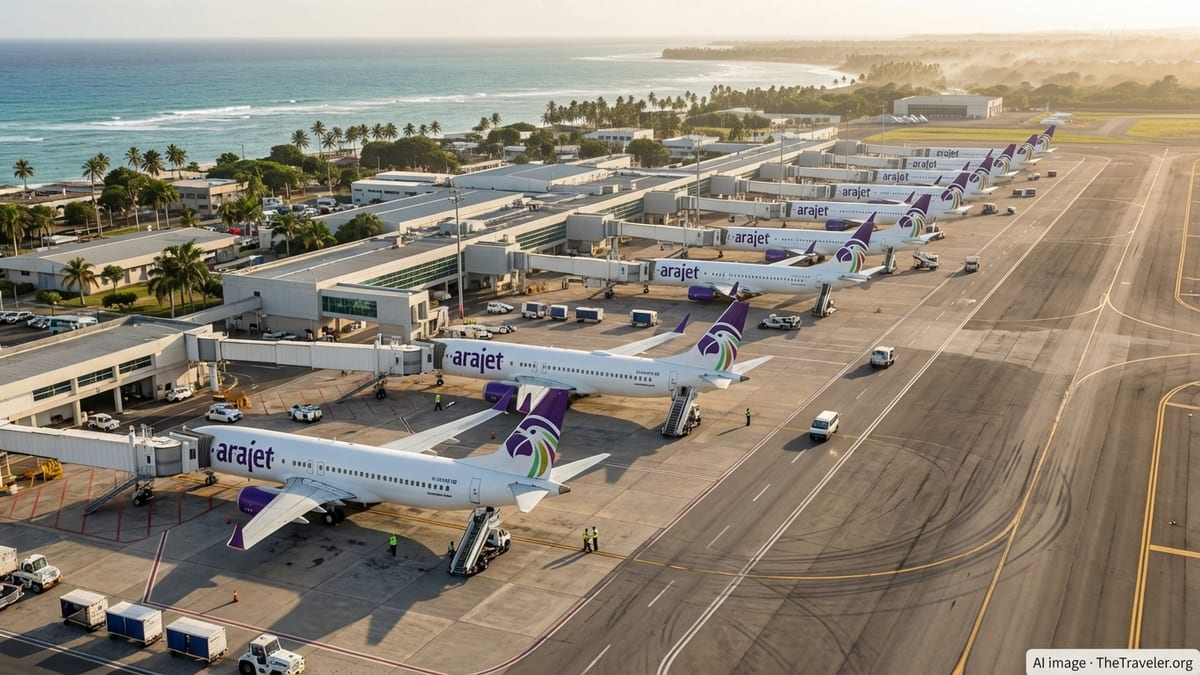
Publicly available travel data and airline schedule information highlight how the Dominican Republic’s air connectivity has become a strategic asset in the current environment. Major gateways in the United States and Canada list Punta Cana among their top international leisure routes, while European carriers operate frequent seasonal and year-round services to multiple Dominican airports. This existing network makes it relatively straightforward for tour operators to shift capacity into the country when other regions become harder to sell.
Industry reports from late 2025 and early 2026 show that airlines and charter operators have already done so at key moments, redirecting aircraft first from hurricane-affected Caribbean islands and now, in some cases, from Mediterranean and Middle Eastern routes affected by conflict or higher operating risks. The Dominican Republic has responded by authorizing additional flights during peak periods and highlighting its tourism infrastructure, from large resort complexes to cruise berths and regional airports.
Travel advisories from major source markets generally frame the Dominican Republic as a destination where visitors should exercise normal or enhanced caution, but where tourism zones are heavily policed and security measures are visible. For many travelers comparing risk profiles across regions, that combination of managed risk, high familiarity and robust on-the-ground services is proving attractive when contrasted with areas currently appearing in war-related headlines.
The safe-haven perception is further reinforced by the country’s diversified product. While all-inclusive beach resorts in Punta Cana and La Romana remain the main draw, the development of city breaks in Santo Domingo, eco- and adventure tourism in the interior and cultural circuits in Santiago and the Cibao Valley help spread economic benefits and reduce overdependence on a single coastal strip.
Economic Resilience Built on Diversification and Investment
The tourism boom is translating into visible economic resilience. Tourism accounts for a significant share of the Dominican Republic’s gross domestic product and foreign exchange earnings, and record visitor numbers have helped offset headwinds from global inflation and higher fuel prices. Local business media report strong performance in hospitality, construction and services linked to tourism, with high hotel occupancy levels across the eastern corridor extending well into the traditional shoulder seasons.
Investment trends point to a deliberate effort to deepen and diversify the tourism offering. Official announcements have highlighted hundreds of millions of dollars in new hotel projects, marina developments and mixed-use complexes, as well as road improvements linking interior cities with coastal areas. In Santiago, central government funding has been earmarked for urban renovations and cultural tourism initiatives, signaling an intent to position the inland metropolis as a complementary draw to the beaches.
The government has also promoted public-private partnerships to expand airport terminals, modernize ports and encourage cruise lines to homeport or call more frequently in the country. These investments are designed to increase the system’s capacity to absorb surges in demand caused by external shocks, whether they originate from regional hurricanes or distant geopolitical crises.
Economic analysts caution, however, that sustaining double-digit growth will require attention to environmental pressures, workforce training and community inclusion. Issues such as coastal erosion, sargassum influxes and water management are increasingly important in public debate as the country weighs how to balance volume growth with long-term sustainability.
Strategic Positioning in a Volatile Global Tourism Landscape
The Middle East conflict and related airspace disruptions underscore how exposed global tourism is to geopolitical risk. For the Dominican Republic, the current moment is both an opportunity and a stress test of its strategy. By 2026, the country is not merely absorbing displaced demand but actively positioning itself as a reliable anchor in a volatile system, emphasizing connectivity, safety messaging and product diversity.
Regional commentary suggests that other Caribbean destinations are competing for the same visitors and airline capacity, yet few can currently match the Dominican Republic’s scale of rooms, routes and established tour operator relationships. This gives the country a first-mover advantage in capturing travelers who might otherwise have considered Middle Eastern resort hubs or Mediterranean winter-sun locations.
At the same time, the reordering of travel flows is prompting closer collaboration among Caribbean governments and tourism boards, as they seek to coordinate marketing, negotiate airlift and respond to shared challenges such as climate risks and rising operating costs. In that regional context, the Dominican Republic’s strong performance is viewed as both a benchmark and a driver of broader Caribbean visibility.
As 2026 unfolds, the extent to which the Dominican Republic can maintain its safe-haven appeal while managing rapid growth will be closely watched by airlines, investors and competing destinations. For now, the country stands out as a case study in how early investment, market diversification and consistent branding can position a small nation to capture a much larger share of global tourism in times of uncertainty.