


More news on this day
Albania is entering a new phase as a European tourism hotspot, with record visitor numbers and a surge of interest from Italy, Germany, the United Kingdom and Kosovo reshaping its coasts and mountain towns while intensifying pressure on fragile ecosystems and planning rules.
Get the latest news straight to your inbox!
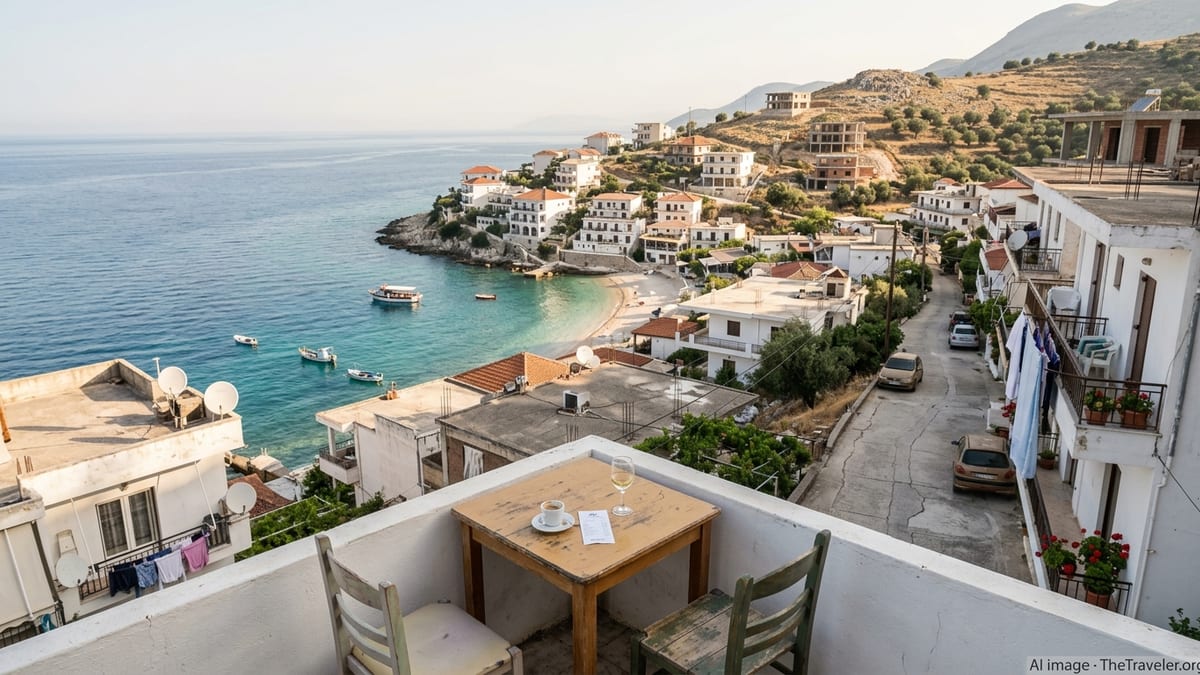
Record Numbers Redraw the Tourism Map of the Western Balkans
Publicly available data from Albanian institutions and regional coverage indicate that the country received around 11.7 million foreign visitors in 2024, a historic high that pushed tourism’s share of the national economy to new levels. Tourism fact sheets for 2024 describe a sector contributing more than a quarter of gross domestic product, with beach tourism alone generating significant revenue compared with earlier years.
Regional visitors still dominate arrivals, with Kosovo holding a leading share of entries across the border. Reports on 2023 statistics show that Kosovar visitors accounted for roughly two fifths of all foreign arrivals, underlining how family ties, shared language and relatively affordable seaside stays on the Adriatic and Ionian coasts continue to draw repeat guests.
What has changed most strongly over the last two seasons is the composition of Western European visitors. Official tourism promotion materials and local economic analysis highlight that arrivals from Italy, Germany and the United Kingdom have expanded quickly since 2022, helped by new air routes, enhanced ferry connections across the Adriatic and aggressive marketing campaigns branding Albania as “Europe’s last undiscovered coast.”
Sector overviews suggest that Italy has now joined Germany, the UK and regional neighbors as one of Albania’s top tourism markets, with estimates for 2023 and 2024 placing Italian arrivals at around or above the one million mark annually. Analysts expect these flows to grow further as new accommodation comes online and more international hotel brands and high-end resorts open along the coast.
Italian, German and UK Travelers Push Demand for Higher-End Stays
Travel research focused on the Albanian market describes a clear shift in expectations from Western European visitors. Italians, who historically viewed Albania primarily as a low-cost alternative for beach holidays or short breaks, are increasingly searching for mid-range and premium experiences that blend comfort with distinctive local character, including agritourism, wine routes and historic-town stays.
Similar patterns are reported for German and UK travelers, whose presence along the so-called Albanian Riviera has grown in parallel with budget and legacy carriers expanding seasonal services to Tirana and coastal airports. Market analyses refer to rising demand for boutique hotels, wellness retreats and design-forward properties in formerly modest seaside villages, especially in the south of the country.
These changing preferences are reshaping investment. Country investment fact sheets list a growing roster of international brands, from large chains in Tirana and Durrës to resort-style projects announced for coastal areas and the Albanian Alps. Domestic investors are also moving quickly to reposition family-run guesthouses and small hotels as “experiential” or “eco-luxury” properties, though sector observers note that standards and genuine sustainability practices vary widely.
For Albania’s policymakers, the influx of higher-spending visitors is both an opportunity and a challenge. While per-visitor revenue is climbing, commentators within the country warn that the current focus on rapid construction of accommodation risks overshooting demand, straining infrastructure and undermining the very landscapes and cultural sites that drew these travelers in the first place.
Vlora Airport and the Vjosa-Narta Wetlands Put Growth Under Scrutiny
The most visible flashpoint in this tension between growth and conservation is the coastal region around Vlorë. The new Vlora International Airport, developed near the Vjosa-Narta protected landscape, has become a symbol of Albania’s push to scale up tourism and of the environmental trade-offs involved. International environmental organizations and wetland specialists have published detailed criticism of the project, pointing to shortcomings in the original environmental impact assessment, its siting within an important bird and lagoon habitat, and the partial redrawing of protected-area boundaries.
Wetlands-focused groups describe the Vjosa-Narta lagoon as a wetland of international importance and an essential stopover for migratory birds. Their reports argue that large-scale infrastructure such as an international airport introduces collision risks for birds, noise pollution and long-term land-use change that may be incompatible with conservation objectives, particularly if traffic grows in line with tourism projections.
Albanian government representatives, in public statements covered by domestic media, have characterized the airport as a strategic project that will extend the tourist season, open southern Albania to direct international flights and reduce travel times for visitors from Western Europe. Supporters of the project frame it as a necessary step to capture the current wave of interest from Italian, German and British travelers, who increasingly seek convenient direct connections rather than long overland journeys.
The controversy around Vlora is now influencing the wider conversation about how and where Albania should build the infrastructure needed for its booming tourism sector. Planning specialists and environmental advocates are using the case to argue for more rigorous, transparent impact assessments and closer alignment with European Union environmental standards as Albania continues accession-related reforms.
Luxury Resorts, Protected Coasts and the Kushner-Linked Dispute
Alongside airports and transport links, coastal resort projects are sharpening debates about the limits of development in protected areas. Over recent weeks, international coverage and online documentation have focused on a proposed luxury resort complex around the Vjosa-Narta, Zvernec and Sazan area, a coastal zone that overlaps with protected wetland and lagoon habitats.
Reports summarize plans for thousands of hotel rooms and extensive leisure facilities on or near land that has held protected status. They also describe the project’s links to a private investment firm associated with Jared Kushner, noting that the scale of the development and its location have attracted intense scrutiny from conservation organizations, local communities and legal observers.
Publicly accessible reporting, including summaries of investigative pieces republished on social platforms, indicates that Albania’s special anti-corruption prosecution office has opened an investigation into past changes to land ownership and protected-area boundaries connected to the project. The same coverage notes that protests by residents and environmental groups have taken place near fenced-off beach areas, with demonstrators opposing what they view as the privatization of public coastal space and the degradation of sensitive habitats.
According to these accounts, the dispute has also attracted attention at the European level. Commentaries relay that European Union institutions have raised questions about whether large-scale tourism construction in formally protected zones is compatible with EU environmental rules, a point with potential implications for Albania’s membership path. The resort controversy has therefore evolved into a broader test of how the country balances investor interest with rule-of-law commitments and ecological safeguards.
What Comes Next for a Destination at a Crossroads
Tourism analysts following Albania describe the country as being at a crossroads familiar to other rapidly emerging destinations. On one side is a powerful growth narrative, with record arrivals from Kosovo, Italy, Germany, the UK and beyond, rising international visibility and a wave of new infrastructure and hospitality investment. On the other is a mounting list of environmental disputes, from airports in wetlands to resort plans in protected coastal zones.
Policy documents and expert commentary suggest that the next phase will depend on how firmly Albania embeds environmental safeguards into tourism planning. Proposals under discussion in the public sphere include tightening construction controls in and around protected areas, improving coastal zoning, enforcing public access to beaches and aligning environmental impact assessment procedures more closely with EU norms.
There is also growing recognition that the country’s long-term appeal to high-value visitors may rely less on sheer volume and more on maintaining authentic landscapes and cultural sites. Sites such as Butrint National Park, a UNESCO World Heritage area in the south of the country, are frequently cited in international travel coverage as emblematic of Albania’s unique blend of archaeology, wetlands and coastline. Conservation-oriented management at such locations is increasingly seen as part of the brand that draws discerning travelers from Italy, Germany, the UK and other markets.
For now, the numbers continue to climb and investment pipelines remain full. Whether Albania can convert this momentum into a model of Mediterranean tourism that couples record arrivals with robust environmental protection will determine if today’s boom becomes a durable success story or a cautionary tale for destinations chasing rapid growth without clear limits.