


More news on this day
Etihad Airways and Romanian flag carrier TAROM are deepening aviation ties between the Gulf and Eastern Europe through a new codeshare partnership that links Abu Dhabi with Bucharest and a string of secondary cities across the region.
Get the latest news straight to your inbox!
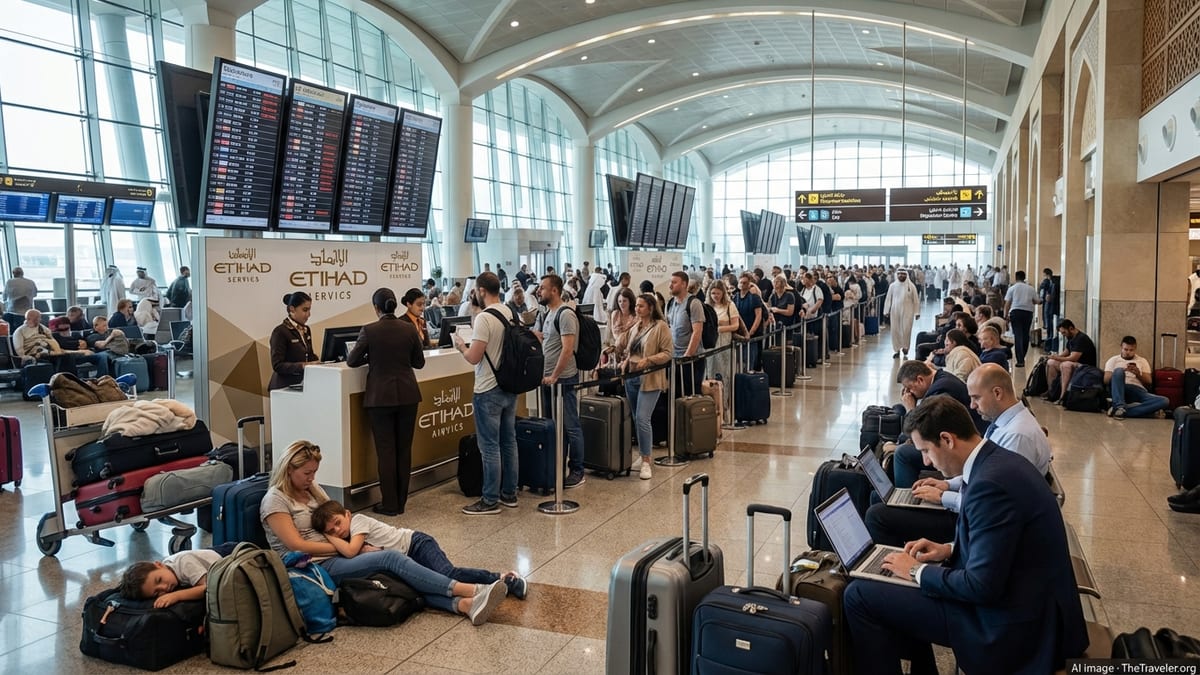
New Codeshare Connects Abu Dhabi to Romania and Beyond
Publicly available information shows that Etihad Airways and TAROM have signed a commercial codeshare agreement designed to expand travel options between Eastern Europe, the Middle East, Africa, Asia and Australia. The cooperation centers on Etihad’s hub at Abu Dhabi and TAROM’s operations from Bucharest, creating a new bridge between the two networks.
According to the Romanian carrier’s latest announcement, the deal enables Etihad passengers to connect from Abu Dhabi to Bucharest and onward to a series of Romanian destinations, while also providing Romanian travelers with streamlined access to Etihad’s long haul services. The arrangement is presented as part of a wider strategy by both airlines to strengthen connectivity through partnerships rather than standalone point to point flying.
Reports indicate that the tie up comes as Gulf carriers continue to rebuild and expand global networks, while smaller European airlines look for ways to plug into long haul traffic flows. For TAROM, the agreement offers greater visibility in markets where it does not operate directly, while Etihad gains more comprehensive coverage across a part of Europe where it has had limited reach.
Coverage in specialist aviation outlets highlights that the move effectively gives Abu Dhabi a deeper foothold in Eastern Europe, an area traditionally linked to global long haul networks via hubs in Western Europe or Istanbul. The partnership is framed as complementing, rather than replacing, existing one stop options for travelers in the region.
Expanded Reach Across Romanian Cities and Regional Capitals
Details shared by TAROM show that the new codeshare initially covers a group of domestic routes radiating from Bucharest. Etihad ticketed customers will be able to connect to cities including Baia Mare, Cluj Napoca, Iasi, Oradea, Suceava and Timisoara, using TAROM operated flights that carry Etihad’s designator code.
In addition to Romanian destinations, the partnership extends to several regional capitals served by TAROM from Bucharest. Published information lists Budapest, Sofia, Belgrade and Chisinau among the cities now woven into Etihad’s sales network through the agreement, creating a broader catchment area across Eastern and Southeastern Europe.
Industry analyses note that these secondary and tertiary markets have often been underserved in terms of direct long haul connectivity. Travelers from such cities typically rely on multiple connections or lengthy surface journeys to reach major hubs. The Etihad TAROM link aims to shorten those journeys by turning Bucharest into a more effective gateway for Abu Dhabi bound passengers.
For airports in Romania and neighboring countries, the added traffic potential is viewed as a modest but meaningful boost. Aviation commentary points out that codeshare arrangements of this kind can support route sustainability by feeding additional passengers into existing services, rather than requiring each carrier to launch its own independent long haul operation.
Upcoming Abu Dhabi–Bucharest Service Anchors the Partnership
Coverage by industry news outlets indicates that the codeshare agreement is being launched ahead of Etihad’s planned nonstop service between Abu Dhabi and Bucharest. Reports describe the new route as scheduled to start near the end of 2026, giving Abu Dhabi a direct link to the Romanian capital and, via TAROM, to surrounding markets.
While exact schedules remain subject to change, the route is expected to operate several times per week, with timings structured to connect efficiently with Etihad’s long haul bank at Zayed International Airport. This would enable same day transfers from Eastern Europe to destinations across Asia, the Indian Ocean, Africa and Australia.
Route development specialists suggest that anchoring a codeshare on a dedicated nonstop flight strengthens the commercial logic of the partnership. Instead of relying entirely on third country connections, the Abu Dhabi–Bucharest service provides a clear focal point for marketing and scheduling, turning Bucharest into a defined spoke on Etihad’s network plan.
For TAROM, the introduction of Etihad operated flights on the city pair may also contribute to a rebalancing of capacity and competition on links between Romania and the Gulf region. Observers note that travelers in the market will gain another option alongside existing one stop itineraries via hubs such as Istanbul and Doha.
Strategic Context in a Competitive European Market
The Etihad–TAROM collaboration is emerging in a period of renewed competition among global network carriers for European traffic. In recent months Etihad has announced a series of route launches and frequency increases across Europe and beyond, including new services to Krakow and Luxembourg, signaling a renewed focus on connecting medium sized cities to its Abu Dhabi hub.
Analysts describe the TAROM agreement as consistent with that approach. Rather than attempt to establish its own presence in every Eastern European market, Etihad is turning to a local flag carrier with established slots, local brand recognition and regional know how. TAROM, in turn, gains association with a major Gulf hub that can extend its reach to long haul destinations that would be unviable to serve directly.
Aviation commentary also notes that Eastern Europe remains a relatively fragmented region in terms of airline alliances and partnerships. While some carriers are embedded in the three large global alliances, smaller operators often pursue bilateral deals to secure feed and distribution. The Etihad–TAROM agreement fits into this pattern, adding another layer to an already complex web of interline and codeshare relationships across the continent.
From a passenger perspective, the main effects are expected to be seen in simplified ticketing and baggage handling, more harmonized schedules and a wider range of one stop options available under a single booking. Travel industry observers suggest that pricing dynamics will depend on how aggressively the partners choose to promote the new links, particularly during off peak seasons.
Implications for Travelers and Regional Tourism
Travel and tourism stakeholders in Romania and neighboring countries are watching the development with interest, as greater access to Abu Dhabi and Etihad’s network could influence visitor flows in both directions. Easier connectivity may encourage more leisure and business travel from the Gulf and Asia to Romanian and Eastern European destinations that remain relatively less known on the global tourism map.
For outbound travelers in the region, the codeshare is expected to improve options to reach destinations across the Indian Ocean, Southeast Asia and Australia, which typically involve at least one long haul sector via a hub in the Middle East or Western Europe. Abu Dhabi’s position as a transfer point may appeal to passengers seeking alternative routings or schedules to those offered by competing hubs.
Commentary in regional media highlights that the success of the initiative will depend on reliable operations and clear communication to passengers about the combined product. As with other codeshares, a journey might involve aircraft and onboard standards from two different airlines, which requires careful alignment of service expectations.
For now, the new Etihad–TAROM links mark another step in the gradual reshaping of air connectivity across Eastern Europe, with Gulf hubs playing an increasingly prominent role in channeling long haul traffic to and from the region.