


More news on this day
An American Airlines flight operating as AA1314 from Philadelphia to Austin diverted to San Antonio after departure, performing an emergency landing that capped an already delayed departure from Philadelphia International Airport and disrupted onward plans for dozens of travelers.
Get the latest news straight to your inbox!
Delayed Departure from Philadelphia Precedes In-Flight Diversion
Publicly available flight tracking data and passenger accounts show that AA1314, scheduled to operate from Philadelphia International Airport to Austin, left Philadelphia significantly behind its planned departure time. The aircraft remained on the ground longer than scheduled at the gate, contributing to a late pushback and extended time before takeoff.
Reports indicate that the delay in Philadelphia was associated with ground handling and congestion, a recurring operational challenge at one of American Airlines’ key hubs. Passengers described a protracted wait on the ground, with the aircraft held at the gate and on the taxiway before finally departing for central Texas.
Once airborne on the route toward Austin, the flight did not proceed as originally planned. Flight-tracking records show the aircraft turning south toward San Antonio, rather than continuing directly to Austin, signaling a diversion away from its intended destination.
The change in routing effectively converted what was scheduled as a straightforward hub-to-point service into an irregular-operation event, with knock-on effects for arrival times, connecting itineraries, and crew duty schedules.
Emergency Landing at San Antonio International Airport
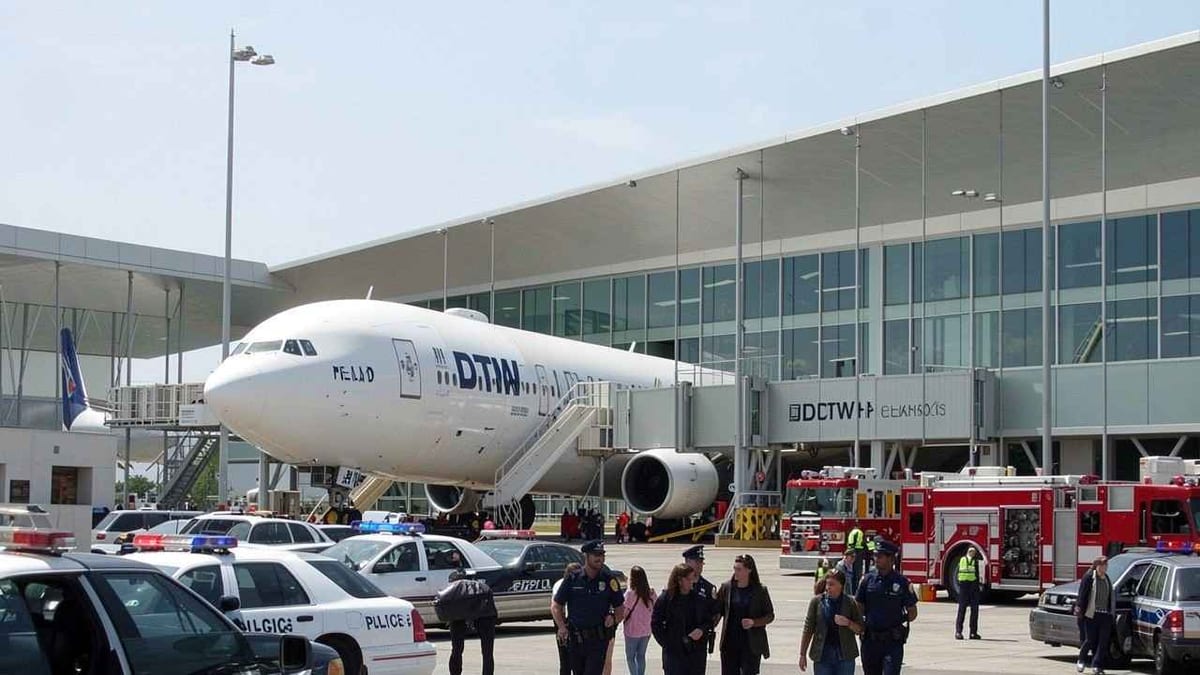
Data from live flight monitoring platforms indicate that the AA1314 service initiated a descent and approach into San Antonio International Airport after the in-flight diversion. The landing was treated as an emergency arrival, with airport procedures activated in line with standard aviation safety protocols.
Information compiled from aviation tracking services and subsequent coverage suggests that the emergency landing was precautionary in nature, consistent with industry practice when crews receive cockpit indications or encounter circumstances that warrant a diversion to the nearest suitable airport. The aircraft followed a stabilized approach profile into San Antonio, where it landed without reported injuries.
San Antonio International Airport is a regular station for American Airlines, with established ground operations, maintenance support, and emergency response capability. This made it a logical diversion point for a flight already en route to Austin, given its infrastructure and proximity within the Texas airspace.
Following the landing, the aircraft was brought to a parking stand for inspection and for passengers to be deplaned. Available information does not point to any runway excursion or structural damage, underscoring that the emergency declaration was primarily a safety-focused operational measure.
Impact on Passengers and Onward Travel to Austin
The diversion of AA1314 from Austin to San Antonio created immediate logistical challenges for travelers who had planned to arrive in the Texas capital. According to passenger reports shared through public forums and social media posts, many customers faced uncertainty around missed connections, ground transportation arrangements, and rebooked itineraries.
Standard airline practice in such cases typically includes coordinating hotel accommodation where required, rebooking on later services, and offering ground transport when diversions occur between relatively close airports. Although the precise mix of support on this specific flight has not been fully detailed in public reporting, the combination of a delayed departure and an unplanned landing in San Antonio meant that some travelers arrived in Austin significantly later than expected.
The disruption also extended to checked baggage and onward connections. When a diversion occurs, bags often remain with the aircraft until safety checks are complete and new routings are established, which can lengthen the time required for passengers to reunite with their belongings or transfer to connecting flights.
The episode illustrates how an incident on a single sector can cascade through travel plans, particularly on busy hub days when seat availability is tight and rebooking options are limited across the network.
Operational Context and Safety Procedures
According to publicly available information from aviation safety resources, diversions and emergency landings remain relatively rare compared with the total number of commercial flights operating daily in the United States. When they do occur, they typically reflect a cautious approach by flight crews who elect to land as soon as practical when confronted with technical indications, medical incidents on board, or severe weather en route.
American Airlines, like other major carriers, operates under Federal Aviation Administration regulations that prioritize landing at the nearest suitable airport when safety margins could be affected. Diverting an aircraft to an alternative airport such as San Antonio allows crews to access maintenance teams and emergency support while minimizing risk to passengers and crew.
San Antonio’s role as a diversion airport for flights bound for central and south Texas is supported by the airport’s runway length, air traffic control capabilities, and regular service by large mainline aircraft. These characteristics make it a common alternate in flight planning for routes crossing the region.
While incidents like the diversion of AA1314 draw attention from travelers and aviation observers, data compiled by industry groups and regulators consistently show that commercial air travel in the United States remains one of the safest modes of transportation, in part because of conservative procedures that favor precautionary landings when any potential issue arises.
Broader Implications for Philadelphia–Austin Operations
The AA1314 diversion comes against a backdrop of operational complexity on routes involving Philadelphia, a major hub with dense schedules and frequent congestion in peak periods. Travelers have periodically reported extended ground delays, gate holds, and ground-crew constraints that can compress turnaround times and add pressure to tightly timed rotations.
For the Philadelphia to Austin market, irregular operations such as diversions, missed connections, and crew timing limitations can influence how travelers plan and buffer their itineraries. Some passengers choose longer connection windows or early-morning departures to reduce the risk of misconnecting when unforeseen events occur along the route.
Industry analysts note that as airlines continue to rebuild and reshape networks across the United States, operational resilience, including contingency plans for diversions and emergency landings, remains a key point of focus. The handling of AA1314 illustrates how quickly a routine domestic leg can shift into disruption management mode, testing communication channels between crews, operations centers, airports, and travelers.
For passengers on AA1314, the experience meant an unplanned stop in San Antonio and a longer journey to Austin than expected. For the broader network, the flight’s diversion serves as another example of how safety-focused decisions in the cockpit intersect with the travel experience on the ground, reinforcing both the robustness and the fragility of tightly scheduled domestic air service.