


More news on this day
Atlanta’s position as one of the world’s busiest aviation gateways is poised to grow as American Airlines folds the city more tightly into its 2027 global network expansion, adding new long haul options to Europe and Asia that are expected to boost both international visitor numbers and outbound travel demand.
Get the latest news straight to your inbox!
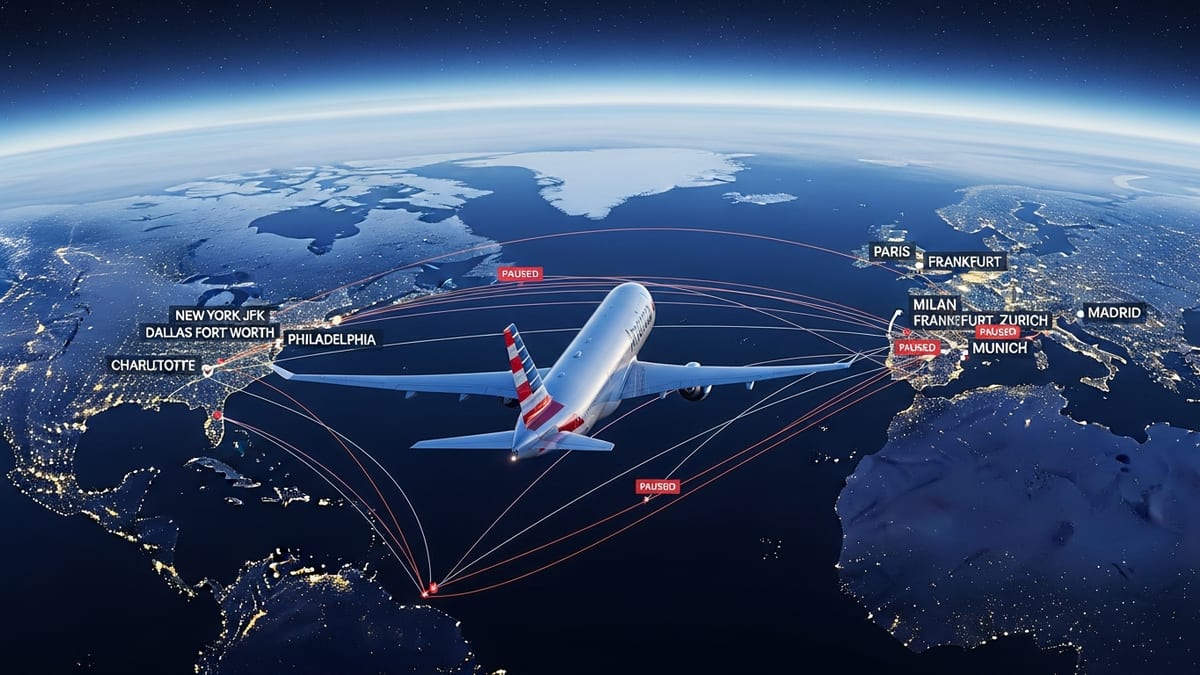
American’s 2027 Strategy Puts More Long Haul Focus on the Southeast
Publicly available network data for summer 2027 shows American Airlines preparing a wave of new intercontinental services, including seven additional nonstop routes and three fresh European destinations across its system. The carrier is adding Vienna, Reykjavik and Porto to its map while restoring or expanding links to major hubs such as Tokyo and Amsterdam, part of a broader push to grow its long haul presence toward the end of the decade.
According to independent schedule analysis and industry coverage, the new 2027 routes are structured around American’s existing hubs, with Chicago, New York and Philadelphia playing central roles in the expansion. Chicago O’Hare is slated to regain nonstop service to Tokyo Narita, while New York John F. Kennedy gains new links to Amsterdam and Nice and Philadelphia adds additional European points as American leans on its transatlantic strength.
Although Atlanta is not an American hub, the airline has been steadily building its presence at Hartsfield Jackson Atlanta International Airport through domestic connections and select international services. Route planners and airport data providers note that American’s growing network depth in Europe and Asia in 2027 will give Atlanta based travelers more one stop itineraries over its core hubs, directly competing with entrenched rivals for premium long haul traffic.
Industry commentary suggests that American’s overall international growth strategy remains tied to its joint business and alliance partners, with the carrier targeting roughly 200 international capable aircraft by the end of the decade. That larger long haul fleet underpins the 2027 schedule changes and provides the capacity needed to route more connecting passengers from secondary markets such as Atlanta onto transatlantic and transpacific services.
New One Stop Links from Atlanta to Emerging European Hotspots
As American adds new European cities to its 2027 schedule, Atlanta travelers are expected to gain faster one stop connections to destinations that currently require more circuitous routings. Published route announcements highlight new services from Philadelphia to Vienna, Porto and Reykjavik and expanded flying from New York to Amsterdam and Nice, creating additional connection banks for southeastern U.S. origin passengers.
Travel industry reports detail how these new routes are timed to support evening departures from the East Coast and morning arrivals in Europe, which typically align well with late afternoon feed from major U.S. cities. With Atlanta already linked to American’s hubs by frequent domestic flights, the additional European gateways effectively widen the menu of one stop options beyond the traditional pairing of Atlanta with London via partner networks.
For Atlanta’s tourism sector, this shift is significant. Data from airport and city economic development reports shows that Europe remains the largest long haul source region for inbound visitors to Georgia, and greater schedule variety tends to correlate with higher visitor numbers and more competitive fares. American’s new European flights are expected to stimulate both inbound and outbound demand, particularly to secondary cities which have seen limited nonstop coverage from the United States.
Analysts also point out that the new services may redirect some Atlanta travelers who currently connect over rival hubs or foreign carriers. With American marketing through its oneworld alliance and joint business partnerships, Atlanta based passengers could increasingly find competitive itineraries via Philadelphia, New York or Chicago, reinforcing the city’s role as a feeder market into the broader transatlantic network.
Chicago Tokyo Service and Stronger Asia Access for Atlanta Flyers
The most notable Asia development in American’s 2027 plans is the restoration of Chicago O’Hare to Tokyo Narita service using Boeing 787 9 aircraft. Aviation trade publications and schedule filings indicate that the route is planned as a daily, year round operation, reflecting renewed confidence in transpacific demand and the carrier’s long term cooperation with Japan Airlines.
For Atlanta, which currently has limited nonstop connectivity to Asia and is largely dependent on a single dominant carrier for direct flights to Japan, the Chicago Tokyo link provides a new one stop option via American’s domestic network. Booking tools and airport route maps show that Atlanta Chicago remains one of American’s busiest internal corridors, making it a natural feed path into the revived transpacific service.
Travel analysts note that while American has scaled back some Asia operations over the past decade, the 2027 schedule adjustments point to a more targeted approach rather than a retreat from the region. By anchoring Asia flying at strong hubs like Chicago and pairing those long haul departures with dense domestic feed from cities such as Atlanta, the airline seeks to capture corporate and leisure travelers who value alliance wide connectivity and mileage earning across itineraries.
In practice, this means Atlanta travelers bound for Tokyo and onward points in East and Southeast Asia may see more competitive itineraries through American’s network, particularly when combined with oneworld partner connections beyond Tokyo. As capacity returns across the Pacific, pricing pressure often follows, which could translate into lower fares or improved product offerings for passengers starting their journeys in Atlanta.
Competitive Pressure at the World’s Busiest Airport
Hartsfield Jackson Atlanta International Airport holds the title of the world’s busiest airport by passenger numbers and serves as the primary hub for Delta Air Lines, which operates a fortress style presence at the field. Industry references describe Atlanta as Delta’s largest hub and a major gateway to both Europe and Asia, with the carrier maintaining an extensive portfolio of nonstop long haul routes that includes direct service to Japan.
American’s decision to deepen its 2027 international network while strengthening connectivity from non hub cities like Atlanta intensifies competition for long haul travelers in the Southeast. Although Delta’s nonstop portfolio from Atlanta remains broader, American’s combination of new European destinations and revived Asia links offers alternative routings that may appeal to cost conscious travelers, loyalty program members, and those seeking specific city pairs not available nonstop from Atlanta.
Airport planning documents and city council material show that Atlanta has aggressively pursued new international routes in recent years, adding dozens of services to Europe, the Caribbean and Latin America. The presence of another major U.S. carrier actively investing in long haul connectivity, even via connecting hubs rather than local nonstops, aligns with the city’s broader ambition to diversify its global access and reduce reliance on a single airline for intercontinental links.
For local tourism officials and business travel planners, the growing range of itineraries available on American and its partners can be leveraged when courting conventions, sporting events and corporate relocations. More airlines competing on long haul traffic typically leads to a wider choice of schedules, cabins and fares, which can be a selling point when promoting Atlanta as both a destination and a base for international operations.
Implications for Travelers and the Regional Economy
As American’s 2027 schedule gradually opens for sale, Atlanta travelers are expected to see more connecting options populate fare search tools, particularly for spring and summer departures. Industry advice commonly highlights that introductory fares and promotional offers often accompany new route launches, which could benefit early bookers looking to reach emerging European hotspots or secure seats on the restored Chicago Tokyo service.
On the economic front, additional long haul connectivity, even when provided through connecting hubs rather than new local nonstops, tends to support higher volumes of international visitors and greater outbound mobility. Research on air service and regional growth often links expanded route maps with increased foreign direct investment, tourism spending and academic or cultural exchanges, outcomes that align with Georgia’s efforts to attract overseas partners.
For American Airlines, building Atlanta into a stronger feeder market for its expanded 2027 network supports aircraft utilization and strengthens its competitive position against other U.S. global carriers. For Atlanta, the payoff arrives in the form of more ways to connect to Europe and Asia, more pricing discipline across competing airlines and alliances, and a clearer role in the evolving map of global air travel.
As schedules firm up and additional announcements emerge, travelers and industry observers will be watching closely to see how much of American’s long haul growth translates into tangible service improvements for Atlanta based passengers and how rivals respond at the world’s busiest airport.
American Airlines 2027 global routes announcement
AeroRoutes analysis of American Airlines summer 2027 intercontinental network
FlyStayNews coverage of American Airlines’ seven new 2027 nonstop routes
Travel + Leisure round up of new U.S. to Europe flights for 2027
FlightConnections overview of current Atlanta long haul connectivity