


More news on this day
An American Airlines Boeing 737-800 operating as Flight 2067 from Indianapolis to Chicago diverted back to Indianapolis International Airport shortly after departure, with publicly available flight tracking data indicating a precautionary return and a safe landing for all on board.
Get the latest news straight to your inbox!
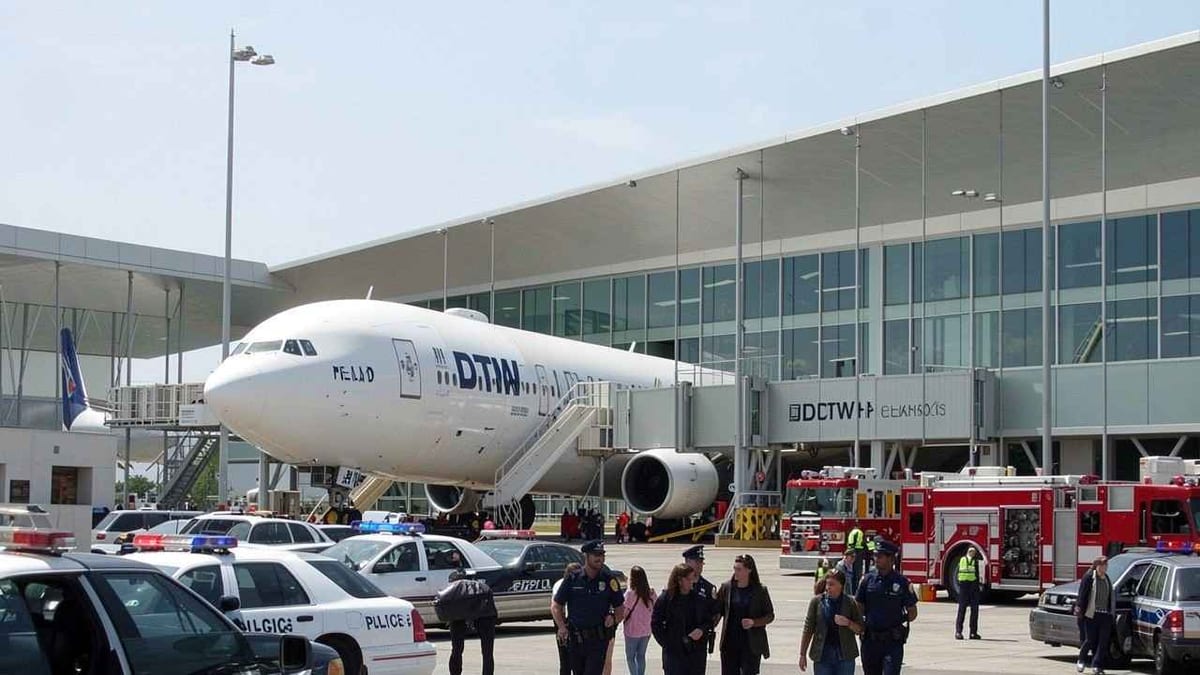
Flight From Indianapolis to Chicago Cuts Journey Short
Flight information platforms tracking American Airlines services between Indianapolis and Chicago show that a regularly scheduled morning departure aboard a Boeing 737-800 left Indianapolis bound for Chicago O’Hare before reversing course and returning to its origin airport instead of completing the short hop to Illinois.
Data for the particular rotation identified as Flight 2067 indicate that the aircraft climbed out of Indianapolis International Airport and leveled off before turning back toward the city, following a holding pattern consistent with standard airline and aviation procedures when a crew elects to return to the departure airport. The flight subsequently landed back at Indianapolis, where it taxied to the gate.
Reports compiled from flight status boards and aviation tracking services suggest that the interruption took place relatively early in the journey, during a phase when aircraft remain within straightforward reach of the departure field. The sequence of events meant the flight did not reach Chicago as scheduled and that onward plans for some travelers were disrupted.
The incident is the latest example of a short-haul U.S. domestic flight being cut short so that a crew can address an unexpected situation on the ground rather than in the air, a pattern that is broadly consistent with how major U.S. carriers manage potential operational or technical concerns.
Precautionary Returns Common in Modern Airline Operations
Publicly available safety guidance and airline policy summaries note that diversions or returns are frequently precautionary rather than a sign of imminent danger. Analysts often point out that modern commercial aircraft are designed with significant redundancy, and that returning to the gate allows airline maintenance teams to conduct inspections with full access to tools, spare parts, and technical staff.
Industry case studies published in recent months, including coverage of other American Airlines flights that have diverted or returned to departure airports, underscore that such decisions are typically driven by a conservative approach to risk management. Crews may decide that any irregular indication, even if minor, is best investigated with the aircraft on the ground and passengers disembarked.
In situations like the diversion of Flight 2067, passengers commonly experience additional time on board during taxiing and post-landing checks, followed by either a change of aircraft or a rescheduled departure. Available reporting on recent diversions across U.S. airlines suggests that outcomes range from relatively short delays to full cancellations depending on the cause, crew duty limits, and aircraft availability.
Travel guidance materials for U.S. carriers also emphasize that, when a diversion stems from factors categorized as beyond an airline’s control, passengers may face different rebooking and compensation options than in situations linked to controllable operational issues.
Indianapolis–Chicago Corridor Sees Heavy Regional Traffic
The Indianapolis to Chicago route is one of the most frequently traveled short segments in the Midwest, with a mix of mainline and regional services connecting Indianapolis International Airport and Chicago O’Hare International Airport each day. Timetables published for June 2026 show both American Airlines and United Airlines operating multiple frequencies on the corridor using narrowbody jets and regional aircraft.
Flight schedule summaries for Indianapolis highlight Chicago as one of the busiest destinations from the Indiana capital, alongside major hubs such as Dallas, Charlotte, and Atlanta. The short sector length, typically around an hour of scheduled flight time, makes it attractive for connections onto longer domestic and international services at O’Hare.
Against this backdrop of heavy traffic, a single diverted flight such as American Airlines 2067 can still cause ripple effects for travelers connecting onward to other destinations. Passengers with tight connections from Chicago to other U.S. cities or overseas itineraries may need to be rebooked onto later flights, sometimes involving rerouting through alternate hubs.
Travel planning resources often recommend that passengers using busy hubs like Chicago O’Hare allow for buffer time between regional feeder flights and long haul departures, precisely because weather, congestion, or operational issues on short routes can lead to schedule changes.
What Passengers Can Expect After a Diversion
Consumer travel advisories and airline policy documents describe a relatively standard process following an event like the return of Flight 2067 to Indianapolis. Once the aircraft is parked at the gate, passengers are typically asked to remain seated until the crew confirms that it is safe to disembark, after which airline ground teams manage the transition to the terminal.
From there, travelers usually receive updated information through a combination of airport departure boards, mobile apps, and email or text notifications. Many major carriers, including American Airlines, encourage passengers to rely on official digital channels for real time rebooking options, seat assignments on alternative flights, and information about any overnight accommodation or meal support that may apply.
Recent reporting on diverted American Airlines flights indicates that rebooking may occur automatically for some travelers, particularly those with through tickets to onward destinations. Others may have the option to modify itineraries through self-service tools or at staffed customer service points in the terminal.
Experienced travelers often note that holding onto original boarding passes, monitoring notifications closely, and checking baggage tracking features can help smooth the process after an unexpected return or diversion, especially on busy routes like Indianapolis to Chicago where multiple carriers and flight numbers can operate within short time windows.
Broader Context for American Airlines Operational Disruptions
Across the wider American Airlines network in 2026, published analyses and traveler accounts have highlighted a mix of weather related, staffing related, and technical disruptions influencing operations. Flight diversions, including returns to departure airports, form a relatively small subset of overall schedule changes, but they tend to attract attention because they occur after passengers have already boarded and departed the gate.
Industry observers point out that similar events are reported at other large U.S. carriers, reflecting common factors such as air traffic control constraints, thunderstorms along key routes, and the complexity of maintaining dense schedules with high aircraft utilization. In this environment, the decision to return a flight like AA2067 to Indianapolis aligns with a system that prioritizes caution when faced with any irregularity.
For Indianapolis International Airport, which continues to see steady growth in both domestic and connecting traffic, the handling of an event such as the diversion of a Chicago bound American Airlines flight also reflects the airport’s role as a regional node within the national network. Operations data and airport information resources show ongoing investments in facilities and ground handling intended to keep such irregular operations manageable.
As of the latest update, public flight tracking and schedule information indicate that services on the Indianapolis to Chicago corridor continue to operate, with the diversion of American Airlines Flight 2067 appearing as an isolated irregularity rather than a sign of broader disruptions on the route.