


More news on this day
Heavy rain sweeping across the Boston area in late July 2026 triggered widespread disruption at Logan International Airport, with publicly available tracking data showing hundreds of delays and dozens of cancellations as airlines struggled to keep flights moving through low clouds, poor visibility and congestion in the wider Northeast corridor.
Get the latest news straight to your inbox!
Stormy Skies Slow One of New England’s Busiest Hubs
According to data compiled from major flight-tracking platforms, a series of intense showers and embedded thunderstorms over several days in late July led to prolonged delays and cancellations at Boston Logan. Periods of torrential rain and low ceilings limited the airport’s capacity, forcing air-traffic managers to meter arrivals and departures and leaving aircraft waiting on the ground at origin airports across the country.
Weather summaries for the region show that the heaviest rain bands passed through during peak travel periods, compounding the impact on schedules. With storm cells also affecting other key Northeast hubs, including New York and Washington, delays at Logan frequently coincided with restrictions elsewhere, reducing the options for rerouting aircraft and passengers.
Historical performance data for Boston indicate that the airport is particularly vulnerable when poor weather restricts the number of runways that can be used at the same time. When operations are compressed during heavy rain or low visibility, even minor disruptions can cascade into significant delays as airlines juggle arriving crews, aircraft positioning and turnaround times.
In this latest episode, the combination of summer thunderstorm patterns and already busy July traffic created conditions that amplified every slowdown. By the end of several affected days, aggregated figures showed that delayed departures and arrivals at Logan numbered in the hundreds, with dozens of flights removed from the schedule entirely.
Hundreds of Delays, Dozens of Cancellations Across Multiple Carriers
Publicly available dashboards tracking United States flight operations showed that Logan shifted from relatively normal operations to widespread disruption as the heaviest rain moved in. Over the worst 24-hour periods, delays mounted into the several-hundred range, affecting a mix of short-haul shuttle routes, transcontinental services and international flights.
While exact tallies varied by source and time of day, the pattern was consistent: rolling departure holds, extended arrival queues and cancellations clustered in the late afternoon and evening windows when thunderstorms were most active. Airlines with large presences at Logan saw their schedules particularly squeezed as they attempted to prioritize limited takeoff and landing slots.
Low-cost and network carriers alike were forced to thin out operations, in some cases preemptively canceling flights when forecasts indicated that sustained heavy rain and low clouds would push the airport into flow-control measures. In several instances, flights that did depart from other cities bound for Boston were slowed en route by air-traffic restrictions over the Northeast, adding further knock-on delays to later departures from Logan.
Travelers connecting through Boston also felt the impact as missed connections and crew timing limits forced additional schedule adjustments. Industry analyses of recent severe-weather events suggest that such secondary effects can persist for a day or more after conditions improve, as airlines work to reposition aircraft and crews that ended up out of place.
Regional Weather Patterns and Network Ripple Effects
Meteorological discussions for the period indicate that the heavy rain over Boston was part of a broader unsettled pattern affecting much of the Mid-Atlantic and New England. Slow-moving frontal boundaries and moist air from the south fueled repeated downpours, while isolated thunderstorms produced sharp reductions in visibility and occasional lightning near flight paths.
Because many of Logan’s busiest routes connect to other weather-sensitive airports along the East Coast, disruptions quickly spilled beyond Massachusetts. When storms were active over New York or Washington at the same time as in Boston, flights in both directions faced compounding constraints, including holding patterns, ground-delay programs and reduced arrival rates.
Studies examining extreme weather and aviation performance note that such multi-airport events can generate disproportionate delays compared with disruptions confined to a single hub. Once a critical number of flights are slowed or canceled, passenger itineraries start to unravel, and airports like Logan, which serve as both origin and connecting points, can experience crowded terminals and longer-than-usual dwell times for stranded travelers.
In this July episode, these network-wide dynamics were evident in the way disruptions at Logan aligned with reports of delays and cancellations at several other major U.S. airports. Even flights operating under clear skies at their departure points sometimes faced indirect delays when their aircraft or crew had previously been caught up in the Boston weather system.
Stranded Passengers, Crowded Terminals and Limited Options
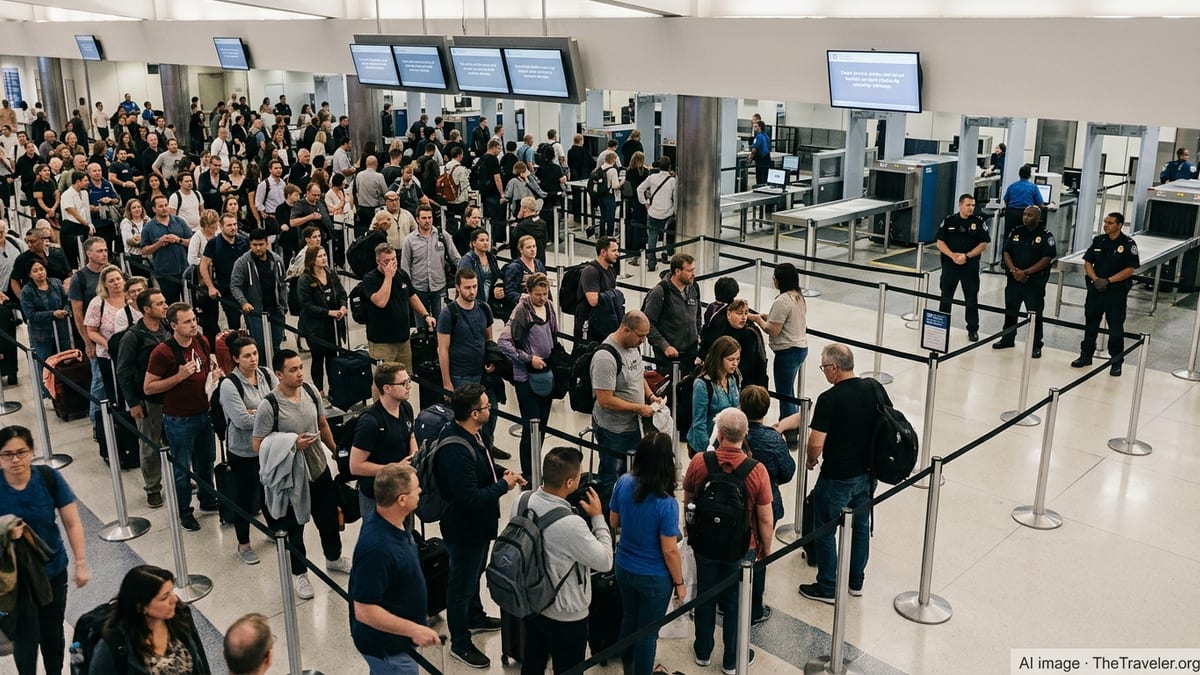
Accounts shared on public forums by travelers moving through Boston during the heaviest rains describe crowded gate areas, long lines at service counters and frequent schedule changes on departure boards. Some passengers reported multiple rebookings over successive days as both their original and alternative flights were delayed or canceled.
July is among the busiest travel months for New England, which meant that many flights were already operating near full capacity before the storms arrived. With limited spare seats available, especially on popular evening departures, travelers whose flights were canceled sometimes struggled to find same-day alternatives out of Logan. In some cases, people opted to reroute via smaller regional airports or delay trips by several days.
Publicly available information on airline policies shows that, in weather-related disruptions, carriers typically focus on no-fee rebooking rather than compensation, since weather is categorized as outside their direct control. As a result, many passengers at Logan during the July storms relied on travel insurance, credit-card protections or personal flexibility to absorb additional costs for accommodation and meals.
Some travelers also described using rail or bus services as backup options for shorter regional journeys once it became clear that further rain bands were likely to trigger additional delays. Transportation researchers have noted that heavy precipitation events often push passengers toward alternative modes when trips are time-sensitive and the distance is manageable.
Operational Strain Highlights Broader Climate and Capacity Questions
The July disruption at Logan adds to a growing list of recent weather events that have tested the resilience of major U.S. airports. Over the past several years, Boston has experienced multiple storms that brought significant flight cancellations and delays, underscoring how quickly severe precipitation can push complex aviation systems to their limits.
Climate assessments for the Northeast point to a long-term increase in intense rainfall events, raising questions about how airports like Logan can adapt infrastructure and procedures to maintain reliability. Even when safety is not directly threatened, more frequent instances of heavy rain and embedded thunderstorms can strain runway capacity, ground operations and air-traffic management.
Industry analyses suggest that a mix of strategies, from improved forecasting and dynamic scheduling to infrastructure upgrades that allow for more flexible runway use in poor weather, may be necessary to reduce the scale of future disruptions. However, such changes require coordination across airport operators, airlines and regulators, and typically take years to implement.
For now, travel experts emphasize that passengers flying through weather-prone hubs during peak summer months should plan for potential delays, build extra time into connections and monitor conditions closely. The late-July experience at Boston Logan illustrates how quickly a few hours of heavy rain can ripple outward into hundreds of delayed flights, dozens of cancellations and a challenging travel day for thousands of people.