


More news on this day
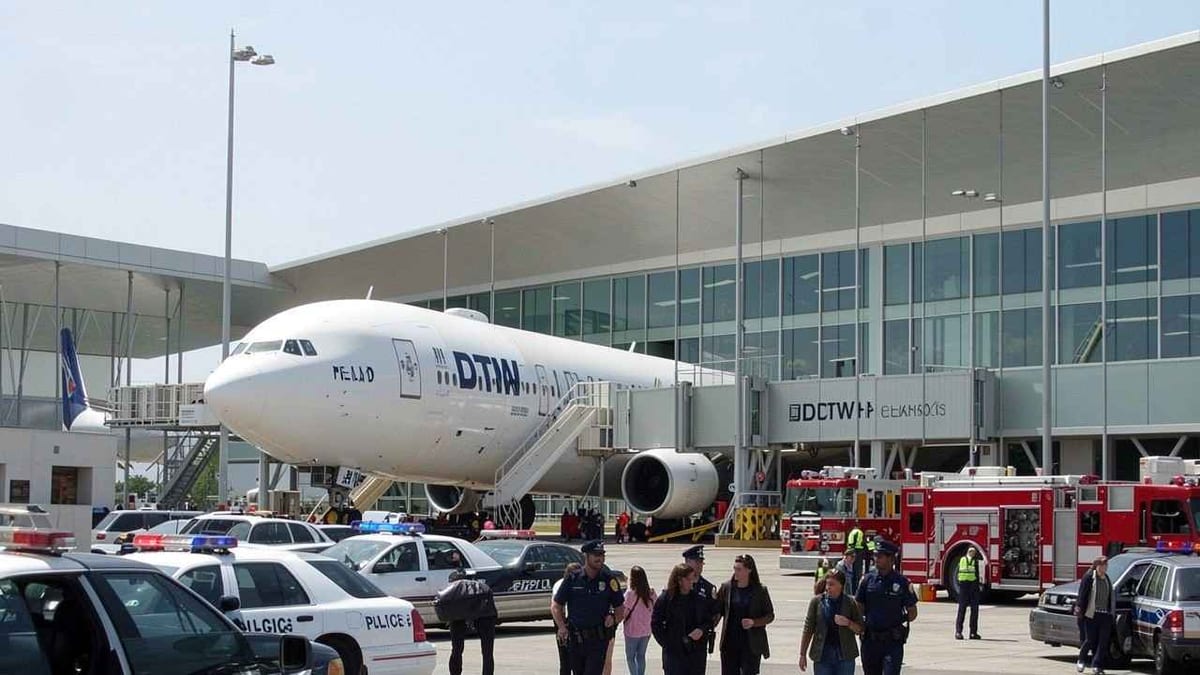
A United Airlines Boeing 737 operating as flight UA1559 from Santa Ana, California, to Newark, New Jersey, diverted to Cleveland Hopkins International Airport on July 28, 2026, after weather-related disruptions affected arrivals into the New York region, according to publicly available flight-tracking and schedule data.
Get the latest news straight to your inbox!
Coast-to-Coast Flight Interrupted by Weather Over Northeast
Flight records show that UA1559 departed from John Wayne Airport in Santa Ana on July 28 as a regularly scheduled transcontinental service bound for Newark Liberty International Airport. The aircraft, identified in public databases as a Boeing 737, followed its planned route across the continental United States before altering course as it approached the northeastern corridor.
Data from multiple flight-tracking platforms indicate that the aircraft shifted from a direct arrival profile into Newark to a track toward Cleveland Hopkins International Airport. The change occurred as thunderstorms and convective weather affected a broad area around northern New Jersey and neighboring states, part of a wider pattern of summer storms that disrupted airline operations across the East Coast.
Publicly accessible diversion histories for similar Newark inbound flights in recent weeks show a pattern of reroutes to alternate airports such as Cleveland, Boston, and other regional hubs when storms or low visibility have temporarily reduced arrival capacity. UA1559’s diversion fits into that broader operational picture, in which carriers route aircraft to airports with suitable runway length, available ground handling, and options for refueling and passenger reaccommodation.
No publicly available reports on July 28 indicated any onboard emergency or mechanical issue for UA1559, and the diversion has been described in open sources as a weather-related operational decision rather than a safety incident involving the airframe.
Cleveland Hopkins Serves as Strategic Alternate for Newark Traffic
Cleveland Hopkins International Airport has increasingly appeared as an alternate landing point for flights originally bound for Newark when weather or traffic constraints develop over the New York area. Its location within reasonable repositioning distance, as well as its runway configuration and existing United Airlines presence, make it a practical option for temporary diversions.
Operational guidance and diversion practices publicly posted by aviation authorities describe how crews and airline operations centers weigh fuel reserves, real-time weather radar, air traffic control flow restrictions, and available alternates when deciding whether to proceed, hold, or divert. In situations where storm cells linger near arrival paths or holding stacks become saturated, routing an aircraft to a prepared alternate can reduce airborne holding time and preserve safety margins.
In the case of UA1559, flight-tracking data show a relatively direct repositioning toward Cleveland rather than extended holding near Newark. That pattern is consistent with a preemptive decision to land at an alternate where ground infrastructure was available, instead of waiting for conditions and traffic programs to improve in the New York airspace.
Recent entries on aviation forums and traveler discussion boards have highlighted a series of diversions to Cleveland for flights bound for Newark during periods of severe thunderstorms, underscoring the airport’s growing role as a relief point for the congested northeastern hub system.
Passenger Experience Shaped by Diversion Protocols
For travelers aboard UA1559, the diversion would have meant an unscheduled stop and a revised arrival timeline into the New York region. Publicly available accounts from passengers on other diverted United Airlines flights this summer describe extended ground time at alternates while crews refuel, coordinate new flight plans, and wait for updates on conditions at the original destination.
United’s publicly accessible customer service policies for irregular operations outline how the airline typically rebooks travelers, provides meal vouchers when appropriate, and arranges overnight accommodation in certain circumstances, depending on the cause of the disruption and local availability. Weather-related events are generally categorized differently from carrier-controlled issues, but airlines still maintain a duty of care to assist passengers during lengthy delays or diversions.
Discussion threads on frequent flyer forums following recent Newark diversions suggest that passengers often receive updated itineraries via airline mobile apps and airport displays, sometimes with rebooking through alternative hubs or to nearby airports in the same metropolitan area. While experiences can vary, travelers commonly report that gate agents and digital channels work in tandem to redistribute affected customers onto later flights.
In the UA1559 case, publicly visible schedule adjustments into Newark and surrounding airports on July 28 point to a tight operating environment across multiple evening arrival banks, indicating that some passengers may have continued their journeys on later services or connecting flights from Cleveland after the diversion.
Weather Patterns Drive Ongoing Disruptions Across United Network
The diversion of UA1559 occurred during a broader spell of unsettled summer weather affecting major United Airlines hubs and focus cities along the East Coast and Midwest. Open-source operational summaries, including airline travel waivers posted for late July, referenced strong thunderstorms and convective systems that were expected to disrupt flights over several days.
Historical analyses of U.S. flight delay patterns published in academic and industry research have long identified summer thunderstorms in the Northeast and Mid-Atlantic as a leading cause of reactionary delays. When a hub airport such as Newark reduces arrivals or departures due to storms, the effects often ripple across the network, triggering missed connections, aircraft and crew misalignment, and an increased likelihood of diversions to alternates like Cleveland.
In late July 2026, social media and travel community posts documented multiple diversions into secondary airports as storms moved through New Jersey and neighboring states. These included widebody and narrowbody aircraft arriving from both domestic and international origins, highlighting the interconnected nature of traffic flows into the New York region.
UA1559’s diversion therefore reflects not only a single flight’s operational adjustment but also the broader challenge airlines face in maintaining schedule integrity while adhering to conservative safety margins in highly congested and weather-sensitive airspace.
Focus on Safety and Network Resilience
Aviation safety guidance published by regulators and industry groups emphasizes that diversions, while disruptive for passengers, are a standard and often routine tool for managing risk in adverse conditions. By opting to land at an alternate such as Cleveland rather than continue to an airport affected by storms, flight crews and operations planners prioritize safe fuel reserves, predictable approach paths, and stable runway conditions.
United Airlines and other major carriers have invested in sophisticated operations centers, meteorology teams, and data-driven planning tools to anticipate where storms are likely to interfere with scheduled arrivals. When forecasts and real-time radar indicate that routes into a hub may become unreliable, preplanned alternates and flexible scheduling help limit cascading disruptions, even if diversions like that of UA1559 cannot always be avoided.
Publicly available network data for the evening of July 28 show that Cleveland maintained regular departures to multiple United hubs and focus cities, offering options for onward travel after the arrival of diverted flights. By using such alternates strategically, carriers seek to keep aircraft and crews positioned within the network so that recovery can proceed more quickly once weather-related constraints ease.
While detailed post-diversion timelines for UA1559 have not been fully documented in open sources, the event highlights how a single weather system over the New York region can reshape cross-country journeys, shift aircraft temporarily to mid-continent airports, and test airlines’ ability to balance operational resilience with passenger expectations.