


More news on this day
American Airlines is positioning itself for what analysts describe as a historic surge in demand for Summer 2026, with record passenger volumes expected to flow through its hubs as the carrier layers in new transatlantic and Latin American routes to capture robust leisure and visiting-friends-and-relatives travel.
Get the latest news straight to your inbox!
Record Demand Sets the Stage for a Landmark Summer
Industry forecasts for 2026 point to another year of elevated air travel, even as growth moderates from the immediate post-pandemic rebound. The latest outlook from the International Air Transport Association projects global passenger demand will continue to rise in 2026, while U.S. government aerospace forecasts show airline traffic remaining above pre‑2020 levels despite a slower growth rate than in 2024 and 2025. American Airlines, already the world’s largest carrier by passengers carried and daily flights, is expected to be one of the principal beneficiaries of this demand environment.
Publicly available financial information from early 2026 indicates that American has entered the year with strong momentum in passenger revenue, reflecting sustained appetite for both domestic and international trips. Commentary from airline and travel-industry analysts highlights a shift toward longer-haul leisure travel in 2026, aided by moderating average fares and aggressive competition on major transatlantic corridors.
Forward booking data cited in recent travel-market analysis points to a strong U.S. outbound summer, even as some U.S.–Europe flows soften compared with the record levels seen in 2024 and 2025. Research firms tracking fare and booking patterns report that international airfares for Summer 2026 are generally lower than a year earlier, particularly to Europe and parts of South America, helping to keep aircraft full through the main vacation months.
Within this backdrop, American’s network size and hub structure give it considerable leverage. The airline’s portfolio of hubs in Dallas–Fort Worth, Charlotte, Chicago–O’Hare, Miami, Philadelphia, Phoenix, and the New York and Washington areas allows it to aggregate demand from across the United States into long‑haul flights, supporting high load factors even as it adds capacity on select routes.
New Routes to Europe and South America Anchor Expansion
American’s own planning for Summer 2026 reflects this constructive demand picture. In an August 2025 network announcement, the carrier outlined a series of new routes to Europe and South America for the 2026 northern summer season. The schedule update added six new international routes, focused on deepening its presence in key leisure and diaspora markets while reinforcing its major coastal and Midwest hubs.
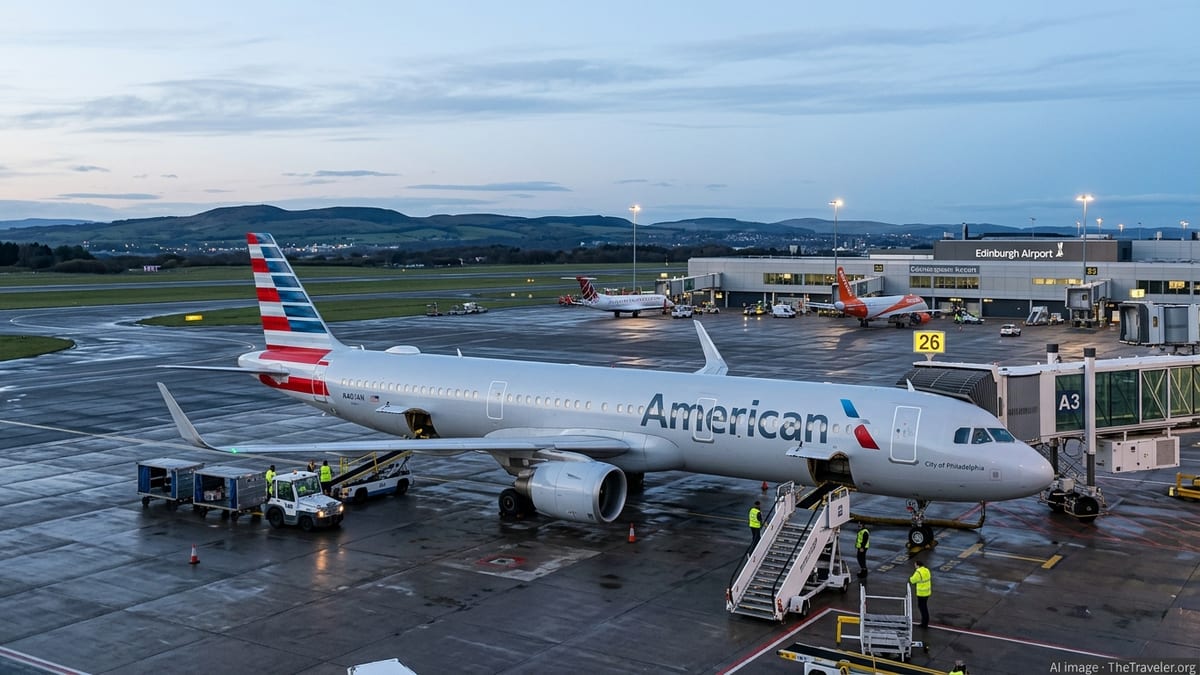
According to that network filing, the airline is expanding its reach from the East Coast and Sun Belt into additional secondary European cities, complementing the transatlantic growth it rolled out in 2025 from hubs such as Philadelphia, Miami, Charlotte, and Chicago. Those earlier rounds of expansion included new nonstop links from U.S. gateways to cities like Edinburgh, Milan, Athens, and Madrid, and Summer 2026 service builds on that strategy by offering more choice and better connectivity across the Atlantic.
South America is also a central pillar of American’s plan. Publicly available route updates from the carrier and airport operators indicate that the airline is adding new or restored services to major South American destinations in 2026, leveraging strong visiting‑friends‑and‑relatives traffic and resilient demand for beach and cultural tourism. The Latin America and Caribbean region has long been a core franchise for American, particularly through Miami and Dallas–Fort Worth, and new flights for Summer 2026 are aimed at defending that position against growing competition.
The carrier’s own communications have emphasized that the 2026 network is designed to give U.S. travelers more one‑stop options from mid‑sized cities by timing new long‑haul departures to connect with domestic banks at its largest hubs. That approach is intended to support record passenger volumes without relying solely on the largest coastal origin markets.
Domestic Connectivity and Hub Strategy Under Pressure
To support a record summer schedule, American is also tweaking domestic routes and schedules, particularly around its busiest connecting hubs. Prior to Summer 2025, the airline disclosed that it was offering nearly 5 percent more flights than the previous year and more than 20 percent additional departures from Chicago–O’Hare alone, including a mix of new destinations and retimed flights. Network data released in late 2025 shows further adjustments for the 2026 season, including up to 15 new routes designed to improve connectivity into the global network.
Chicago–O’Hare remains one of the focal points of this strategy. American has announced multiple incremental destinations from O’Hare, with a blend of new seasonal routes and expanded frequencies on high‑demand domestic spokes. However, Summer 2026 also brings capacity constraints at the airport. Recent Federal Aviation Administration communications describe planned limits on operations at O’Hare between May 17 and October 24, 2026, as part of broader efforts to manage congestion and staffing across the national airspace system.
Analysts note that these caps will require American and other carriers to be highly selective about where they add capacity. American’s approach, reflected in schedule data and route announcements, appears to prioritize feeding its most profitable long‑haul services, even if that means trimming marginal domestic frequencies. Industry observers suggest that the airline’s hub‑and‑spoke design gives it flexibility to reroute connections through other hubs such as Dallas–Fort Worth, Charlotte, or Phoenix when constraints tighten at a single airport.
At the same time, the airline continues to grow in secondary and regional markets, often through a mix of mainline and regional‑jet flying. Airport traffic reports from around the United States show American adding or restoring links from cities like San Antonio and Wilmington to key hubs, a trend that is expected to continue into Summer 2026 as the carrier aims to funnel more travelers into its international banks.
Fares, Competition, and the Traveler Experience
The expected surge in Summer 2026 travel coincides with a complex pricing environment. Independent fare research published in early 2026 finds that average U.S. domestic airfares are modestly lower than in 2025, while international fares, especially to Europe, have fallen more sharply, even as peak‑season prices on popular leisure dates remain elevated. One prominent airfare analysis firm reports that certain U.S. domestic corridors could see sharp increases from June to July 2026 as demand peaks, even where June fares briefly dip in response to shoulder‑season dynamics.
This environment is likely to influence how American deploys its capacity. The airline has indicated in past seasons that it uses dynamic revenue management to match seats to demand across its hubs, and analysts expect a similar strategy in 2026, with aggressive discounting outside the busiest travel windows but higher pricing on prime departure days and nonstop long‑haul flights. Lower average fares compared with the immediate post‑reopening period could help American fill the additional seats created by its new routes while still generating strong revenue per flight.
Competition is intensifying at the same time. Other U.S. legacy carriers have announced their own substantial international expansions for summer travel, and low‑fare airlines continue to chase sun destinations and secondary European cities. For American, the combination of a large loyalty program, extensive code‑share partnerships, and a dense domestic network remains a key differentiator as it seeks to capture travelers planning complex itineraries or multi‑city trips.
Travelers are likely to feel both the benefits and the strains of this record summer. Expanded route choices and more nonstop options can shorten total journey times, but crowded airports and tight schedules, especially at constrained hubs, may heighten the risk of delays. Federal aviation authorities have recently highlighted the pressures on air traffic control staffing and infrastructure, while also pointing to incremental improvements in on‑time performance as airlines and regulators refine schedules ahead of the peak period.
What a “Historic” Summer Could Mean for American
For American Airlines, a record Summer 2026 would be measured not only by the number of passengers carried, but also by how efficiently it can move them through a complex network. Forward‑looking commentary associated with the airline’s latest financial results describes strong demand trends tempered by higher fuel costs and infrastructure challenges, suggesting that margin performance will depend heavily on operational reliability during the busiest months.
Industry observers expect American to lean on several levers to manage the surge: concentrating growth on the highest‑yield routes, using schedule buffers to absorb disruptions where possible, and selectively reducing capacity in lower‑demand markets when airspace or airport limits require trade‑offs. The carrier’s decision to add a focused set of new long‑haul routes, rather than a broad wave of capacity, is seen by analysts as an attempt to balance growth with operational resilience.
At the same time, the airline’s Summer 2026 network reflects broader structural changes in global travel. The rebound of long‑haul leisure flying, the growing importance of secondary European and Latin American gateways, and persistent constraints at some U.S. hubs are reshaping how and where American deploys its aircraft. If travel demand follows current projections, the coming season may serve as an early test of how the airline’s post‑recovery strategy performs under peak stress.
For travelers planning Summer 2026 trips, the emerging picture suggests a season of abundant options but limited slack in the system. American Airlines is preparing to handle record numbers across its network, but early booking, flexible dates, and awareness of potential bottlenecks at major hubs are likely to remain essential for a smoother journey as the historic summer unfolds.