

More news on this day
American Airlines has launched a fresh round of cost cutting at the hotels it uses for flight attendant layovers, prompting sharp warnings from union leaders who say the changes could undermine crew rest and safety at a time of mounting labor tensions at the carrier.
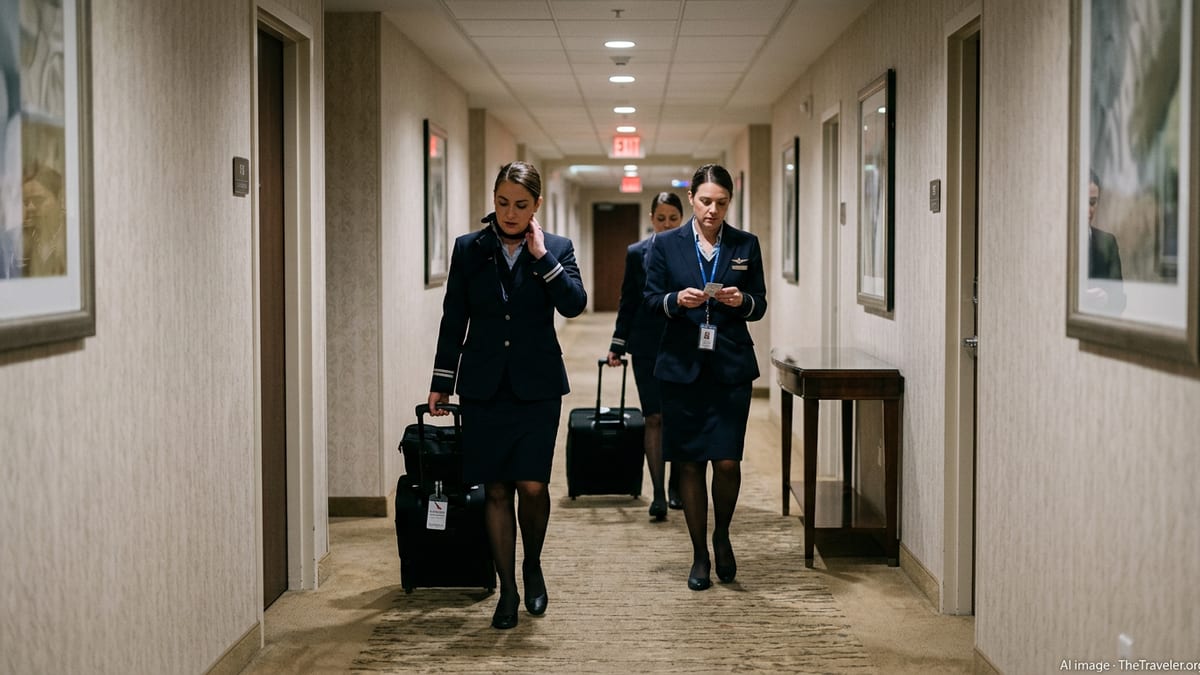
Cost Review Targets Longstanding Crew Hotels
In internal communications circulated this week, American Airlines management outlined plans to review and replace many of the hotels it currently uses to accommodate flight attendants during layovers. According to union summaries of the discussions, the airline has signaled that it intends to carry out multiple hotel site visits each month across its network as part of a broad effort to lower lodging costs.
Union officials say the company’s review is focused on long established, higher priced properties that crews generally favor for their proximity to airports, reliable shuttle services, and quieter room blocks. These hotels, they argue, have built up a track record of supporting rest requirements that are written into the collective bargaining agreement. Replacing them with cheaper options, they warn, risks eroding the safeguards that protect flight attendants from fatigue.
American has not publicly detailed which cities or hotel partners are under review, but people familiar with the process say the strategy is systemwide and linked to a broader effort to improve the carrier’s cost structure in 2026. The move comes on the heels of investor scrutiny over the airline’s financial performance, including recent analyst downgrades and concerns about rising fuel prices and airport congestion.
For crews, the changes come amid lingering frustration over irregular operations during recent winter storms, when some flight attendants reported sleeping on airport floors or in lobbies after rooms failed to materialize. Union leaders say those episodes exposed weaknesses in the company’s lodging operations that should be fixed, not leveraged for further cost savings.
Union Links Hotel Cuts to Fatigue and Safety Risks
The Association of Professional Flight Attendants, which represents more than 25,000 American Airlines cabin crew, has framed the hotel review as a core safety issue rather than a simple amenity downgrade. In messages to members, union officials warned that pushing crews into lower tier accommodation farther from airports, or into hotels with limited food access and noisy surroundings, can directly affect alertness on duty.
Union safety advocates point to long duty days, overnight red eye schedules and tight turns as reasons why rest environments matter. They argue that even modest changes in commute time to and from hotels, or the reliability of shuttle services, can eat into already narrow rest windows. That, they say, can leave crew members more vulnerable to fatigue just as regulators and airlines emphasize human factors and error prevention on the flight deck and in the cabin.
Flight attendants have also raised concerns about personal security and neighborhood quality around lower cost hotels, particularly for late night arrivals and early morning departures. Some union representatives say they have already received reports of crews moved to properties where walking outside after dark feels unsafe or where interior corridors and locks do not meet past standards.
American has maintained in internal briefings that any new hotels selected will comply with contractual obligations and regulatory requirements for crew rest. Labor leaders counter that the contract language leaves room for interpretation on issues such as distance from the airport and meal options, and they accuse the company of trying to exploit those gray areas to reach cheaper deals with hotel chains.
Escalating Labor Tensions Around CEO Leadership
The hotel cost cutting push lands at a sensitive moment in American’s relationship with its flight attendants. In February, the union’s board issued an unprecedented vote of no confidence in Chief Executive Robert Isom, citing what it called chronic understaffing, chaotic operations during severe weather and stalled progress on improving working conditions.
That symbolic rebuke followed street protests outside the airline’s Fort Worth headquarters and social media campaigns highlighting stories of crews scrambling to secure lodging after cancellations or extended delays. Union leaders say members remain angry about episodes in which hotels ran out of contracted rooms or reservations were not properly extended, leaving crews to fend for themselves in the middle of the night.
Within that context, even incremental changes to hotel programs are being interpreted as part of a broader pattern of austerity that targets workers while the airline touts premium offerings to high value customers. Crew members posting on internal forums and public platforms have described the latest review as “another cut from the frontline,” arguing that savings on lodging pale in comparison with the potential operational fallout of tired and demoralized staff.
The company has tried to reassure employees that the review is about aligning costs with market conditions rather than downgrading standards. Executives have also emphasized that American remains committed to running a safe, reliable operation and that any hotel adjustments will be monitored. For many flight attendants, however, trust has eroded after years of contentious negotiations and high profile disruptions.
Operational Pressures and Regulatory Scrutiny
American’s hotel strategy shift is unfolding against a backdrop of intensifying operational pressure across the U.S. aviation system. The Federal Aviation Administration has recently convened carriers, including American, to address congestion at major hubs and has warned that schedule reductions may be necessary to reduce delays and cancellations at busy airports.
Industry analysts note that when schedules are tightened or reshaped, the complexity of crew planning increases, and so does the strain on lodging networks that must absorb last minute changes. In that environment, robust hotel programs with spare capacity and flexible partners are seen as crucial shock absorbers during storms, equipment failures or air traffic control constraints.
Regulators and legislators have in recent years strengthened minimum rest rules for pilots and flight attendants, reflecting a broader recognition that fatigue can play a role in safety incidents. While hotel selection itself is not directly regulated, advocates say that weakening accommodations can undercut the spirit of those reforms, especially if crews must travel farther or navigate logistical hurdles simply to reach their rooms.
Travel and hospitality groups are also monitoring the situation. Hotel operators in major hub cities rely heavily on crew business, and some fear that aggressive bidding wars for airline contracts could drive rates down to levels that force service cutbacks or security compromises. Others see an opportunity to capture new volume if established properties lose their airline partnerships.
Passengers Watch for Ripple Effects on Service
For travelers, the dispute over flight attendant hotels may appear removed from the cabin, but veterans of the industry say the ripple effects can be felt in on board service, communication and overall reliability. Well rested crews are generally better equipped to handle medical events, turbulence and tight connections, while fatigued staff may struggle under the same pressures.
Consumer advocates caution that sustained labor unrest at a major carrier can eventually translate into slowdowns, higher cancellation rates or work to rule campaigns that strictly enforce procedures in ways that lengthen boarding and turnaround times. With airlines already facing scrutiny for crowded schedules and customer service missteps, any additional friction in crew operations could quickly become visible to passengers.
Business travel managers and frequent flyers are watching closely as union rhetoric hardens. Some corporate clients have begun asking pointed questions about contingency plans, particularly on routes heavily served by American where options to switch carriers are limited. If talks between management and the union were to break down further, they worry that a period of rolling disruption could follow.
For now, American’s hotel review is moving forward, with union safety and hotel committees preparing to challenge any properties they deem substandard. How the airline balances its cost cutting ambitions with the need to rebuild trust among front line crews may prove a key test of its leadership as it tries to navigate a difficult year for the U.S. airline industry.