


More news on this day
Singapore Airlines and its low-cost arm Scoot have extended cancellations on key Middle East routes to Dubai and Jeddah as the fast-moving conflict involving Iran continues to disrupt airspace, strand passengers and upend travel plans across the region.
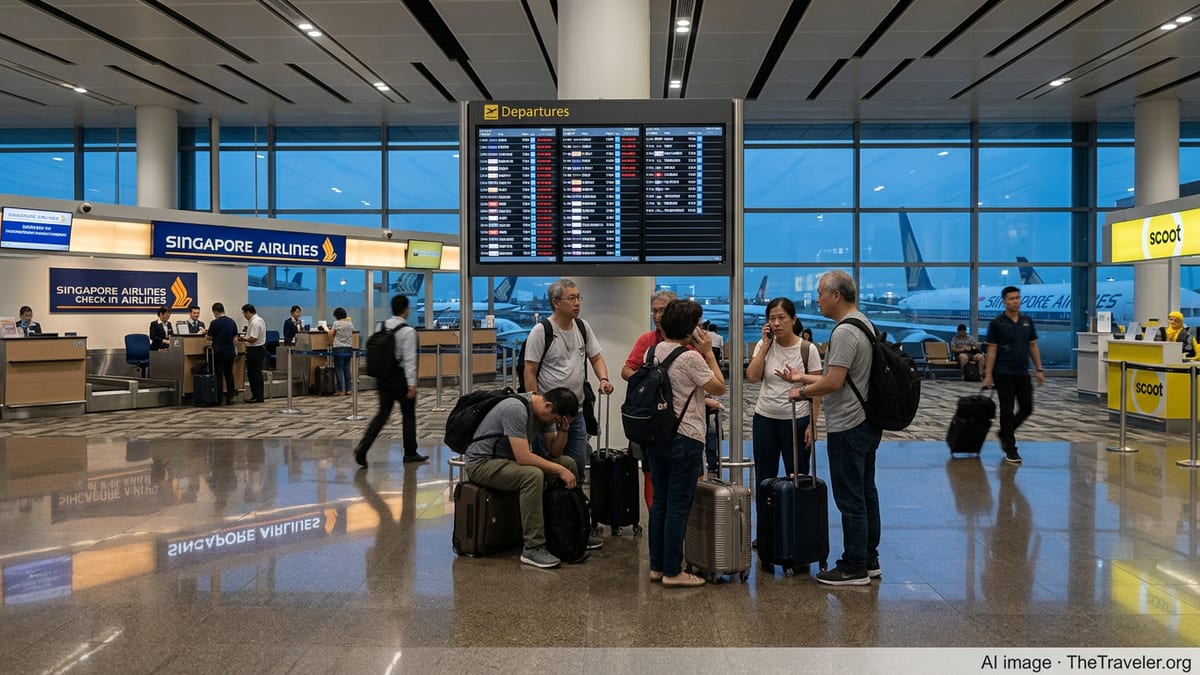
Which Singapore Airlines and Scoot flights are affected
Singapore Airlines has suspended its regular Singapore–Dubai service on flights SQ494 and SQ495, with the latest advisory extending cancellations through 15 March 2026. The route connects Changi Airport with Dubai International, one of the world’s busiest hubs for Europe–Asia transfers, and its prolonged suspension underlines the severity of the current security environment.
Scoot, the group’s budget carrier, has halted its Singapore–Jeddah rotation, specifically flights TR596 and TR597. The latest schedule update shows cancellations on selected dates including 7, 9 and 10 March, on top of an earlier wave of disruptions dating back to 28 February when the conflict escalated.
Across both brands, the SIA Group has now cancelled or suspended at least two dozen services to Dubai and Jeddah since 28 February, when U.S. and Israeli strikes on targets in Iran triggered swift retaliation and prompted multiple governments to shut or severely restrict their airspace. These targeted cancellations sit alongside wider re-routings of other long-haul flights to avoid affected skies.
The airlines have indicated that further changes remain possible at short notice, stressing that the suspensions are under constant review as the situation on the ground and in the air evolves day by day.
Why flights are being cancelled and how the conflict is evolving
The current disruption traces back to coordinated strikes on Iran on 28 February, followed by retaliatory missile and drone attacks that included hits on infrastructure in the United Arab Emirates and other Gulf states. In response, countries such as Iran, Iraq, Israel, Jordan and Kuwait moved to close their airspace, while the UAE imposed partial closures affecting traffic into and out of Dubai and Abu Dhabi.
These measures effectively severed some of the most heavily used corridors linking Europe, the Middle East and Asia. For carriers like Singapore Airlines and Scoot, whose Dubai and Jeddah routes rely on stable access to Gulf skies and predictable airport operations, the combination of missile activity, airspace shutdowns and temporary restrictions on airport capacity made continued service untenable from a safety and operational standpoint.
Although limited flights have since resumed at major hubs such as Dubai International, capacity remains constrained and subject to sudden change. Regional and international airlines are simultaneously vying for scarce slots and safe routings, forcing network planners to prioritise core operations. For SIA and Scoot, that has meant extending suspensions on Dubai and Jeddah rather than operating irregular or risk-exposed services.
Aviation analysts note that even when active hostilities subside, it often takes days or weeks for airlines to restore normal schedules. Aircraft and crew may be out of position, air traffic control systems overloaded and insurance or regulatory clearances still pending on certain routes, all of which feed into conservative decisions about when to restart flights.
What this means for current and future bookings
Passengers booked on affected Singapore–Dubai or Singapore–Jeddah flights are being offered options that typically include rebooking on alternative dates or routes, or obtaining refunds in line with each carrier’s commercial policy. Fees for changing itineraries are generally being waived for directly impacted customers, although specific conditions can vary depending on the fare type and booking channel.
Travellers connecting through Dubai to Europe or Africa on separate tickets may face particular challenges. With SIA’s Dubai flights suspended and other airlines still rebuilding schedules, onward options can be limited or heavily booked. Agents are reporting longer call centre wait times and tight seat availability on alternative routings via cities such as Doha, Abu Dhabi or Istanbul, which are themselves managing backlogs from earlier cancellations.
For would-be pilgrims and business travellers headed to Jeddah, Scoot’s halted services mean fewer nonstop options from Southeast Asia in the short term. Some are being re-accommodated via other regional hubs or on different carriers, but routings may involve extra stops, longer flight times and last-minute schedule changes as airlines work around restricted airspace.
Passengers who have not yet travelled but hold bookings beyond the currently announced suspension dates should be prepared for the possibility of rolling extensions. Industry observers say carriers are avoiding long forward cancellations in favour of shorter windows, giving them flexibility to either restart services quickly or push back resumptions if the security outlook deteriorates again.
Practical advice for travellers with upcoming Middle East plans
For anyone booked on Singapore Airlines or Scoot to Dubai or Jeddah in the coming weeks, the single most important step is to ensure contact details are up to date in the airline’s booking system. The carriers are using email, SMS and app notifications to push real-time updates on cancellations, delays and rebookings as decisions are made.
Travellers are advised not to head to the airport unless they have a confirmed, operating flight displayed in their booking. With some Middle East hubs still operating under capacity caps and access controls, turning up early in the hope of being accommodated on alternative services can lead to long waits with no guarantee of a seat.
Those planning new trips to or via the region should consider the heightened risk of disruption and build additional buffer time into itineraries, particularly where onward connections, cruises or events are concerned. Purchasing flexible or changeable fares, as well as comprehensive travel insurance that covers war-related disruptions and airspace closures, can provide a degree of financial protection if plans unravel.
Finally, travellers should monitor both airline advisories and government travel notices in parallel. While carriers will decide on flight operations based primarily on safety and logistics, official guidance from foreign ministries can influence whether certain journeys remain advisable from a broader security perspective, even after aircraft begin flying again.
How long could the disruption last
As of 7 March 2026, Singapore Airlines has formally suspended its Dubai flights until at least 15 March, while Scoot has issued specific cancellation dates for Jeddah into the middle of the month. Beyond those thresholds, both carriers say their decisions will depend on the security picture, airspace availability and the operational status of key airports.
Industry experts caution that the path back to normality is unlikely to be linear. Even if active hostilities ease, recurring airspace closures, missile alerts or targeted strikes could trigger fresh rounds of cancellations. Airlines may also choose to operate some routes at reduced frequency before fully restoring pre-crisis schedules, especially where demand has softened or aircraft are tied up on diversionary routings.
For now, travellers with essential reasons to fly to or through the Middle East are being urged to stay flexible, keep documentation and contact information handy, and be ready for last-minute adjustments. Leisure travellers, particularly those with more discretionary itineraries, may find it prudent to delay or reroute plans until airlines and authorities signal a more durable stabilisation of the situation.
What is clear is that the suspension of Singapore Airlines and Scoot services to Dubai and Jeddah is part of a broader, regionwide reset in how airlines are navigating Middle East airspace during this conflict. While the measures are disruptive, carriers and regulators insist they are necessary to safeguard passengers and crews amid one of the most volatile security environments the global aviation industry has faced in recent years.