


More news on this day
American Airlines is under mounting scrutiny after reports indicated that approximately 3.5 million of its customers were swept up in a wave of holiday travel disruptions and follow-on security concerns, raising new questions about how the carrier prepares for peak-season demand and protects passenger information.
Get the latest news straight to your inbox!
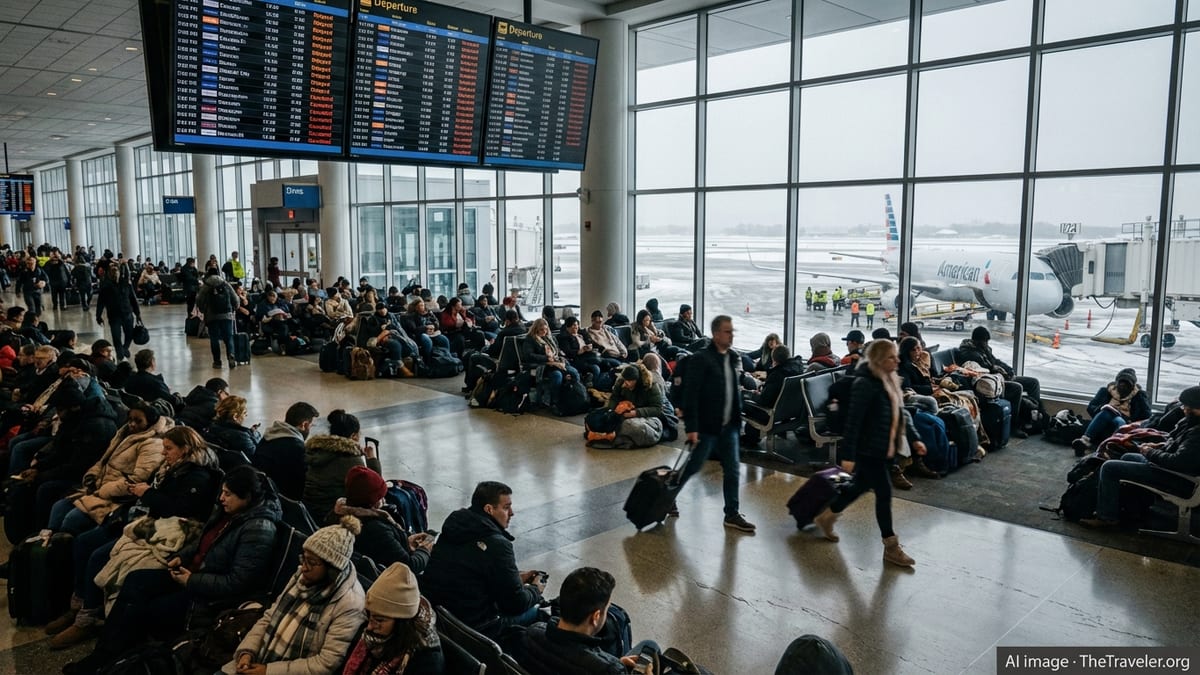
Holiday Rush Strains America’s Largest Airline
American Airlines has been positioning itself as ready for record-breaking peak travel, projecting more than 3.5 million customers over major holiday periods and concentrating nearly half a million passengers through its Dallas Fort Worth hub alone, according to recent travel demand coverage. These volumes reflect a rebound in domestic and international travel, but they also expose how quickly operations can buckle when weather, technology and staffing issues collide.
Published travel data and government statistics show that U.S. airlines have struggled to keep pace with surging demand during long holiday weekends, with delays and cancellations rising fastest during the busiest periods. American, which operates more than 6,000 flights a day in 2026, enters each holiday with a dense schedule that leaves little margin when systems fail or storms sweep through key hubs.
Recent peak seasons have featured a combination of winter weather, air traffic control constraints and intermittent technology problems across the industry, and public commentary suggests American’s on-time performance has at times lagged other large carriers. Travelers caught in the most recent holiday disruptions reported long tarmac waits, last-minute cancellations and difficulty rebooking when flights stacked up at major hubs.
The scale of the disruptions has fueled criticism that airlines, including American, continue to schedule aggressively into peak seasons while relying on networks that can be highly sensitive to any operational shock, leading to chaotic ripple effects for millions of passengers.
Technology Outages and CrowdStrike Fallout
Operational pressure on American has been compounded by a series of technology incidents across the aviation sector. In one widely reported case, a global technology outage tied to a third-party vendor temporarily grounded flights at multiple airlines, including American, after key operational systems lost connectivity. The carrier publicly acknowledged that systems were affected and stated that it used mobile notifications to alert customers as flights resumed.
Separate coverage has highlighted an industry-wide IT disruption connected to a software issue at cybersecurity provider CrowdStrike, which caused data problems and check-in delays at airlines and airports worldwide. While those reports did not single out American alone, they underscored how reliant carriers are on shared technology stacks and how a single flawed update can generate national-scale travel chaos during peak periods.
Social media accounts and discussion forums from affected travel days described American flights held at gates or on taxiways while dispatch and weight-and-balance data were restored. Travelers reported being asked to deplane and reboard as crews waited for clearance to depart, while others described airport monitors filled with delayed departures linked to IT problems beyond local staff control.
Industry analysts note that such incidents illustrate a growing cyber and technology risk surface for airlines. Even when core reservation or crew-scheduling platforms are not compromised by malicious actors, a failure at a large software vendor can act as a single point of failure, effectively freezing operations and creating holiday travel bottlenecks that affect millions of passengers.
Data Security Concerns After Earlier Breaches
Beyond operational turmoil, American has also faced questions about how it safeguards customer and employee data. Prior incidents have involved technology and recruiting vendors that support multiple airlines, where attackers targeted third-party systems rather than the airline’s own networks. Public breach-notification filings and security analyses describe cases in which personal information for tens of thousands of airline employees or applicants was exposed when an external recruiting database was compromised.
In a separate episode, an international passenger service system provider disclosed a data security incident that affected loyalty-program records for several global carriers, including American. Public statements at the time indicated that the exposed data was limited, but the event highlighted how shared infrastructure in the airline industry can turn a single intrusion into a multi-airline breach.
Cybersecurity specialists and regulatory filings point out that major U.S. airlines, including American, identify cyberattacks and data breaches as a material business risk. Companies warn investors that successful intrusions could lead to litigation, regulatory scrutiny, incident notification costs and long-term reputational damage, especially if they occur in close proximity to headline-making operational meltdowns.
For holiday travelers, the combined effect is a growing sense of vulnerability. Passengers already contending with missed connections and lost bags during peak periods increasingly question whether their loyalty credentials, contact details or travel histories are also at risk when airlines or their vendors suffer security incidents.
Customer Backlash and Pressure for Stronger Protections
The confluence of holiday chaos and security worries has intensified public backlash against American on consumer forums and complaint channels. Recent online discussions from early September 2026 describe frustration with cascading delays, hot cabins during ground holds and perceived communication gaps when crews have limited information about the status of systems or inbound aircraft.
Some travelers argue that the current model, in which airlines rely on dense hub networks and highly integrated digital platforms, leaves customers exposed to both mass disruptions and difficult rebooking experiences. When a single outage halts flights nationwide, re-accommodating millions of travelers becomes a logistical challenge that can stretch over several days, particularly around winter and end-of-year holidays.
Consumer advocates and transportation commentators have called for clearer disclosure when airline operations are affected by external IT providers, as well as faster notification when personal data is involved in third-party breaches. They point to state data-breach laws that require timely notice and argue that large carriers should exceed minimum legal standards to rebuild trust with frequent flyers.
Against this backdrop, American has promoted new digital tools aimed at giving passengers more control during disruptions, including app-based rebooking and digital wallet integrations that streamline check-in and boarding. Publicly available information from the airline highlights efforts to turn “disruptions into decisions” by presenting travelers with self-service options when schedules change unexpectedly.
What Travelers Can Do Before the Next Peak Season
With more record-setting travel weekends on the horizon, experts recommend that passengers flying on American or any major carrier adopt a more defensive posture around both itinerary planning and personal data security. Travel planners frequently suggest booking the earliest flights of the day on non-stop routes where possible, building in longer connection windows at hub airports and avoiding tight same-day connections when traveling with families or checked bags.
Cybersecurity advisors also point to simple steps that can reduce exposure if airline or vendor systems are compromised. These include enabling multifactor authentication on frequent-flyer accounts, using unique passwords rather than reusing credentials from other services, monitoring loyalty balances for unusual redemptions and treating unsolicited emails or texts about itinerary changes with caution.
For those who experienced disruptions during the most recent holiday chaos, passenger rights resources encourage reviewing airline contracts of carriage and federal consumer guidance on refunds, meal vouchers and hotel accommodations. While policies differ by carrier and by cause of delay, understanding the rules in advance can help travelers advocate for themselves at crowded customer service desks.
As American prepares for the next wave of peak-season travel, the intersection of operational resilience and digital security remains in sharp focus. The experience of millions of passengers over recent holidays suggests that travelers now judge airline performance not only by on-time arrivals, but also by how transparently carriers address outages and how diligently they guard the personal information entrusted to them.
ABC News: Labor Day travel and airline volumes
American Airlines: Global technology outage information