


More news on this day
Air travelers may need to brace for rougher rides and more frequent schedule headaches as a warming climate reshapes the atmosphere that jets depend on, with new research pointing to stronger turbulence, hotter runways, and shifting winds that threaten to disrupt flight operations worldwide.
Get the latest news straight to your inbox!
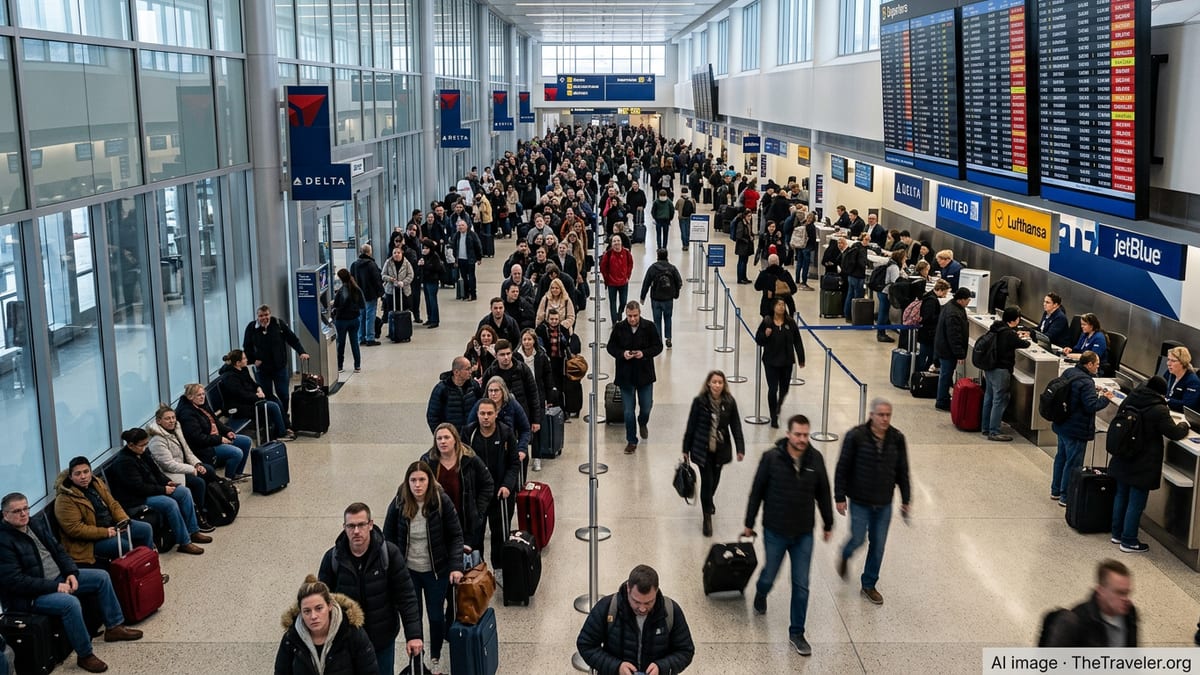
Climate Change Is Altering the Skies Above Major Flight Corridors
Scientists tracking the upper atmosphere report that jet streams, the high-altitude rivers of air that help steer aircraft across oceans, are already changing as the planet warms. Studies in leading climate journals indicate that wind patterns in the North Atlantic flight corridor are becoming more variable, with pockets of stronger shear that can both speed and slow flights depending on direction.
Research published in Nature Climate Change links these shifts to human-driven warming and highlights a growing risk of clear air turbulence, the invisible bumps that often catch crews and passengers off guard. Model simulations suggest that, under elevated carbon dioxide levels, wintertime clear air turbulence over the busy North Atlantic could increase markedly in coming decades, particularly at cruise altitudes used by long-haul jets.
More recent work using reanalysis data and operational flight records over the North Atlantic points to a complex picture in which average roundtrip times have not yet changed dramatically, even as turbulence hot spots emerge more frequently along preferred routes. Analysts note that the combination of stronger localized winds and more unstable layers in the upper troposphere is likely to make route planning and in-flight adjustments more challenging for airlines in the years ahead.
Rising Turbulence Risks Could Translate Into More In-Flight Disruption
Clear air turbulence already ranks among the most costly forms of in-flight weather disruption, and climate-linked changes are expected to intensify that burden. Peer-reviewed projections summarized in aviation safety and meteorological literature indicate that moderate to severe clear air turbulence could rise by tens of percent or more on some transoceanic routes by mid-century if greenhouse gas emissions continue on current trajectories.
According to published analyses, turbulence is responsible for the majority of weather-related injuries in commercial aviation and adds hundreds of millions of dollars a year to operating costs through unscheduled maintenance, fuel inefficiencies, and delays. As temperature gradients aloft sharpen and jet streams become more sheared, climate models suggest that the atmosphere will produce more of the turbulent layers that are hardest to detect with conventional radar.
Researchers are experimenting with new tools to anticipate these hazards, including advanced turbulence indices and machine-learning systems trained on decades of high-altitude data. These methods aim to improve forecasts of clear air turbulence and give dispatchers and crews more precise guidance about when to change altitude or reroute. However, if the underlying frequency and intensity of turbulence continues to rise, passengers are likely to experience more seatbelt-on periods, sudden bumps, and occasional diversions, even with better forecasting.
Hotter Runways Mean Tougher Takeoffs and Weight Limits
Higher temperatures near the surface pose a different set of challenges, especially during heatwaves at busy hubs. As air warms, it becomes less dense, which reduces the lift generated by aircraft wings and the thrust efficiency of engines. Technical studies from climate and aerospace researchers have quantified how this “thinner” air can force airlines to impose weight restrictions on departures, particularly at airports with short runways, high elevation, or both.
One widely cited analysis that modeled aircraft performance at major airports found that, by mid to late century, 10 to 30 percent of flights scheduled during the hottest hours of the day could face some level of payload restriction under high-emissions scenarios. More recent work focusing on airports in Europe and Asia reaches similar conclusions, projecting that, on the hottest days, jets may need longer takeoff distances and may not be able to depart at maximum certified weight.
In practical terms, these limits can mean fewer seats sold, cargo left behind, or the need to tanker less fuel and schedule an additional refueling stop. Recent media coverage has documented instances at heat-prone airports where flights already depart with restricted loads during extreme temperature spikes. As climate projections show more frequent and intense heatwaves, analysts expect such operational adjustments to become more common at airports around the world.
Airports and Airlines Start Planning for a Hotter, Bumpier Future
Global aviation bodies have begun to incorporate climate adaptation into long-term planning, treating atmospheric change as a direct operational risk rather than a distant environmental concern. Updated guidance from international aviation organizations emphasizes that extreme heat, more intense storms, and increased turbulence are likely to drive more weather-related disruption and calls for upgrades in infrastructure, forecasting, and procedures.
Climate adaptation reports highlight a range of measures under consideration, from reinforcing runways and improving drainage to revising air navigation procedures for more variable winds aloft. Some policy and finance assessments point out that even modest increases in temperature-related delays and payload restrictions could have noticeable economic impacts when multiplied across thousands of daily flights, especially at critical transfer hubs.
Industry analyses also note that adaptation will need to sit alongside efforts to cut emissions from aviation itself. While sustainable aviation fuels, more efficient aircraft, and optimized routing are aimed at reducing the sector’s contribution to warming, planners increasingly acknowledge that a certain amount of climate change is already locked in. As a result, work is shifting toward making airports and airspace more resilient to hotter, more turbulent conditions that are expected in the coming decades.
What Travelers Can Expect as Skies Warm
For individual flyers, the most visible consequences of hotter skies may be a gradual rise in delays, occasional weight-related rebooking during heatwaves, and more frequent turbulence advisories. Experts stress that commercial aviation remains one of the safest forms of transport, but they also note that climate change is likely to erode some of the buffer that allowed carriers to operate with relatively predictable seasonal patterns.
Long-haul passengers may notice routes that shift slightly from year to year as airlines and air traffic managers adjust to evolving jet stream behavior. On some days, strong tailwinds could shorten eastbound crossings, while intensified headwinds and turbulence patches lengthen or complicate the westbound leg. Closer to the ground, extreme heat could push more departures into cooler early morning or late evening windows, reshaping schedules at popular leisure and business destinations.
Travel planners suggest that passengers who are sensitive to disruption may wish to build extra connection time into itineraries during peak summer months and remain attentive to carrier notifications about turbulence and schedule changes. With both the lower and upper atmosphere being reshaped by rising temperatures, the expectation among researchers and aviation planners is that a more dynamic, less stable sky will become a defining feature of air travel in the decades ahead.
NASA: Impacts of Rising Temperatures on Aircraft Takeoff Performance
ICAO Climate Adaptation Synthesis Report
Nature Climate Change: Intensification of Transatlantic Clear Air Turbulence
Associated Press: Rising Temperatures Could Keep More Flights From Taking Off on Time
Climate Dynamics: Clear Air Turbulence Trends Over the North Atlantic