

More news on this day
American Airlines has received U.S. government approval to resume commercial flights between Miami and two major Venezuelan cities, opening the first direct air corridor between the United States and Venezuela since flights were halted in 2019 over security and political concerns.
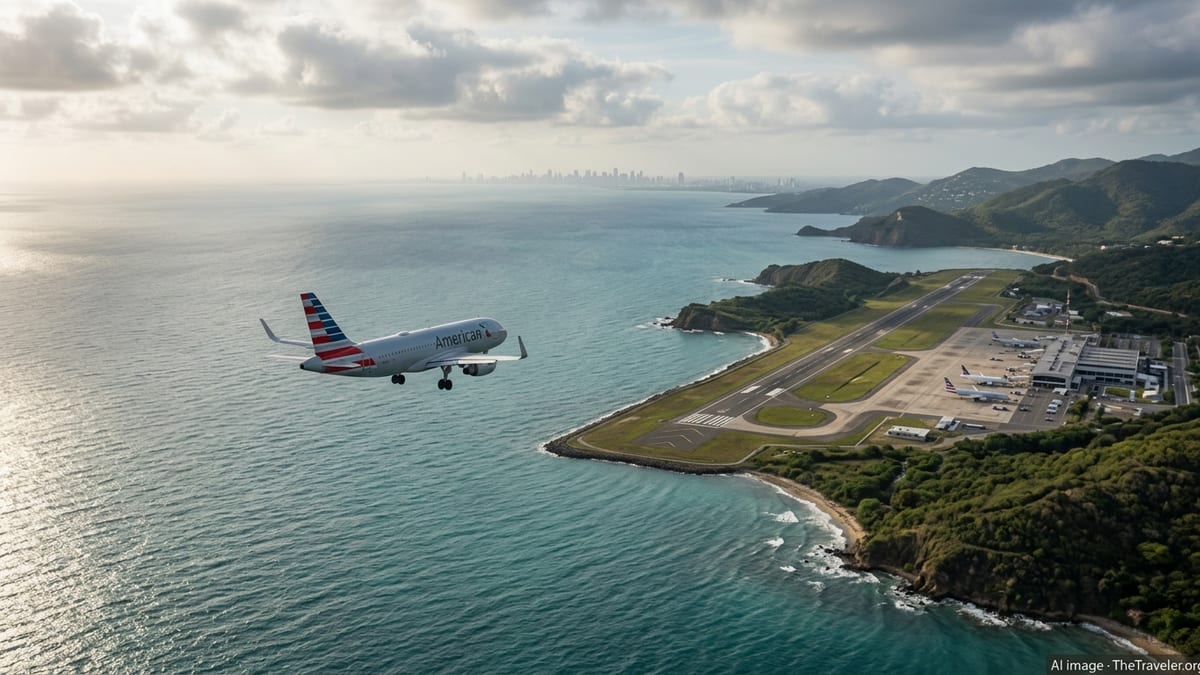
First U.S. Carrier Back in Venezuelan Skies
The U.S. Department of Transportation has granted American Airlines and its regional subsidiary Envoy temporary authority to operate scheduled passenger flights from Miami to Caracas and Maracaibo, according to regulatory filings and airline statements. The two year exemption clears a key regulatory hurdle and positions American as the first U.S. airline to reenter the Venezuelan market after a long suspension of direct service.
American, which first launched service to Venezuela in 1987, was the last U.S. carrier operating there when it suspended flights in March 2019. The shutdown followed an emergency U.S. order halting civil air operations to and from the country, citing security risks on the ground and in Venezuelan airspace. Since then, U.S. travelers have had to rely on convoluted one stop itineraries via third countries or forgo travel altogether.
The new approval allows daily nonstop links between Miami International Airport and Caracas Simón Bolívar International Airport as well as Maracaibo’s La Chinita International Airport. While specific launch dates and schedules have not yet been published, American has signaled that service could begin as early as mid April, once operational preparations and final security checks are complete.
Envoy aircraft, operating under the American Eagle brand, are expected to fly the routes, providing flexibility on gauge as demand rebuilds. Industry analysts say the decision underscores Washington’s view that security conditions and airport controls in Venezuela now meet minimum standards for the return of U.S. commercial traffic.
Security Reviews and Shifting Political Landscape
The move comes after a series of security audits and diplomatic shifts that have reshaped the relationship between Washington and Caracas in recent months. U.S. officials say Transportation Security Administration teams carried out inspections at Caracas and Maracaibo airports, focusing on passenger screening, baggage handling, perimeter controls and coordination with local authorities.
Those checks were a prerequisite for any easing of the 2019 restrictions, which were imposed amid concerns about political instability, crime and aviation safety. The U.S. government had also warned airlines about risks linked to military activity and electronic interference in and around Venezuelan airspace, prompting several non U.S. carriers to scale back or suspend operations.
Officials now point to a gradual stabilization of the security environment and new bilateral arrangements with Venezuela’s interim authorities as key factors behind the policy reversal. A broader reopening of airspace in the Caribbean region earlier this year paved the way for regulators to evaluate restoration of point to point service.
American’s return is widely seen as a test case for whether other U.S. airlines might seek approvals of their own. For now, however, regulators have framed the authorization as limited and closely monitored, with the option to modify or revoke permissions if conditions deteriorate.
What the Reopening Means for Travelers
For U.S. based travelers with family, business or humanitarian ties to Venezuela, the approval marks a significant easing of logistical obstacles. Direct flights from Miami are expected to sharply cut travel times compared with common routings through Panama City, Bogotá or Caribbean hubs, and should reduce the risk of missed connections and irregular operations that have plagued multi stop journeys.
Travel agents report a surge in inquiries since word of the decision began to circulate, particularly from members of the large Venezuelan diaspora in Florida. Many have spent years relying on fragmented routes or lengthy overland segments within South America to visit relatives or manage property and business interests inside the country.
Pricing dynamics remain uncertain. At least initially, limited capacity and pent up demand could support relatively high fares on the restored routes. Over time, competition from non U.S. carriers offering one stop options, along with any additional U.S. entrants that receive approval, may help moderate prices.
Travelers should also expect a more stringent security and documentation environment than existed before 2019. Industry experts say passengers are likely to face enhanced screening at departure and arrival, as well as evolving entry requirements on the Venezuelan side, which may shift as the political transition advances.
Operational Details and Timelines
American has not yet released a full timetable, but filings and schedule planning data suggest an initial focus on daily frequencies from Miami to both Caracas and Maracaibo using narrow body aircraft operated by Envoy. That structure would allow the airline to plug Venezuelan cities into its broader Miami hub, offering onward connections across the United States and to Europe.
Before flights begin, the carrier must finalize crew training, ground handling arrangements and contingency planning specific to Venezuelan airports. Insurers and corporate travel departments will be watching closely, as risk assessments and coverage policies may need updating to reflect the restored routes.
Industry observers note that the two year approval window gives American time to test the viability of the market and adjust capacity. If demand proves robust and security conditions remain stable, the airline could seek to extend or expand its authority, potentially adding frequencies or upgauging aircraft.
For now, the company has framed the restart as a cautious but important step in rebuilding its historic presence in northern South America. Executives have highlighted Venezuela’s role in American’s Latin American network prior to 2019, when the carrier flew multiple daily frequencies and carried a mix of leisure, visiting friends and relatives, and corporate traffic tied to the energy sector.
Broader Implications for U.S.–Venezuela Connectivity
The restoration of American’s Venezuela flights carries symbolic weight beyond aviation. The absence of direct air links had come to embody the deep freeze in relations between the two countries, complicating everything from consular work and cultural exchanges to trade and investment.
Diplomats and regional analysts say the new approval signals a cautious reengagement, even as broader sanctions and political disagreements remain. Reliable air connectivity, they argue, is a practical foundation for dialogue, emergency response and people to people ties, particularly given the size of the Venezuelan community in the United States.
For Venezuela, the return of a major U.S. carrier could help support tourism, remittances and business travel just as the country seeks to stabilize its economy and rebuild relationships with global partners. Local tourism operators are already positioning to market beach destinations and cultural hubs to U.S. visitors who may have written the country off during years of turmoil.
Aviation experts caution, however, that the recovery of U.S.–Venezuela air traffic is likely to be gradual. Infrastructure constraints, shifting regulations and lingering perceptions of risk may weigh on demand. The performance of American’s initial flights from Miami will be closely watched as an early indicator of how quickly travelers are willing to return to Venezuelan destinations by air.