

More news on this day
American tourists are entering a more scrutinized world of global travel, where heightened security, geopolitical tensions, and sophisticated data tools are combining to create new forms of tourist profiling and, in some cases, wrongful detention. Recent advisories and case reports point to a landscape in which nationality, digital footprints, and even tattoos or social media posts can shape how travelers are treated at borders and in popular destinations.
Get the latest news straight to your inbox!
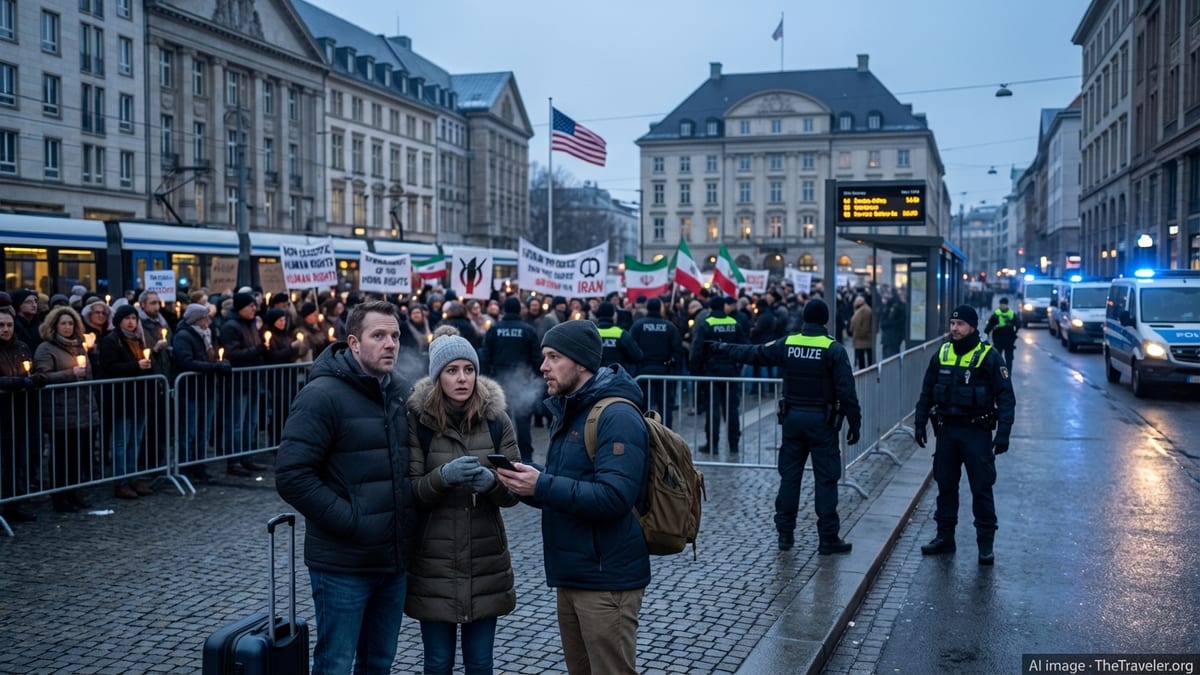
Travel Advisories Reveal a Higher-Risk Landscape for Americans
Publicly available information from the U.S. State Department shows a steady expansion of warnings for destinations where Americans face elevated risks, including crime, terrorism, and politically motivated detention. Level 4 “do not travel” advisories now explicitly cite the danger of wrongful arrest, kidnapping, and arbitrary enforcement of local laws in a number of countries, underscoring how a U.S. passport is no longer a broad guarantee of smooth passage.
Reports on recent advisories highlight Venezuela and Myanmar among the locations where Americans are advised not to travel due to a mix of security threats and concerns about unfair detention. A global risk report released in early 2025 similarly notes that several U.S. citizens have been held abroad in circumstances described as unlawful or politically sensitive, suggesting that American nationality can itself become a point of leverage in diplomatic disputes.
Separate guidance for “high-risk travel” published by the State Department in 2025 stresses that some governments may prevent travelers from leaving their territory if they become entangled in investigations or business disputes. Coverage of a U.S. government employee barred from departing China in 2025 illustrates how exit bans, once relatively rare in public discourse, are emerging as another tool that can leave Americans stranded while local authorities pursue broader political or legal objectives.
Travel industry analysis from financial and risk consultancies indicates that these warnings are having a tangible effect on behavior. Surveys conducted in late 2024 and 2025 show that a large majority of travelers remain concerned about instability and personal safety, and many are reconsidering or reshaping itineraries based on perceived threats related to their nationality.
The Mechanics of Tourist Profiling: Data, Devices, and Digital Trails
Tourist profiling is not a formally defined category in most regulations, but recent coverage of border practices suggests that Americans can be singled out through patterns of data-driven screening. In many airports, officials rely on advance passenger information, watchlists, and behavioral analytics to flag travelers for extra questioning or secondary inspection. While these tools are promoted as neutral security measures, civil liberties advocates warn that they can reinforce bias when combined with subjective judgments about nationality, religion, or political views.
Several widely reported cases show how digital footprints can shape a traveler’s experience. In one 2025 incident, a Norwegian visitor said he was denied entry to the United States after officers reviewed memes on his phone that mocked a prominent U.S. politician. Officials later attributed the denial to drug use rather than online content, but the case fueled broader debate over how deeply border agencies should probe a traveler’s social media, messages, and photos, and whether such scrutiny can be applied inconsistently based on perceived political sympathies.
Parallel concerns are surfacing in reverse for Americans going abroad. Intelligence and security reports describe governments using phone checks, social media monitoring, and location data to identify individuals considered politically sensitive or linked to activism. In some jurisdictions, dual nationals or diaspora travelers returning to family countries have reported harsher questioning, confiscated devices, or extended detention while their connections and past statements are examined.
Academic work on travel risk technology also points to the rise of predictive tools that map urban “danger zones” and advise travelers where to avoid. While these systems promise more personalized safety information, they also rely on datasets that may embed social or racial bias. Experts caution that, if governments quietly integrate similar tools into border and policing operations, tourists could find themselves categorized as higher risk based largely on origin, appearance, or historic crime patterns in neighborhoods they visit.
Wrongful Detention and Politicized Arrests: A Growing Fear
Concerns about profiling are sharpened by a series of highly publicized detentions of Americans abroad. In the last several years, journalists, businesspeople, and tourists from the United States have been arrested in countries with tense relations with Washington and later identified by U.S. officials as wrongfully detained. A large prisoner exchange with Russia in 2024, which included multiple Americans, and continuing cases in Venezuela and other states have reinforced the idea that some travelers can become bargaining chips in wider geopolitical negotiations.
Specialized security firms tracking kidnap and detention risks report a noticeable concentration of wrongful detention cases involving Americans in a handful of countries where relations with the United States are strained. Their 2025 global insights note that high-profile arrests of U.S. citizens in Venezuela and elsewhere have coincided with diplomatic pressure and sanctions, raising concerns that ordinary tourists are increasingly vulnerable to power struggles they neither control nor fully understand.
Human rights reporting from Central America and parts of the Middle East adds another layer of risk. Articles examining prison conditions in El Salvador, for example, describe a vast maximum-security facility used to hold both local gang suspects and foreign nationals, including individuals deported or transferred from the United States. In this environment, travelers with tattoos, unusual personal backgrounds, or perceived links to criminal groups may find that local authorities interpret their appearance as evidence of gang affiliation, even when they have no criminal record.
Families of detained Americans frequently learn only after the fact that their relatives were questioned over everyday items, social media posts, or minor past infractions that took on disproportionate significance in a high-tension political climate. Advocates argue that this pattern blurs the line between legitimate law enforcement and profiling, leaving tourists unsure what behavior will attract harmful attention.
How American Tourists Can Reduce Risk Without Staying Home
Despite the rise in warnings and headline-making incidents, global travel for Americans remains broadly possible, and many destinations are classified at the lowest advisory level. Travel analysts emphasize that informed, low-profile behavior can significantly reduce the likelihood of being targeted or misidentified as a security risk. The key, they say, is treating safety not as an afterthought but as part of trip planning from the first day.
Public guidance from the State Department and risk-management firms recommends starting with a close reading of official travel advisories for each country on an itinerary, paying particular attention to notes about wrongful detention, crime hotspots, and local law enforcement practices. Travelers are encouraged to enroll in consular alert programs so that they receive security updates and can be located more easily in an emergency.
Security consultants also advise Americans to adopt a conservative approach to digital privacy when crossing borders. That can include backing up data before departure, using devices with minimal personal content, enabling strong passwords and screen locks, and limiting access to sensitive email or social media accounts on the road. Some experts suggest that travelers avoid carrying material that could be misinterpreted in a politicized context, such as protest images, controversial memes, or messages critical of local governments.
On the ground, standard precautions still matter. Reports from insurers and travel assistance providers highlight the value of blending in by dressing modestly, avoiding public displays of wealth, using licensed transportation, and steering clear of protests or politically charged gatherings, even if they appear peaceful. Keeping copies of passports, visas, and local emergency contacts separate from original documents can speed assistance if an encounter with police or border agents escalates unexpectedly.
Building a Personal Safety Plan for Global Trips
Given the complexity of modern travel risks, experts increasingly recommend that Americans create a basic personal safety plan for any international trip. This approach, adapted from corporate travel risk frameworks, encourages individuals to map out potential threats before departure and identify clear responses. The goal is not to eliminate all danger, which is impossible, but to avoid being caught unprepared in situations where profiling or misunderstanding might occur.
Analysts suggest that travelers begin by assessing their own profile. Dual citizens, journalists, activists, people with visible religious or political symbols, and those with past legal issues may face a different risk calculus in some regions. Understanding how local authorities view such identities can shape decisions about where to go, how long to stay, and what documentation to carry.
Insurance and assistance products are also evolving in response to these concerns. Travel policies with coverage for emergency evacuation, legal support, and 24-hour security advice are increasingly marketed to leisure travelers, not just corporate clients. Industry commentary indicates that more Americans are purchasing policies with flexible “cancel for any reason” options, giving them an exit strategy if conditions or personal risk perceptions change just before departure.
Ultimately, current reporting suggests that the era of automatic welcome for American tourists has given way to a more conditional environment. By combining careful destination research, digital hygiene, and practical on-the-ground habits, travelers can navigate that reality more safely. The challenge is to recognize the real possibility of profiling and wrongful detention without surrendering the benefits and experiences that come with seeing the world.