

More news on this day
Amtrak is moving ahead with plans for a new generation of universal single-level railcars that will replace much of its aging long-distance fleet, marking one of the most significant overhauls of U.S. intercity passenger equipment in decades and promising a more modern, consistent travel experience across the national network.
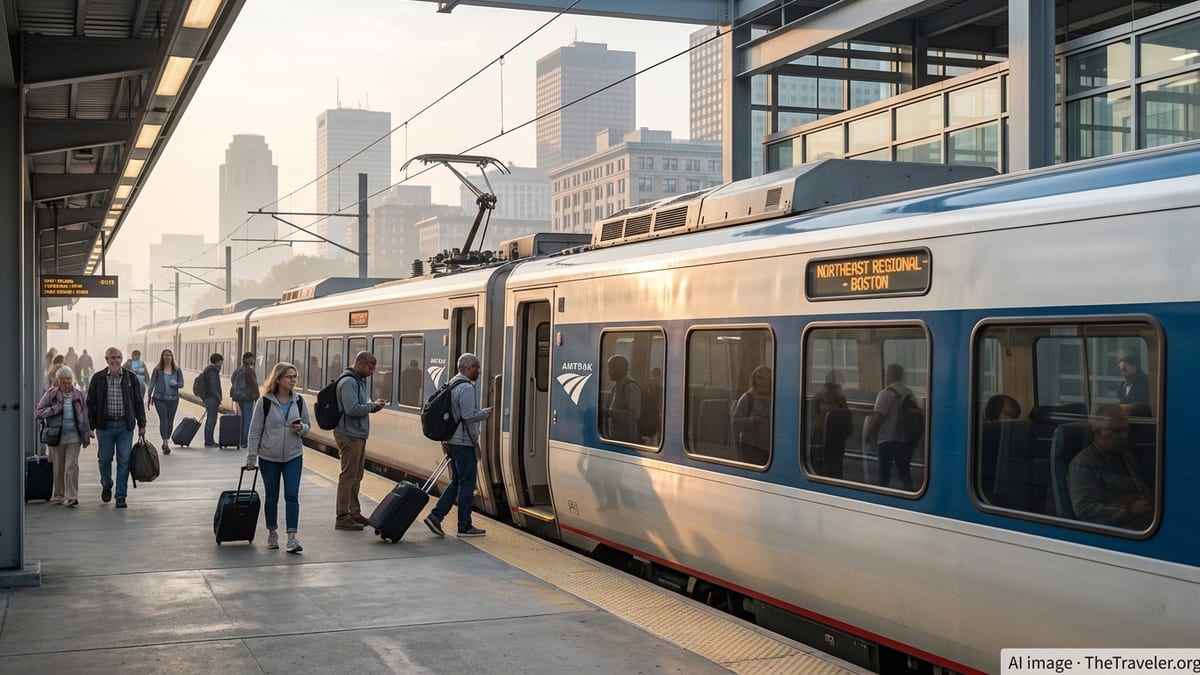
A National Long-Distance Fleet Enters a New Era
The new long-distance program is designed to retire cars that in many cases date to the 1970s and 1980s, replacing them with a standardized family of single-level coaches, sleepers, diners and lounges that can be deployed on routes across the country. Amtrak officials say the goal is not just to swap out old hardware, but to reset expectations for overnight rail in the United States for the next 30 years.
According to Amtrak’s fleet planning documents and recent program updates, the universal single-level cars are being procured through a multi-year competitive process that follows a formal request for information in 2022 and a request for proposals that attracted multiple major builders. The company expects design, testing and certification to take several years, with initial deliveries projected for the early 2030s as older cars reach the end of their useful lives.
The shift to a single-level platform will gradually supplement and ultimately replace much of the existing mix of single-level Viewliner equipment and bi-level Superliners that now serve 14 overnight routes. Amtrak says a common platform will simplify operations and maintenance while still allowing for regional tailoring, such as different window arrangements, lounge layouts or sleeping room configurations suited to specific routes.
Design Priorities: Comfort, Accessibility and Consistency
Amtrak has framed the universal single-level cars as the long-distance counterpart to its new Airo corridor trains and NextGen Acela sets on the Northeast Corridor, with a similar focus on comfort, technology and accessibility. Planning documents highlight upgraded seating, more private-room options, modern food service and reimagined lounge spaces intended to make overnight rail feel less dated and more like contemporary hospitality.
Key priorities include fully accessible passageways, restrooms and sleeping accommodations throughout the train, building on the accessibility standards now embedded in Amtrak’s newer equipment orders. Wider vestibules and doorways, improved lifts for passengers with reduced mobility and better wayfinding are being treated as core design elements rather than afterthoughts. The company has said publicly that the new fleet is expected to “reimagine onboard accessibility and mobility” on long-distance services.
Consistency is another driver behind the universal concept. Today, passengers boarding a long-distance train in the West may encounter Superliner bilevel cars with steep interior stairs, while riders in the East see a different layout and room inventory in single-level Viewliners. A common car platform is intended to offer a more predictable onboard product, regardless of whether a traveler is riding the Empire Builder, the Crescent or the Silver Service trains.
Operational and Environmental Benefits Behind the Shift
Beyond customer-facing features, Amtrak and its partners see practical advantages in a single-level long-distance fleet. Standardized components, shared car shells and unified mechanical systems can reduce the complexity of maintenance and spare parts inventories, particularly as Amtrak expands heavy overhauls and state-of-good-repair work at facilities across the network.
The move dovetails with the rollout of Amtrak’s new ALC-42 Charger locomotives, which have been entering long-distance service since 2022. These diesel-electric units, built by Siemens, are more fuel-efficient and meet stricter emissions standards than the P40 and P42 locomotives they replace. Pairing newer locomotives with modern, lighter-weight cars is expected to generate additional fuel savings while improving reliability and on-time performance on trips that can span multiple time zones.
Standardizing on single-level cars also offers infrastructure advantages. Unlike bilevel equipment, which can be restricted by bridge clearances, tunnel profiles or station platform geometry in certain regions, a universal single-level design can operate almost anywhere on the network. That gives Amtrak more flexibility to adjust consists, add seasonal capacity or redeploy cars in response to demand or service changes without worrying about clearance envelopes.
Passenger Experience: From Cabins to Dining Cars
For passengers, the most visible change will be inside the cars. Drawing on lessons from the Airo corridor program and feedback from riders, advocates and disability groups, Amtrak’s long-distance specifications call for brighter interiors, improved lighting and more intuitive storage solutions. Renderings and early descriptions emphasize larger windows to highlight scenery on routes through the Rockies, the Southwest and the Southeast coast.
Sleeping accommodations are expected to evolve from today’s mix of roomettes and bedrooms toward a broader range of price points and privacy levels, potentially incorporating modern materials, integrated charging, better sound insulation and hotel-style touches. In coach, Amtrak has indicated it wants seats that feel more like widebody airline premium economy than traditional rail recliners, with improved cushioning, legroom, headrests and personal power at every seat.
Dining and lounge cars are another focus. After years of experimentation with simplified food service, the long-distance procurement is framed as an opportunity to re-establish a cohesive onboard dining experience while still recognizing changing culinary and staffing realities. Updated galleys, flexible seating layouts and grab-and-go options are all under consideration, alongside more welcoming lounge interiors where passengers can work, socialize or simply take in the view.
Part of a Wider Modernization Wave Across Amtrak
The universal single-level long-distance cars are one pillar of a broader fleet transformation that includes new high-speed Acela trainsets, next-generation Airo trains for short- and medium-distance corridors and refreshed interiors for existing Superliner and Viewliner equipment. Amtrak has described this as a once-in-a-generation effort made possible largely by recent federal infrastructure funding and a sustained push to upgrade both rolling stock and the tracks and stations that support it.
In parallel with the new equipment, the railroad is investing billions of dollars in bridges, tunnels, stations and maintenance facilities. Major projects on the Northeast Corridor, such as tunnel rehabilitations and bridge replacements, are being advanced alongside accessibility upgrades at hundreds of smaller stations that serve long-distance trains. The aim is to ensure that the new fleet can operate reliably and that passengers encounter a consistently modern environment from the platform to their seat or sleeper.
While passengers will not see the universal single-level long-distance cars in everyday service for several years, Amtrak’s recent updates make clear that the specifications are shaping up and that vendor selection is approaching. For travelers who rely on overnight trains to connect big cities with small communities, the program signals that the long-distance network is not being left behind in the modernization wave, but is instead being positioned as a key part of the future of American rail travel.