


More news on this day
The Airline Operators of Nigeria has downplayed fresh threats of industrial action by aviation unions, cautioning that any disruption of flight operations would deepen the sector’s fuel-driven crisis and further strain a fragile economy that relies heavily on air connectivity.
Get the latest news straight to your inbox!
Operators Warn of Economic and Safety Risks
Recent public statements from the Airline Operators of Nigeria, a body representing private carriers, indicate growing unease over renewed strike talk in the country’s aviation sector. While the association has described the latest threats as ill-timed, it has also framed uninterrupted flight operations as a matter of national economic security, not just commercial interest.
AON has argued that aviation functions as critical infrastructure for Nigeria, connecting remote regions, enabling business travel, and supporting medical, humanitarian, and security movements. The group has warned that a shutdown of airline services would quickly ripple across supply chains, disrupt investment-related travel, and aggravate existing economic headwinds.
Industry commentary in local media shows that operators are particularly concerned about the knock-on impact on safety oversight and scheduling stability if airports or navigation services are affected by coordinated work stoppages. Even short warning strikes have previously led to crowding around terminals, extended delays, and complications in managing aircraft rotations.
Aviation analysts cited in Nigerian business coverage note that every day of halted flights can trigger an extended recovery period as airlines reposition aircraft and crew, resolve backlogs, and handle compensation or rebooking for passengers. From the perspective of operators, preventing a full shutdown has become as important as resolving any specific labour grievance.
Fuel Price Crisis and Strained Airline Finances
The latest friction comes against the backdrop of a severe jet fuel price spike that Nigerian carriers describe as an existential challenge. In recent weeks, AON has publicly detailed how airline revenues are increasingly insufficient to cover fuel costs alone, with some operators reporting that the economics of certain domestic routes have turned decisively negative.
According to published coverage of an association letter to government and regulators, AON has warned that fuel marketers’ pricing practices are “decimating” the sector, and that at least one airline has already suspended operations this year after failing to cope with surging input costs. The group has cautioned that more carriers could follow if no relief is provided, whether through better access to foreign exchange, tax adjustments, or closer monitoring of supply practices.
These financial pressures, operators contend, make the prospect of aviation-wide strikes especially destabilising. Airlines facing higher fuel bills, currency volatility, and persistent infrastructure gaps argue that the industry has little remaining buffer to absorb simultaneous revenue loss from a shutdown of flights.
Observers of the Nigerian market point out that the country has endured several cycles of airline consolidation and collapse in recent decades. The present crisis, layered with labour tensions, has revived debates about whether the business environment for aviation has become structurally unsustainable without policy intervention.
Labour Unions Push Back on Working Conditions
On the other side of the dispute, aviation unions have been drawing attention to long-running disputes over pay, welfare, and conditions in key government agencies such as airspace management, meteorology, and airport operations. Publicly available statements from union coalitions show that demands range from implementation of previously agreed salary structures to resistance to proposed relocations or demolitions of agency headquarters buildings.
In earlier episodes, unions serving air traffic management, safety regulation, and airport services have organised warning strikes that slowed or halted operations at major hubs including Lagos and Abuja. Reports from those periods describe passengers trekking long distances to terminals, significant delays, and a reduced schedule as airlines adjusted to the withdrawal of ground and technical services.
Union representatives featured in local reporting argue that industrial action has often been a last resort after negotiations and ultimatums failed to yield implementation of signed agreements. They contend that improved welfare for aviation workers is essential for safety and efficiency, and that any short term disruption must be weighed against the longer term risks of under-resourced agencies.
These contrasting narratives have created a tense atmosphere around collective bargaining across the Nigerian aviation value chain. While operators emphasise sector survival and economic continuity, unions highlight unmet commitments and the need to retain skilled personnel in a competitive global labour market.
Passengers Face Uncertainty as Talks Continue
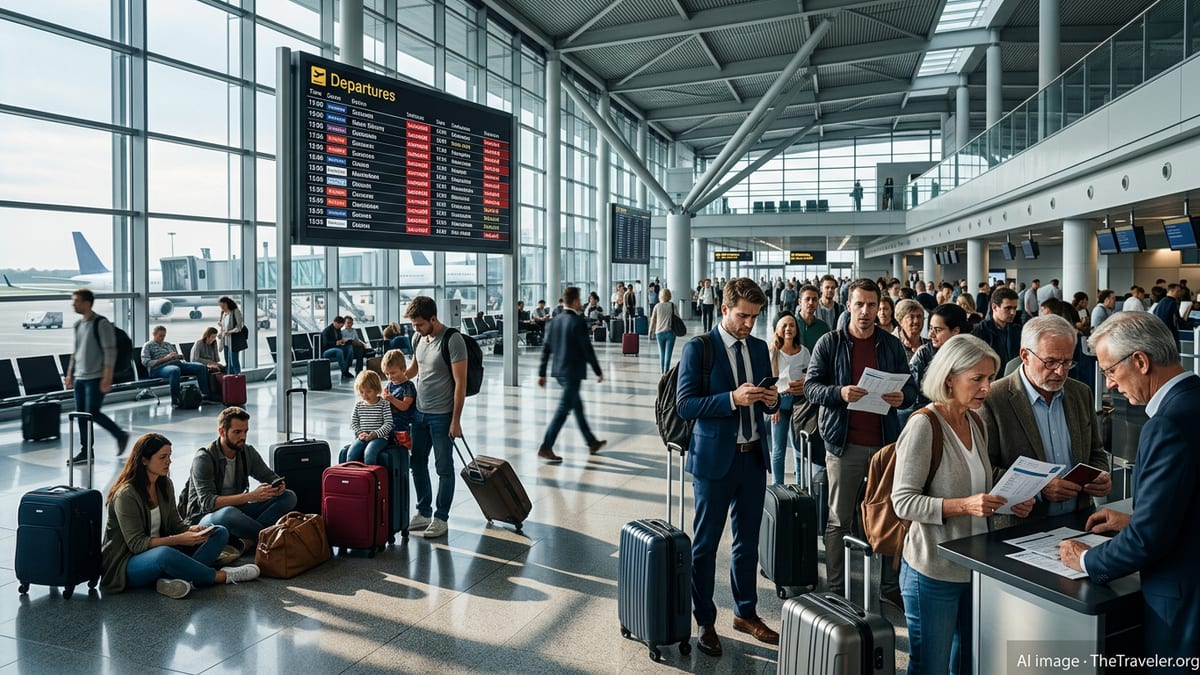
For travelers, the immediate impact of strike threats is uncertainty. Experience from previous industrial actions shows that even the possibility of a shutdown can prompt early-morning crowds at airports, last-minute rescheduling, and a rush on limited seats with carriers perceived as less exposed to the dispute.
Travel agencies and corporate travel managers in Nigeria have tended to respond by building greater flexibility into itineraries, advising clients to allow more connection time, and preparing contingency plans that include alternative dates or modes of transport. However, the country’s road network and security challenges in some regions limit the feasibility of switching from air to ground travel on short notice.
Analysts following the market note that frequent disruption risks undermining confidence in domestic air travel, which has already been tested by rising fares driven by fuel and currency pressures. If passengers come to see the system as chronically unreliable, they may scale back non-essential trips or shift business meetings online, eroding a crucial revenue base for airlines.
Against this backdrop, AON’s firm response to the latest strike rhetoric can be read as both a public relations move and a signal to policymakers that a prolonged shutdown could push vulnerable carriers over the edge. Union leaders, in turn, are likely to view strong language from operators as an attempt to shape public opinion and government mediation in advance of any formal industrial action.
Calls for Mediation and Long-Term Reform
As tensions simmer, commentary from policy institutes and aviation specialists in Nigeria has increasingly focused on the need for structured dispute resolution and deeper sector reforms. Proposals include clearer timelines for implementing negotiated wage agreements, independent facilitation of talks between unions and both public and private employers, and the classification of certain aviation services as essential under clearly defined rules.
Analysts argue that simply dismissing strike threats without addressing underlying grievances risks perpetuating a cycle of brinkmanship that periodically shuts down airports and damages Nigeria’s reputation among investors and tourists. From this vantage point, AON’s warnings about disruption may need to be matched with commitments from all sides to more transparent engagement.
There are also calls for a comprehensive review of how fuel is sourced, priced, and financed for Nigerian airlines, with some industry voices pressing for targeted fiscal measures or dedicated foreign exchange windows. Without a more predictable cost base, operators warn that even the best labour relations framework will struggle to deliver stability.
For now, Nigerian air travelers remain caught between operators intent on keeping planes flying and unions determined to leverage their bargaining power. Whether the current standoff leads to actual walkouts or is resolved at the negotiating table, its outcome is expected to influence labour relations and investment decisions in the country’s aviation sector for years to come.