


More news on this day
Thousands of journeys across the United Kingdom were disrupted after a technical failure inside the country’s air-traffic control network, with a preliminary report attributing the cascade of cancellations to a software defect that unfolded in the space of a millisecond.
Get the latest news straight to your inbox!
What happened and why it mattered
Published coverage of the incident points to an outage on Tuesday, September 8, 2026 that led airlines to cancel more than 2,000 flights in and out of the UK, while many more services operated with significant delays as traffic limits were introduced to keep the system safe and stable.
The disruption’s scale reflects how tightly the UK flight schedule is linked to centralized airspace management. Even when the underlying fault is limited to one major control area, restrictions can ripple across the country when traffic volumes, flight-plan processing, and controller workload must be managed conservatively during a restart.
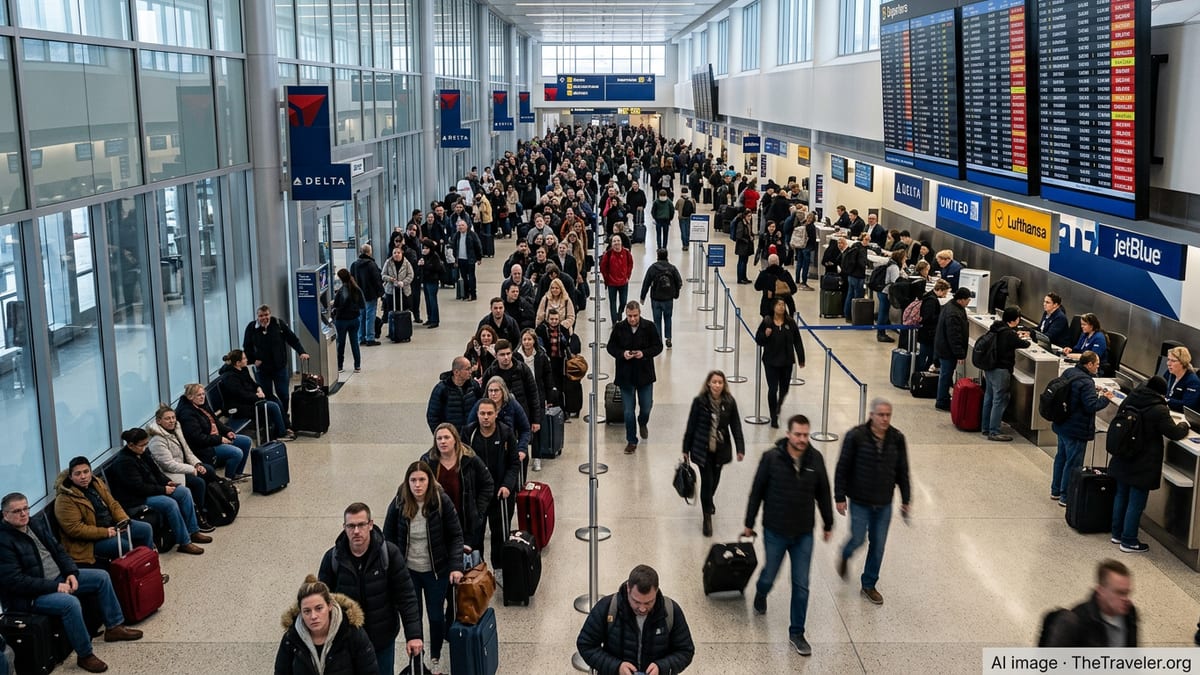
Reports describe passengers spending extended periods on aircraft and in terminals as departure queues backed up and inbound flows were throttled. The knock-on effects extended beyond the day of the outage as aircraft and crews were out of position, creating secondary cancellations and rebookings.
Inside the “millisecond glitch” explanation
NATS, the UK’s main air navigation service provider, published a preliminary report describing a software issue that corrupted flight data extremely quickly, using “millisecond” language to convey how rapidly the defect manifested and spread through a specific part of the system.
According to that preliminary account, the problem affected systems handling flight data associated with the London Area Control centre. While that scope sounds narrow, London-area upper airspace plays an outsized role in the national network because it handles high-altitude flows feeding the country’s busiest airports and overflight traffic.
Published coverage also indicates the investigation considered and ruled out scenarios such as a hostile cyber incident or sabotage, focusing instead on an internal software defect and the operational steps needed to safely reboot and reload flight data.
Why disruption spread beyond London-area control
Even when a technical issue is associated with a single control centre, UK-wide measures can follow if the safest path to recovery involves pausing or limiting departures, then gradually restoring capacity while data loads are validated and controller sectors are brought back online.
Multiple reports indicate that restrictions were applied broadly to allow the underlying National Airspace System to be restarted and flight data reloaded in a controlled manner. That process can require holding aircraft on the ground, spacing arrivals, and coordinating with airports and airline operations centers.
Major airports were among those affected, with published coverage naming hubs including Heathrow and Gatwick, along with other airports across the UK and Scotland. With schedules built around tight turn times, cancellations can quickly become the only way for airlines to regain control of aircraft rotations.
What travelers should know about compensation and rebooking
For passengers, the practical question after a disruption is what assistance applies. Under UK and EU-derived passenger rights frameworks commonly referred to as “UK261,” airlines typically owe care and assistance such as meals, communications, and accommodation during lengthy delays, even when the cause is outside the airline’s control.
Cash compensation, however, depends on the reason for the disruption. When delays and cancellations are driven by air-traffic control or wider network failures, airlines often treat them as extraordinary circumstances, which can limit or eliminate eligibility for fixed compensation while still leaving duty-of-care obligations in place.
Travelers impacted by the September 8 disruption have generally been advised in published consumer guidance to keep receipts for reasonable expenses, use airline apps for rebooking options, and consider whether travel insurance covers additional costs not reimbursed by the airline, particularly when disruption extends into the following day.
What comes next for NATS and UK aviation resilience
The preliminary report has intensified scrutiny of how resilient critical aviation software and operational recovery processes are under real-world pressure. Published coverage suggests attention is focusing on why the fault produced such widespread knock-on effects, and whether safeguards could prevent corrupted data from triggering broad restrictions.
In the days after the incident, coverage also noted renewed debate about leadership and accountability at NATS, as well as calls for a deeper independent review of the systems and procedures involved. The preliminary nature of the findings leaves room for updates as technical investigation continues.
For travelers, the immediate takeaway is that even a brief software defect can lead to multi-day travel disruption when it impacts flight-plan processing and airspace capacity. With autumn schedules still busy and weather volatility increasing, airlines and airports will be under pressure to restore confidence that a single technical anomaly cannot again immobilize the network at national scale.