


More news on this day
Travelers flying through the UAE on Saturday, September 19, 2026 are seeing mixed operations across the country’s three busiest gateways, with flight-status boards and airline advisories showing a normal volume of services alongside scattered cancellations, delays, and revised departure times at Dubai International (DXB), Zayed International Airport in Abu Dhabi (AUH), and Sharjah International Airport (SHJ).
Get the latest news straight to your inbox!
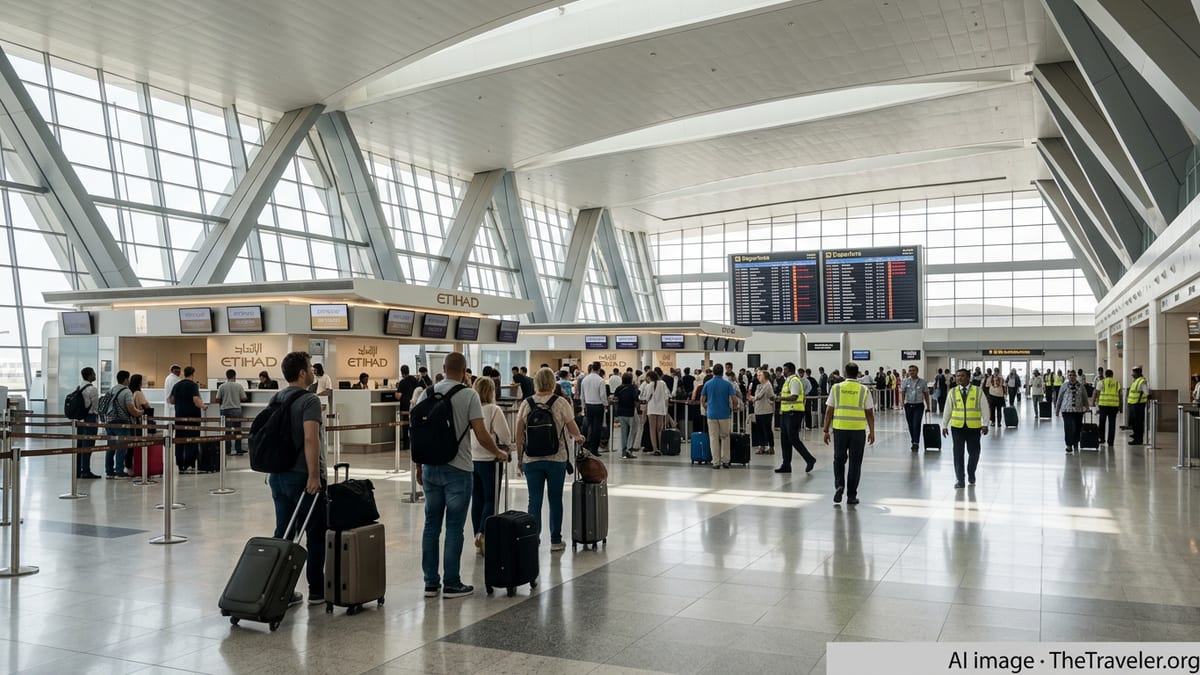
Dubai International (DXB): Heavy schedule, targeted cancellations, rolling delays
Publicly available flight-status trackers indicate Dubai International is operating a full day of departures, with hundreds of flights scheduled across the day. That volume can amplify knock-on effects when individual services are retimed or aircraft rotations change, so travelers are more likely to encounter shifting departure times even when the airport is functioning normally overall.
Published coverage on September 19 lists several flydubai cancellations affecting short-haul Gulf routes, including services between Dubai and Bahrain (FZ023/FZ024) and select Saudi domestic-facing city pairs via Dubai, such as Abha (FZ815/FZ816) and Yanbu (FZ817/FZ818). The same reporting also flags at least one cancellation by another carrier on the Dubai departure board, underscoring that disruptions are not confined to a single airline.
Alongside cancellations, flight boards show revised timings on a number of departures. In practice, that can appear as later-than-planned gate times, a retimed pushback, or an aircraft swap that triggers an updated flight number or operating carrier label, particularly on codeshare services.
Dubai Airports’ flight-status page allows travelers to search by airline, city, or flight number and toggle by date (yesterday, today, tomorrow). Because the page is designed for live updates, travelers can use it as a final check while en route, then rely on their airline app for the most current gate and boarding information.
Abu Dhabi (AUH): Revised departure times show up on select routes
At Zayed International Airport, publicly available departure boards and published reporting point to a largely operating schedule, but with a set of flights showing revised departure times, especially on early-day services. Travelers connecting onward from Abu Dhabi may want to watch for downstream changes to minimum connection windows when a first leg is retimed.
Published coverage on September 19 highlights multiple Etihad-operated departures showing later timings than originally scheduled, including flights to Hyderabad (EY353), Bengaluru (EY233), and Islamabad (EY303). It also lists retimed departures on an Air Arabia Abu Dhabi and Etihad codeshare pairing, including 3L112 marketed with an Etihad codeshare (EY1357) to Ahmedabad.
For travelers trying to reconcile conflicting information between third-party trackers and airline notifications, AUH’s official flight-status pages provide a “last update” timestamp and search tools by flight, airline, or city. That can help confirm whether a retiming is still in effect or has been superseded by a further change.
Weather snapshots and aviation briefings available through UAE aviation weather services show routine METAR and TAF reporting for AUH, but travelers should treat weather data as context rather than a definitive explanation for a delay. Flight delays can also stem from aircraft availability, airspace constraints, late inbound flights, or schedule adjustments.
Sharjah (SHJ): Air Arabia network sees cancellations and notable delays
Sharjah International Airport’s activity is closely tied to Air Arabia’s network, and today’s status boards reflect that concentration: most movements are proceeding, but a handful of services show more significant timing changes. Travelers on carriers with smaller daily frequencies should be especially alert, since a single cancellation can reduce rebooking options.
Published coverage on September 19 lists Air Arabia cancellations affecting routes such as Sharjah to Abha (G9195) and the return Abha to Sharjah (G9196). Additional Air Arabia Abu Dhabi movements on select Gulf routes are also listed as affected in the same reporting, indicating disruption patterns that span multiple UAE airports.
Third-party boards for SHJ show examples of delays on the arrivals side, including flights that are pushed back by more than an hour on certain routes, as well as other services operating on schedule. Because the mix can change quickly, travelers should treat any snapshot as time-sensitive and recheck close to departure.
For passengers, the most practical takeaway is that a “scheduled” label early in the day can still change later as aircraft cycles unfold. Checking status both before leaving for the airport and again after check-in can help travelers react faster to a gate move or a retimed boarding call.
What travelers can do now: Verify status, protect connections, and time your arrival
Across DXB, AUH, and SHJ today, the common thread is variability: many flights operate normally, while a smaller set sees cancellations or revised departure times. Airlines including Emirates and flydubai publish flight-status tools and operational update pages that typically reflect the most current schedule adjustments tied to their own operations.
Travelers with tight connections should consider revalidating the entire itinerary, not just the first leg. A departure that shifts by 30 to 60 minutes can compress a connection enough to trigger an automatic rebooking or leave travelers needing assistance at transfer desks, especially for tickets involving multiple airlines or separate bookings.
For airport arrival timing, the safest approach on a disruption day is to plan for standard check-in windows while also factoring in the possibility of last-minute gate changes. If a flight is canceled, travelers can save time by checking the airline’s “manage booking” functions first for automated rebooking options before heading to the airport.
Finally, travelers should keep documentation handy for any schedule change notifications received by email or app, and watch for updates that may reissue boarding passes or alter terminal assignments. With mixed operations reported across the UAE today, the best defense is frequent verification through the official airport flight-status pages and the operating airline’s app.