

More news on this day
Spring travel across the northeastern United States is facing fresh turbulence as a new wave of April 2026 delays at Philadelphia International Airport feeds into a wider pattern of disruption at major hubs from New York to Boston and Washington.
Get the latest news straight to your inbox!
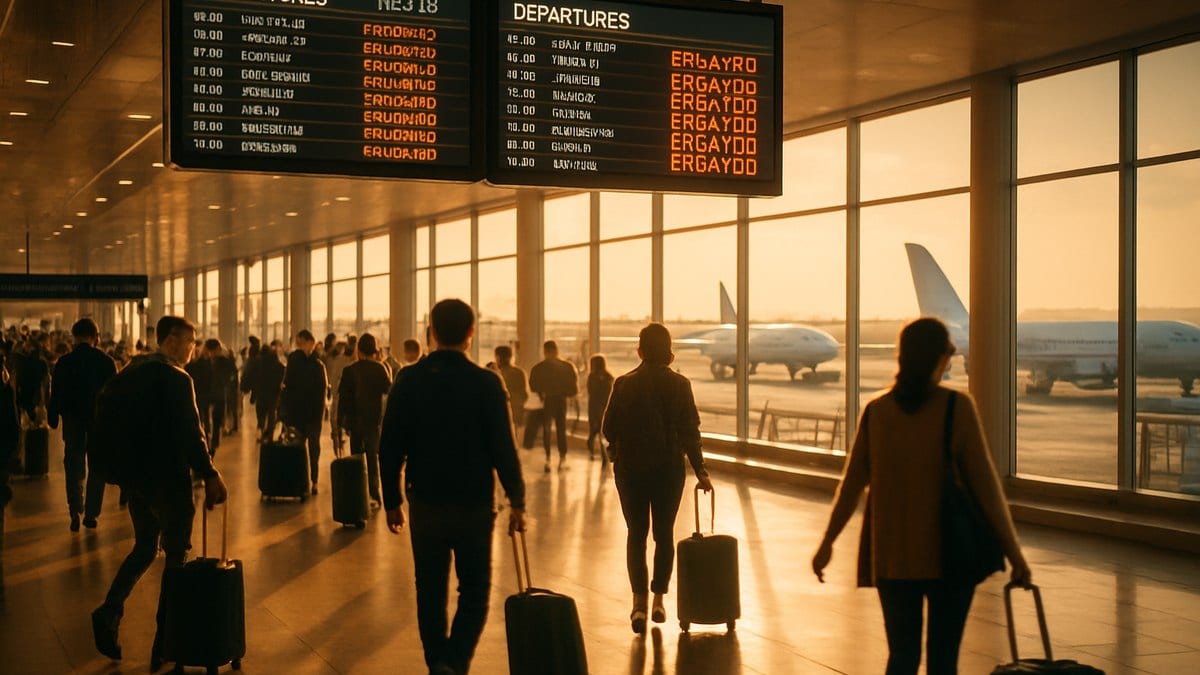
Fresh Wave of Disruption at Philadelphia
Publicly available flight-tracking data and industry coverage for mid-April 2026 indicate that Philadelphia International Airport is contending with elevated levels of delays, with dozens of services departing behind schedule and a smaller number cancelled outright. Reports highlight American Airlines, Spirit Airlines and Frontier among the carriers most affected on some of the busiest days, with late-running departures and rolling gate changes complicating travel plans for domestic and connecting passengers.
Coverage from travel outlets describes Philadelphia as one of several U.S. airports experiencing notable disruption this month, alongside hubs such as New York, Boston, Washington, Orlando and Detroit. Weather-related constraints, including low cloud cover and intermittent instrument flight rules conditions across the Mid-Atlantic and Northeast, are cited as a recurring trigger for schedule slowdowns at Philadelphia and its regional peers.
Travel industry reporting also points to Philadelphia’s role as a key node in the national network, meaning local issues can spill outward quickly. When arrival flows are throttled or departures stack up on the ground, aircraft and crews that should be cycling through other cities fall out of position, setting the stage for secondary delays hundreds of miles away.
Weather and Network Complexity Drive April Slowdowns
Published summaries of the Federal Aviation Administration’s April 2026 outlook for the Northeast and Mid-Atlantic underscore the influence of spring weather on current operations. Low ceilings, patchy visibility and unsettled conditions have combined to limit capacity at various points, prompting ground delays and metering programs that reduce the rate at which flights can land and depart at major airports.
In this environment, even modest weather systems can have outsized effects. Analysis of recent delay patterns shows that airports including Boston Logan, New York’s trio of major fields, Philadelphia and the Washington area have each experienced periods where instrument conditions or convective weather constrained traffic. In some cases, thunderstorms and turbulence further south or west have also affected aircraft and crews scheduled to operate into the Northeast later in the day, amplifying the impact.
Aviation commentators note that the modern hub-and-spoke system magnifies these vulnerabilities. Airlines depend on intricate rotations linking multiple cities in short succession. When a single leg is pushed back by weather or congestion, it often triggers a chain of missed slots and curtailed turn times that can take hours to unwind, particularly during peak morning and evening banks.
Cascading Effects at New York, Boston and Washington
The knock-on effect of Philadelphia’s April disruptions is increasingly visible at other major Northeast gateways. Industry reports on network performance this month describe New York and Boston joining Philadelphia and Washington in lists of airports experiencing above-average weather-related delays, with congested airspace and crowded terminal operations compounding the challenge.
New York’s airports have long been recognized as a central source of delay propagation across the United States, and current conditions are consistent with that pattern. When holding patterns, runway configuration changes or spacing requirements reduce throughput at Kennedy, LaGuardia or Newark, flights arriving from Philadelphia and other regional origins can be forced into extended vectors or ground holds, lengthening block times and disrupting onward connections.
Boston and Washington, both tightly integrated into the Northeast corridor, are seeing similar ripple effects. Published coverage of recent delay days documents missed connections on shuttle-style services and transcontinental routes alike, as late-arriving aircraft from Philadelphia and other Mid-Atlantic points arrive too late to operate subsequent legs on time. The result for travelers is a patchwork of rolling delays and isolated cancellations even at airports not directly under the heaviest weather.
Passenger Impact and Strain on Airline Operations
For passengers, the April pattern at Philadelphia and other hubs has translated into longer connection times, crowded gate areas and elevated stress around missed events and rebooked itineraries. Travel news outlets recount instances of travelers facing waits stretching from under an hour to several hours as departure times slide, with some itineraries requiring overnight stays after last-bank connections fell outside operating hours.
Airlines, meanwhile, are balancing weather-driven limitations with ongoing staffing and fleet utilization pressures. Publicly available data on daily delay tallies shows several large U.S. carriers contributing significant numbers of late departures in early April, reflecting both the scale of their operations and the challenge of recovering once patterns begin to deteriorate. Carriers operating large banks at Philadelphia must decide whether to protect key trunk routes, reposition aircraft for the following day, or concentrate resources on clearing backlogs at specific hubs.
Operationally, irregular operations place strain on customer-service channels and airport infrastructure. Travel media reports describe long queues at service desks, heavy usage of mobile rebooking tools and higher call volumes as travelers seek alternatives. At the same time, ramp crews, air traffic controllers and airport staff work within capacity and safety constraints that limit the pace at which the backlog can clear, particularly when weather remains unsettled.
What Travelers Can Expect for the Remainder of April
Looking ahead through the rest of April 2026, forecasts and historical patterns suggest that intermittent disruption is likely to persist, even if individual days vary widely in severity. Spring frontal systems and convective activity typically remain a feature across the Mid-Atlantic and Northeast through late month, and travel analysts caution that further episodes of low visibility or thunderstorms could again trigger broad regional impacts.
Consumer-focused travel publications are reiterating familiar advice in light of Philadelphia’s latest delays and the wider Northeast pattern. Morning departures are generally viewed as more resilient to knock-on disruption from earlier in the day, while nonstops reduce the risk inherent in tight connections at busy hubs. Passengers are also encouraged to monitor flight status frequently through airline apps and airport displays, as schedules can shift rapidly once traffic-management initiatives are introduced.
Although the April disruption has complicated plans for many travelers, capacity constraints and weather challenges at Philadelphia and its neighboring hubs are not new. Aviation planners continue to point to infrastructure improvements, technology upgrades and more flexible scheduling practices as longer-term tools to ease congestion. For the moment, however, passengers moving through Philadelphia, New York, Boston and Washington this month may need to build extra time and contingency plans into their journeys.