

More news on this day
April 2026 is bringing a new round of turbulence for global air travel, with tracking data showing at least 311 flight delays scattered across seven countries as weather, geopolitical tensions and operational strains converge on already stretched airline networks.
Get the latest news straight to your inbox!
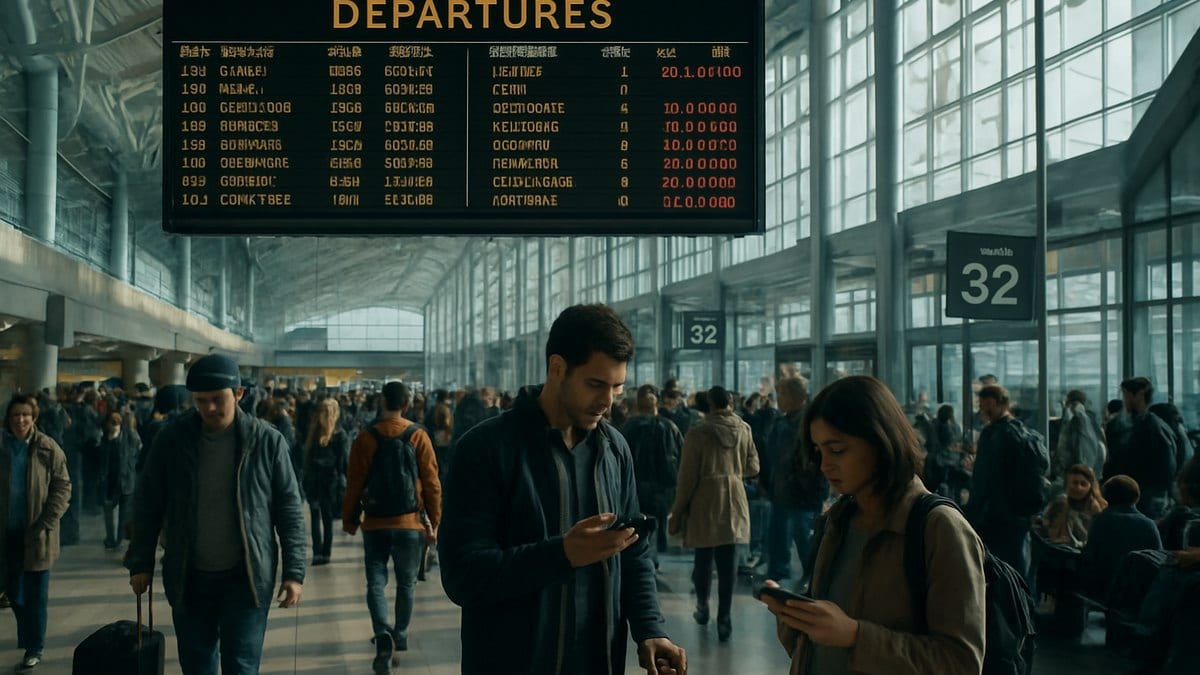
Delays Concentrated Across Seven Key Aviation Markets
Publicly available aviation tracking and travel industry reports for mid April 2026 indicate that at least 311 flight delays have been recorded across seven countries, including Canada, the United States, China, Germany, Bahrain, Qatar and Russia. These delays, clustered at major international hubs, are unfolding on top of dozens of cancellations and are affecting both short haul and long haul routes.
Coverage from travel news outlets describes Canada as one of the focal points on April 12, with 311 delays and 29 cancellations logged across the country’s busiest airports. Major gateways such as Toronto, Vancouver and Montreal are reported to be working through extended queues and knock on schedule changes as airlines attempt to reposition aircraft and crews to restore order to their timetables.
Reports also highlight that the impact is not limited to North America. Operations in Germany, Bahrain, Qatar, Russia and parts of China have been affected by the same web of airspace restrictions, diversions and crew duty time limits that have defined much of 2026’s aviation narrative. In each country, relatively contained local disruptions are being magnified by the interconnected nature of global route networks.
Industry summaries note that while 311 delays may appear modest compared with the thousands of daily flights, the figure is significant when those delays concentrate on core hub operations. Even small clusters of late departures at major nodes can cascade through entire systems, forcing airlines to reshuffle aircraft rotations and delay onward connections well into subsequent days.
Weather, War and Airspace Restrictions Feed a Global Pattern
Air travel in 2026 is operating within a volatile backdrop that blends severe weather with ongoing conflict related airspace closures. Earlier in the spring, a powerful March blizzard in North America led to thousands of cancellations and delays, leaving airlines with limited slack heading into April. Many carriers are still working with tight aircraft and crew reserves, making them less able to absorb fresh disruptions.
At the same time, the conflict involving Iran has prompted extensive airspace closures and route suspensions in parts of the Middle East, according to international economic and aviation analyses. Gulf hubs that typically act as bridges between Europe, Asia and Africa have seen large portions of traffic diverted or grounded, forcing airlines to design longer routings around restricted zones and increasing flying times and fuel usage.
Travel industry coverage of April’s disruptions in Europe and the Middle East points to fuel supply issues, temporary airport capacity constraints and protest related slowdowns as additional stress points. These factors are combining with seasonal weather systems to produce irregular pockets of congestion where aircraft, crew and passengers accumulate faster than the system can clear them.
Analysts quoted in public reports suggest that the geographic spread of April’s 311 documented delays across seven countries is less important than the underlying causes linking them. The same pressure points keep recurring: weather driven schedule instability, rerouted airspace corridors, and airports and airlines that entered the spring travel period with little margin after a difficult winter.
North American Hubs Under Strain as April Begins
In the United States and Canada, early April has brought a series of localized disruption spikes. Data summarized by consumer facing air travel services shows that major hubs such as Chicago, Detroit and Newark have all experienced significant clusters of delays in recent days, even on days when cancellations remained relatively limited.
Chicago’s main hub has been identified in some reports as among the most delay heavy U.S. airports in mid April, with hundreds of late departures and arrivals recorded within a single day. Separate coverage focused on Detroit notes that more than one hundred flights were delayed on April 11 alone, with additional knock on impacts for connecting traffic across domestic and international networks.
Newark Liberty International Airport, a key gateway for transatlantic and domestic services, has also faced repeated schedule reshuffles. Travel features focusing on early April describe over one hundred delays on routes linking Newark with other U.S. cities and European destinations, as a mix of regional weather and upstream disruptions forced timetable changes.
In Canada, the April 12 spike of 311 delays and 29 cancellations has emerged as one of the most acute one day events so far this month. Travel publications note that the combination of ongoing global instability and residual winter weather has left Canadian carriers particularly exposed, especially on routes that rely on complex interline and codeshare arrangements through U.S. and European hubs.
Europe and Asia Pacific Feel Ripple Effects
Across Europe, April 2026 has been marked by a continuation of disruption that began in late winter. News coverage from earlier in the month highlighted more than a thousand delayed flights and over one hundred cancellations within a short period, as storms, staffing constraints and wider network effects rippled through key airports.
Specific reporting on France and the wider European network describes how a mix of air traffic control labor action, airline staffing issues and seasonal weather created backlogs at major airports including Paris and Nice. Although many of these delays fell outside the 311 recorded on April 12 across seven countries, they are part of the same evolving pattern of strain on global schedules.
In Asia Pacific, recent travel analysis points to severe weather and fuel related pressures at major hubs, forcing airlines to contend with longer routings and tighter turnaround times. Global aviation monitoring indicates that when Asia Pacific hubs experience even moderate disruption, the consequences are soon felt in Europe and North America, because many long haul aircraft cycle through multiple continents within a few days.
Travel risk consultancies and aviation data companies cited in public reports emphasize that April’s disruption is not confined to a single region or set of carriers. Instead, it reflects the way in which regional shocks, from European storms to Middle Eastern airspace closures, create schedule instability that shows up as clusters of delays in countries far from the original cause.
Passengers Face Longer Queues and Complex Rebookings
For travelers, the practical impact of April’s 311 delays across seven countries is being felt in longer queues, missed connections and more complex rebooking scenarios. Passenger experiences shared on consumer platforms and summarized by travel outlets describe crowded terminals, rolling departure time estimates and limited same day alternatives on popular routes.
In Canada and the United States, high load factors on many spring flights mean that when a service is heavily delayed or cancelled, moving passengers to later departures can involve overnight stays or multi stop routings. Reports also indicate that crew duty time limits are sometimes forcing last minute aircraft swaps or cancellations when earlier delays push operations beyond allowable work hours.
Across Europe, North America and the Middle East, passenger rights frameworks and airline policies determine what support is offered during long delays, from meal vouchers to hotel accommodation. Consumer advocacy organizations have been using April’s disruption wave to remind travelers to document delays, keep receipts and review carrier specific rules when seeking refunds or compensation.
Travel advice pieces responding to the latest disruption recommend booking longer connection windows, favoring early morning departures when possible, and closely monitoring flight status via airline and airport channels. As April 2026 continues, the pattern of 311 delays across multiple countries is being viewed by analysts as another signal that global aviation remains vulnerable to overlapping shocks, even as demand for international travel stays strong.