

More news on this day
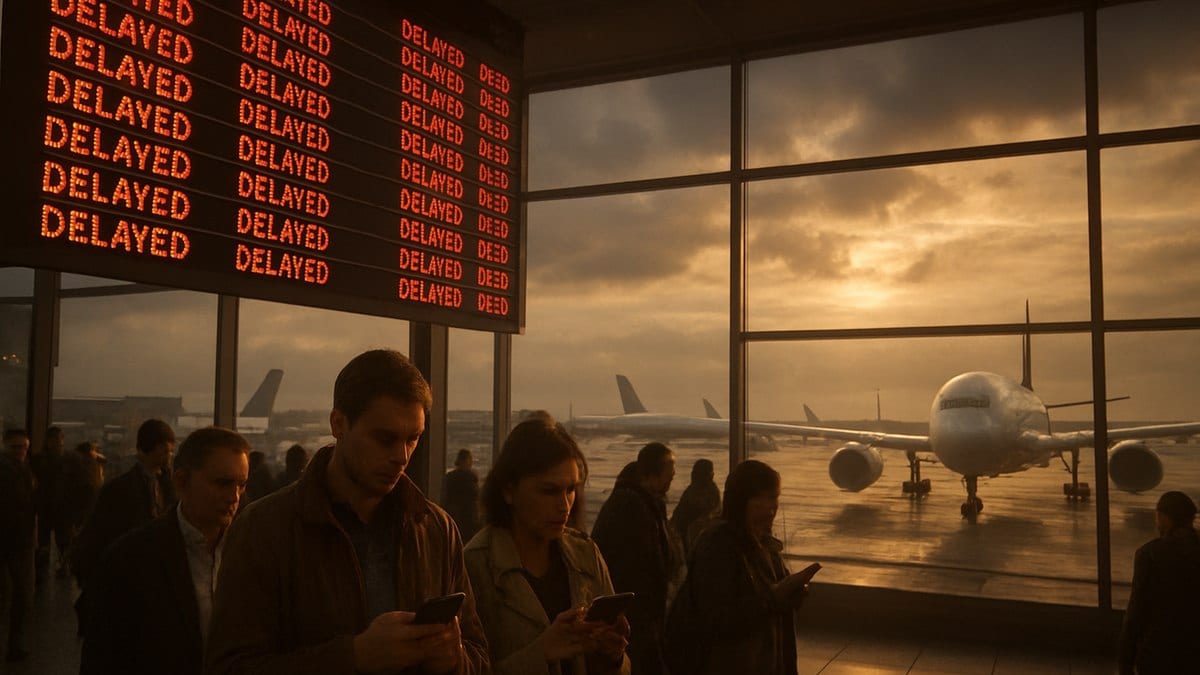
Flight cancellations and delays have surged across at least seven countries in early April 2026, as severe weather, industrial action and lingering airspace restrictions combine to unsettle spring travel plans on multiple continents.
Get the latest news straight to your inbox!
Storm Systems Knock Schedules Off Course
Atlantic and European windstorms moving across the North Atlantic and into the continent at the start of April have played a central role in the latest disruption spike. Operational data cited by passenger rights groups and industry trackers indicates that storms have repeatedly forced runway closures, schedule reductions and go-arounds at major hubs, with ripple effects that extend well beyond the immediate weather window.
In northern and western Europe, a powerful Atlantic low dubbed Storm Dave has been blamed in published coverage for hundreds of delays and more than 200 cancellations in a single multi day period, affecting airports in countries including Iceland, Sweden, Ireland, England and Germany. Additional storm systems such as Storm Goretti have led to temporary runway suspensions and dozens of cancellations at airports in the United Kingdom and Germany, further eroding schedule reliability at the height of the Easter return rush.
Southern Europe has not been spared. Weather related disruption reports from early April highlight heavy rain and gusty winds affecting Mediterranean gateways, forcing ground handlers and air traffic managers to slow operations for safety reasons. While many of the individual delays measured only minutes, the cumulative impact on tightly timed hub operations translated into missed connections and aircraft being out of position later in the week.
In the United States, a series of severe weather outbreaks stretching from late March into early April has also weighed on punctuality. Publicly available information for major carriers shows waves of weather waivers linked to thunderstorms around hubs such as Chicago, Houston and other central and southern airports, leading to hundreds of delayed flights and dozens of cancellations as airlines attempted to reset their networks.
Labor Unrest Adds to European Aviation Strain
Alongside the storms, industrial action within the aviation sector has intensified in several European countries, compounding the operational challenges. Reports from airline advisories and travel industry outlets indicate that Italy, Germany, France, Spain and the United Kingdom have all experienced some form of aviation related labor unrest since late March, with April 2026 emerging as a focal point.
In Italy, air traffic control staff are carrying out a series of limited duration strikes throughout April. Notices from airlines serving the country highlight industrial action windows on multiple dates, including a four hour stoppage on April 10 that has prompted preemptive cancellations and schedule changes affecting Rome, Milan and a number of regional airports. Guidance issued to travelers suggests avoiding tight connections on designated strike days, as even short stoppages can generate multi hour knock on delays.
Germany has been dealing with separate union led action affecting both airport ground services and airline staff. One major carrier has already faced a cabin crew strike that triggered the cancellation of hundreds of flights and stranded tens of thousands of passengers over the Easter return period. While a minimum services framework has kept part of the schedule operating, disruption metrics compiled by aviation analysts show elevated cancellation rates persisting into April as airlines work through backlogs.
France and Spain continue to wrestle with their own patterns of labor related disruption. Coverage from European travel publications describes recurring slowdowns and selective strikes among air traffic control and airport workers in both countries, which have intermittently impacted operations at hubs such as Paris Charles de Gaulle, Paris Orly, Madrid and Barcelona. The result has been a patchwork of schedule changes that can be difficult for travelers to predict more than a few days in advance.
Middle East Airspace Constraints Reshape Long Haul Routes
Beyond Europe and North America, ongoing instability in parts of the Middle East is reshaping long haul flight paths and contributing to global disruption statistics. Security related airspace restrictions and temporary airport closures reported across several states since early March have reduced the number of viable corridors linking Europe, Asia and Africa, forcing airlines to reroute or suspend services.
Travel industry briefings and consultancy alerts describe a pattern in which major hubs such as Dubai and other regional gateways have periodically limited operations or faced congestion as traffic is funneled through fewer open routes. While some airports have partially reopened following earlier shutdowns, schedules remain thinner than usual, and airlines continue to cancel or adjust flights when overflight permissions change at short notice.
This environment has a direct impact on passengers in at least seven nations, as travelers from North America, Europe, Asia and Australasia who would normally connect through the Gulf region confront tighter seat availability and less predictable itineraries. The need to route around restricted airspace can add hours to flight times and push aircraft and crews beyond their planned duty cycles, triggering additional crew related delays later in the day.
Published guidance from legal and consumer advocates emphasizes that compensation eligibility for these disruptions varies significantly by jurisdiction and cause. Weather and security measures often fall into categories where financial compensation is limited, even when airlines are required to provide rebooking assistance or refunds, leaving many travelers facing extended journeys without additional monetary relief.
Asia Pacific Networks Feel the Backwash
Asia Pacific carriers and hubs are also feeling the strain as April progresses. Data compiled by regional aviation trackers for the final days of March, feeding into the early April period, shows hundreds of cancellations and thousands of delays across major airports in China, Southeast Asia, Japan and the broader region. Severe thunderstorms and heavy rain, coupled with chronic congestion at some large hubs, have contributed to rolling bottlenecks.
On March 31, for example, monitoring services recorded several hundred cancellations and more than five thousand delays across Asia Pacific, affecting airports in cities such as Beijing, Jakarta, Tokyo and Riyadh. Analysts note that the aircraft and crew dislocations created by such a concentrated disruption event can take days to unwind, meaning travellers in early April may still be boarding flights affected by aircraft that were out of position at the end of March.
These challenges intersect with the constraints in Middle Eastern airspace, since many itineraries between Asia and Europe or North America rely on smooth operations through Gulf hubs. With schedules under pressure in multiple regions at once, options for same day rebooking have contracted, especially in premium cabin and school holiday travel periods. Passengers are being urged through airline advisories and travel press to build additional buffer time into connections and to monitor reservations closely for last minute timing changes.
Tourism boards and industry observers across Asia Pacific are watching the situation carefully, as a prolonged pattern of disruption could weigh on inbound leisure demand at the very moment when many destinations are seeking to consolidate post pandemic recovery gains. For now, the expectation is that once the current cluster of storms, strikes and routing constraints eases, airlines will work to restore more reliable spring and summer schedules.
What the April Pattern Means for Travelers
For individual travelers, the April 2026 disruption surge across at least seven countries underscores the importance of planning for volatility, even outside traditional peak summer periods. Publicly available airline waivers and advisory notices show a growing trend toward proactive schedule adjustments ahead of forecast storms or strike windows, rather than relying solely on day of operations decisions.
Passenger rights organizations and legal commentators continue to stress the value of understanding the protections that apply from the country of departure, whether under European Union regulations, United Kingdom rules, United States Department of Transportation policies or local consumer law in other markets. In many cases, entitlement to meals, accommodation or rebooking assistance depends on the specific cause of disruption and the jurisdiction involved.
Travel experts writing in consumer outlets recommend that passengers transiting the most affected regions in April consider longer connection times, avoid the last flight of the day on critical legs where possible, and maintain flexible accommodation plans at their destination. They also highlight the benefit of monitoring real time data from flight tracking tools and airline apps, which can sometimes flag likely delays before they appear on airport departure boards.
With the spring travel season still unfolding, industry forecasts suggest that further weather systems, ongoing labor negotiations and geopolitical developments could all influence flight reliability in the weeks ahead. For now, April 2026 is shaping up as a stress test for global aviation resilience, with seven nations in particular illustrating how quickly local disruptions can cascade across an interconnected air travel network.