

More news on this day
An unexpected burst of heavy April snowfall around Manali’s Atal Tunnel in Himachal Pradesh has turned a prime spring travel corridor into a scene of winter turmoil, with traffic disrupted, vehicles stranded on icy highways and visitors scrambling to adapt their holiday plans.
Get the latest news straight to your inbox!
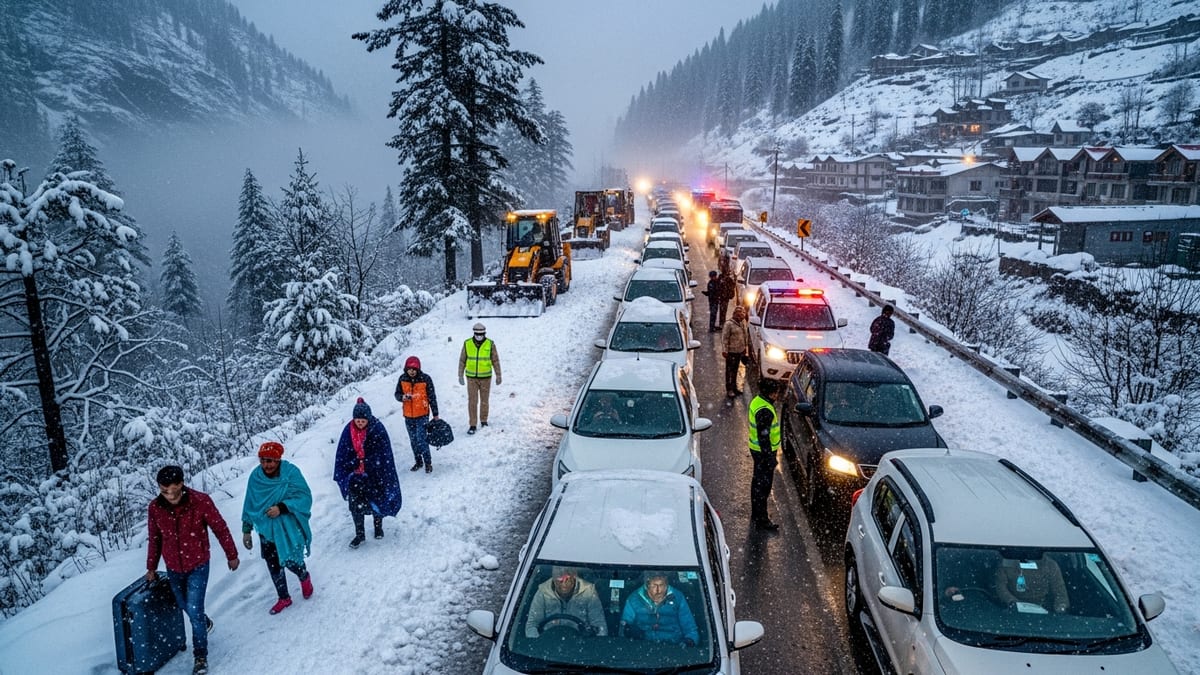
Spring Turns To Winter Around Himachal’s Showcase Tunnel
The Atal Tunnel, a 9-kilometre engineering landmark linking Manali with the Lahaul valley, is marketed as an all-weather gateway. Yet the latest April snowstorm has shown how quickly conditions in the high Himalayas can deteriorate even after the traditional winter season. Recent coverage from Indian and regional outlets describes sustained snowfall on the approaches to the tunnel, including the South Portal near Manali and stretches towards Sissu and Koksar, creating a winter-like chill in early April.
Published reports indicate that fresh snow over successive days has coated roads and slopes above Manali, with higher reaches of Lahaul and Spiti recording significantly more accumulation than the town itself. Images and social media posts from early April show vehicles crawling past snowbanks and visitors posing beside freshly fallen snow at popular lay-bys, underscoring the contrast between mild conditions in lower Kullu and the wintry scenes just a short drive away.
Travel and tourism-focused outlets note that what began as a welcome surprise for holidaymakers hoping to “catch a last snowfall” has, at times, tipped into disruption as snow deepened and temperatures dropped. The result has been a mix of delighted first-time snowfall experiences and mounting anxiety as traffic slowed, parking areas filled and visibility declined on exposed sections of highway.
Traffic Disruptions And Stranded Vehicles On Key Route
According to recent news reports, the storm brought periods of heavy snow, icing and sudden whiteouts on the Manali–Atal Tunnel route and beyond into Lahaul. Several accounts describe long queues of vehicles near the tunnel portals as authorities restricted movement when conditions worsened, particularly on inclines where compacted snow created a slick, hard-to-navigate surface for buses, cars and motorcycles.
Earlier this season, similar spells of March and early April snowfall in the same corridor reportedly left hundreds of vehicles stuck for hours, with some travelers forced to remain in their cars until ploughs and loaders could clear the way. The latest April event appears to have followed a comparable pattern on a smaller but still disruptive scale, catching many visitors who expected calmer spring weather.
Publicly available information from Himachal Pradesh weather bulletins points to a broader wet spell across the state this week, with rain in lower valleys and snow on higher passes such as Rohtang, Kunzum and Baralacha. The Atal Tunnel sits directly on this climatic divide, so even modest systems can turn its northern and southern approaches into bottlenecks when snow combines with tourist traffic at the height of the holiday season.
Travel reports emphasize that, while the tunnel itself generally remains open, the real challenge lies on the exposed approach roads, where avalanches, drifting snow and sheet ice can force temporary closures. When this happens, vehicles are often halted well before the portal, resulting in long tailbacks that leave tourists effectively stranded until conditions improve.
Impact On Tourists And Local Travel Plans
The April snow has upended expectations for many visitors who planned on typical shoulder-season conditions: cool days in Manali, clear roads and distant snow-capped peaks rather than active snowfall. Social media posts and travel blogs from the past week describe visitors arriving in light jackets and sneakers only to encounter heavy flakes and ankle-deep slush at viewing points near the tunnel and in Lahaul.
Some accounts mention day trips from Manali that were cut short when drivers decided to turn back due to worsening visibility or reports of congestion ahead. Others speak of extended halts at roadside cafes and dhabas as groups waited for updates on whether convoys would be allowed to proceed. For travelers on fixed itineraries, such delays can mean cancelled activities in Solang Valley, Sissu or Jispa, as well as missed onward connections towards Leh.
Local businesses, especially taxi operators, guesthouses and small eateries along the corridor, appear to be experiencing a mixed impact. On one hand, images of snow-draped roads have drawn more last-minute visitors hoping to experience “live snowfall” in April. On the other, sudden closures and safety concerns can limit actual movement, concentrating crowds in a few accessible areas and disrupting carefully planned day circuits that many operators rely on during the early spring window.
Travel industry commentary suggests that these swings reinforce a trend seen in recent years: reduced and erratic snowfall in central Manali but persistent, sometimes intense events around the Atal Tunnel and further into Lahaul. This pattern is encouraging more tourists to chase snow at higher elevations, increasing pressure on a road network that remains vulnerable to rapid weather changes.
Why An April Snowstorm Is So Disruptive In The Himalayas
Meteorological assessments of Himachal Pradesh’s climate underline that snowfall in April is not unprecedented on high passes, but the combination of changing travel patterns and social media-driven expectations is amplifying its impact. The opening of the Atal Tunnel in 2020 dramatically shortened travel time between Manali and Lahaul, transforming what used to be a remote winter landscape into an easily reachable day excursion for thousands of visitors.
In practical terms, this means more inexperienced drivers and lightly equipped tourists are now entering terrain where late-season snow is still common. When a strong system sweeps across the western Himalayas, snow levels can briefly drop, bringing heavy flakes to elevations that many consider “safe” by April. The resulting mismatch between expectations and reality can be seen in videos of two-wheelers attempting to navigate icy hairpins and compact cars stuck in snowbanks not far from the tunnel portals.
Climate observers also point to broader variability in Himalayan weather, with some winters producing scant snowfall followed by sudden, intense events in late March or April. Such bursts can overload already saturated slopes, increasing avalanche risk on surrounding ridges and making road-clearing operations more complex. Even when accumulations near the tunnel appear modest, high-altitude sections further along the Manali–Leh route can receive far deeper snow, necessitating strict controls on traffic until stability is assessed.
For local communities in Lahaul and Spiti, the snowstorm offers both challenges and a reminder of how recently these areas remained cut off for months each winter. While the tunnel has improved year-round connectivity, residents continue to live with the reality that a single powerful weather system can still disrupt supplies, medical access and tourism flows, especially in the shoulder seasons.
What Travelers Need To Know Before Heading To Manali And Atal Tunnel
Travel advisories and recent reporting from Himachal Pradesh highlight several practical lessons for anyone planning a trip to Manali and the Atal Tunnel in the coming days and weeks. First, conditions remain highly changeable in April, and fresh snowfall on higher reaches is still possible even if Manali town is experiencing light rain or clear skies. Prospective visitors are encouraged to monitor official weather bulletins and district-level updates right up to the day of travel.
Second, reliable local transport and appropriate gear matter more than many holidaymakers anticipate. Taxi unions and experienced drivers familiar with the tunnel route can better judge when to proceed or turn back, while visitors equipped with proper boots, layered clothing and basic winter accessories are less likely to be caught off guard if a sightseeing stop turns into a snowbound wait.
Third, flexible itineraries are crucial. Reports from this latest storm and other recent events show that half-day excursions can easily stretch late into the evening if convoys are halted or if snow-clearing machinery is redeployed to more critical stretches of highway. Building buffer days into a trip, or being prepared to swap a tunnel visit for lower-altitude activities around Manali, can prevent disappointment and reduce pressure on already crowded mountain roads.
Finally, the April snowstorm serves as a timely reminder that the Atal Tunnel region, however accessible, remains a high-altitude environment. Travelers who approach it with the same respect they would show in winter months, staying alert to changing skies and road conditions, are better positioned to enjoy the drama of an out-of-season snowfall without becoming part of the next traffic jam headline.