

More news on this day
A powerful early-April storm pattern sweeping across multiple U.S. regions has triggered extensive flight delays and scattered cancellations at six major hub airports, compounding pressure on an already crowded spring travel season and leaving thousands of passengers facing missed connections and overnight disruptions.
Get the latest news straight to your inbox!
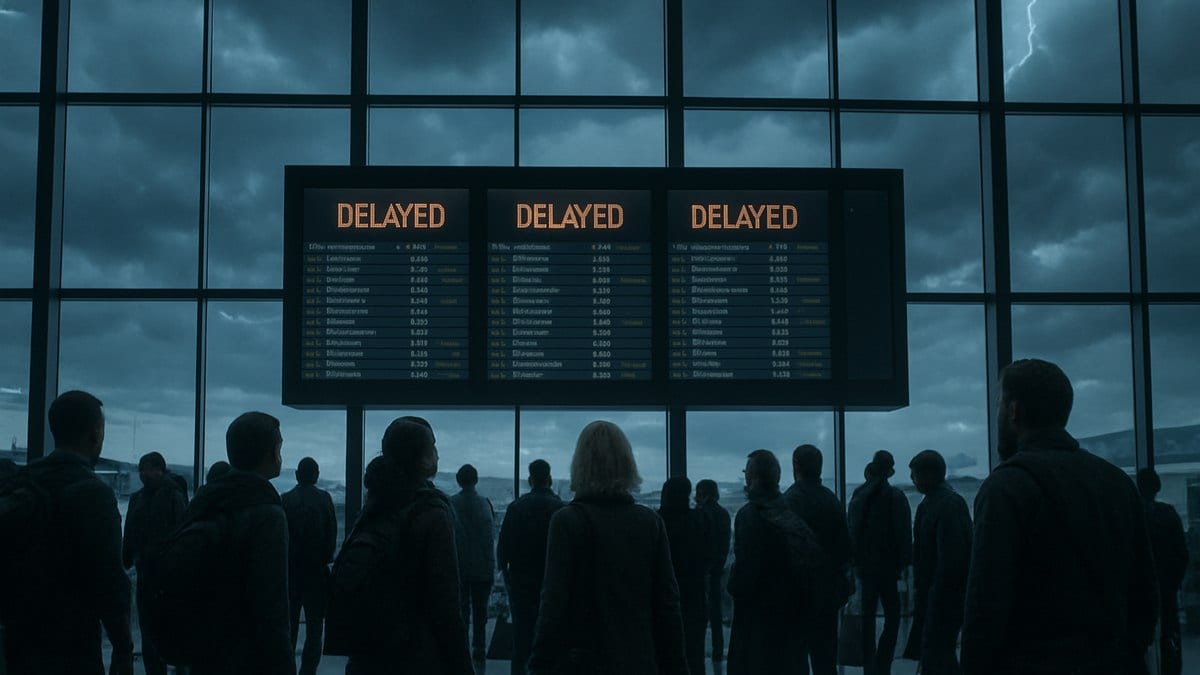
Storm Systems Stall Operations at Key Hubs
Publicly available tracking data and industry analyses indicate that a series of fast-moving storm fronts and embedded thunderstorms in the first full week of April have slowed operations at Atlanta, Chicago O’Hare, Dallas Fort Worth, Denver, Houston Intercontinental and Charlotte, all cornerstone hubs in the U.S. air network. Heavy rain bands, lightning, strong crosswinds and low cloud ceilings have periodically restricted arrival and departure rates at these airports, forcing airlines and air traffic managers to meter traffic and hold aircraft on the ground.
Recent tallies from flight disruption trackers show that on peak days this week, total U.S. delays climbed into the several-thousand range, with a disproportionate share clustered at these six hubs that serve as primary connecting points for the country’s largest carriers. Reports from passenger-rights platforms describe rolling departure pushes of 30 to 90 minutes in Atlanta, Dallas Fort Worth and Houston as storms moved through, while Chicago O’Hare and Denver saw delays swell when convective weather overlapped with already busy afternoon banks.
While outright cancellations have remained lower than during major winter blizzards, the combination of long taxi queues, reroutes around storm cells and reduced airport acceptance rates has effectively cut available capacity during key periods of the day. Analysts note that even short-lived weather interruptions at hubs of this scale can reverberate for hours, as aircraft and flight crews fall out of their planned rotations and struggle to get back in sync.
Data-focused coverage of the early April pattern points out that these disruptions are arriving on top of already elevated baseline delays linked to air traffic control constraints, infrastructure work at several big airports and constrained staffing in some parts of the system. As a result, storms that might once have caused localized slowdowns are increasingly translating into multi-hub, multi-day events.
How Six Hubs Became the Weak Points of the Network
Industry reports emphasize that the six affected airports sit at the heart of the U.S. hub-and-spoke system, which channels vast volumes of connecting traffic through a limited number of mega-hubs. Chicago O’Hare, Dallas Fort Worth and Atlanta alone handle hundreds of thousands of flights per year and serve as primary domestic and international gateways for their respective anchor airlines. Denver, Houston Intercontinental and Charlotte round out the group as critical mid-continent and East Coast connectors.
Weather and aviation performance studies highlight that these same hubs are also among the most exposed to disruptive weather patterns. In recent federal and meteorological analyses, airports such as Dallas Fort Worth, Chicago O’Hare, Atlanta, Denver, Houston Intercontinental and Charlotte rank near the top for weather-related diversions and delay minutes, due in part to their locations along storm-prone corridors where frontal boundaries and jet stream energy frequently collide in spring.
When a strong April storm system tracks east across the Rockies and into the Plains and Midwest, it often passes directly through Denver, Dallas Fort Worth and Chicago in succession before continuing toward the Southeast and Mid-Atlantic, affecting Atlanta and Charlotte. Moist Gulf air feeding into the system can intensify thunderstorms around Houston and other Texas hubs, adding another layer of complexity. The result is a rolling series of constraints at multiple airports that are tightly connected by airline schedules.
According to operational briefings and data summaries, even a modest reduction in landing rates at one of these hubs during a storm can cause a backlog of arriving flights that stretches for hours. Because those same aircraft are scheduled to operate onward legs to smaller cities, missed slots in Atlanta or Dallas Fort Worth can quickly trigger delays in communities far removed from the original bad weather.
Spring Demand Leaves Little Room for Recovery
The April storm surge is colliding with a spring travel period that aviation trade groups and consumer publications describe as one of the busiest on record. Forecasts point to an average of around 2.8 million passengers per day moving through U.S. airports in March and April, reflecting robust leisure demand and strong international traffic layered onto routine business travel.
With planes heavily booked and schedules tightly constructed, airlines have limited slack to absorb weather-related slowdowns. When early morning storms disrupt the first wave of departures out of Atlanta or Houston, there are fewer empty seats available later in the day to re-accommodate passengers who miss connections in Chicago, Dallas Fort Worth or Charlotte. That dynamic can leave travelers stuck for many hours or even until the following day when the next flight with open seats is available.
Travel industry coverage notes that some carriers have been issuing weather waivers and encouraging customers with flexible plans to move their trips away from the worst-affected dates and times. However, the sheer level of demand during this spring period means that many travelers have little choice but to navigate the disruption, particularly on key corridor routes that funnel through the six hubs at the center of this week’s storm-related delays.
Observers also point to the compounding effect of ongoing construction and modernization work at several large airports, as well as air traffic control staffing pressures that limit how much additional traffic can be pushed through surrounding airspace once normal operations resume. These structural constraints can extend the recovery window long after the most intense weather has cleared.
Travelers Face Cascading Disruptions Across the Map
For passengers, the most visible impact of the April storm surge has been extended waits in terminals and on tarmacs as flights creep further behind schedule over the course of the day. Reports from major hubs describe crowded departure areas at Atlanta, Chicago O’Hare and Dallas Fort Worth, along with long queues at customer service desks as travelers seek rebookings, hotel vouchers or alternative routings.
Because the six affected airports serve as national crossroads, disruptions there have produced knock-on effects at dozens of secondary airports around the country. Flights bound for smaller cities that depend on connections through Denver or Houston can be delayed or cancelled when inbound aircraft are held by weather or airspace restrictions. In some cases, flights operating from regions with clear skies have still departed late because their aircraft or crews were previously delayed at one of the storm-hit hubs.
Travel-data firms and consumer advocates emphasize that these cascading effects are a central feature of how weather translates into national-level disruption. A delay that begins as a 45-minute departure push out of Charlotte can grow into a multi-hour misalignment for subsequent flights if there is no scheduling buffer. By the evening rush, even a localized afternoon thunderstorm can manifest as widespread late arrivals and missed connections across multiple time zones.
Published commentary on recent events suggests that travelers connecting through the six hubs at the center of this week’s disruption are bearing the brunt of those compounding delays, particularly those with tight connections, checked baggage or international onward flights with limited daily frequencies.
Strategies for Navigating April’s Storm-Driven Air Travel
As the unsettled April weather pattern continues, travel experts and consumer-facing outlets are reiterating strategies to reduce the risk of severe disruption when flying through major hubs. One frequently cited recommendation is to prioritize early-morning departures, when aircraft and crews are more likely to be in position and thunderstorms are often less intense, especially in storm-prone regions such as the Southeast and central Plains.
Guidance drawn from recent coverage also stresses the value of building longer connection times when itineraries route through Atlanta, Chicago O’Hare, Dallas Fort Worth, Denver, Houston Intercontinental or Charlotte during active storm periods. A buffer of 90 minutes to two hours can provide a critical margin if inbound flights face holding patterns or de-icing delays, particularly for travelers with international connections or those needing to clear security between terminals.
Travel publications further recommend monitoring flight status frequently through airline channels, enabling mobile alerts and considering carry-on-only packing when feasible so that last-minute rebookings or reroutings are easier to accept. For complex or high-stakes trips during April, some analysts suggest building an extra “buffer day” into itineraries to account for the possibility of extended disruption if a strong storm system targets one or more of the six key hubs.
While no strategy can eliminate weather-related risk, the pattern emerging from this month’s storm surge underscores that major U.S. hubs remain highly sensitive to severe spring weather. For travelers, approaching April flights with added flexibility, contingency plans and realistic expectations appears to be essential as the storm season unfolds.