

More news on this day
Spring thunderstorms and airspace constraints have combined to create a difficult start to April for travelers passing through Washington Dulles International Airport in 2026, as rapidly changing storm cells, brief ground stops and lingering backlogs have disrupted hundreds of journeys in and out of the nation’s capital region.
Get the latest news straight to your inbox!
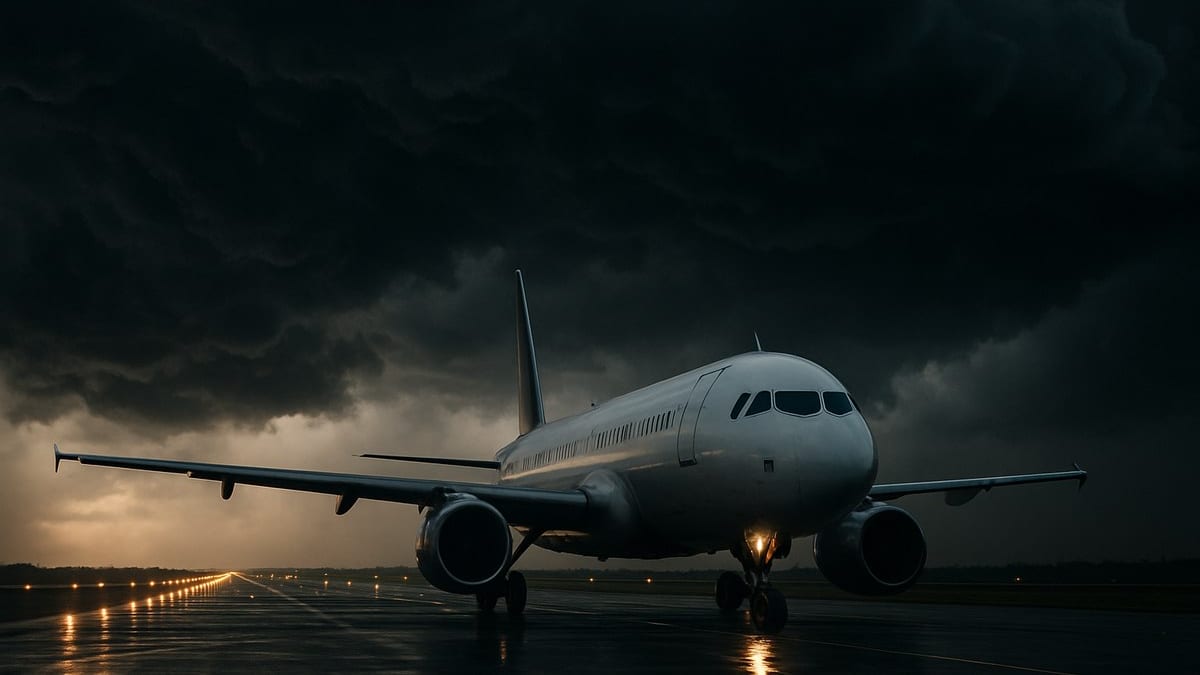
Storm Cells Trigger Sudden Ground Stops Across the Capital Region
Thunderstorms sweeping across the Mid Atlantic in the opening days of April have repeatedly interrupted operations at Washington Dulles, coinciding with ground stops that also affected Reagan National and Baltimore/Washington International airports. Publicly available flight-tracking data and local broadcast coverage indicate that on April 1, strong storm cells and lightning prompted the Federal Aviation Administration to slow or temporarily halt arrivals into the Washington area during the busy late-afternoon travel window.
Regional news reports describe weather-related ground stops beginning shortly before 5 p.m., with updates suggesting that inbound flights to Dulles were held at origin airports while departure queues lengthened on the tarmac. Although some restrictions were lifted within a couple of hours, the imbalance between arriving and departing aircraft meant that congestion persisted well into the evening, especially for connections relying on tight turn times.
Air-travel monitoring services show that these early April disruptions came on top of a broader national pattern of storm-related issues, with several systems bringing heavy rain, lightning and gusty winds to the eastern United States in late March and early April. Aggregated delay and cancellation figures for the U.S. network point to several days in that period when weather was a primary factor in pushing disruption totals sharply higher.
The combination of convective weather and complex East Coast airspace left limited room for rerouting. When storms formed along main approach and departure corridors, Dulles and its neighboring airports were forced to shrink arrival rates, resulting in extended ground delays for flights bound for the region and diversions when airborne holds became untenable.
International Cancellations Underscore Dulles’s Hub Vulnerability
Data compiled by aviation and travel outlets in early April highlight Dulles as one of several hubs facing a concentration of cancellations linked to the volatile conditions. A recent analysis of flight records for April 7 indicates that the airport logged a cluster of cancellations affecting services operated by United Airlines and international partners to destinations including Amsterdam, Reykjavik, Montreal, Frankfurt and Munich.
The number of flights involved was modest relative to overall daily traffic at Dulles, but the impact on travelers was magnified by the hub’s role as a major transatlantic and transborder gateway. Passengers on long-haul routes often face fewer same-day alternatives, so a single cancellation can translate into missed tours, forfeited hotel nights or the need for unplanned overnight stays as travelers wait for open seats on later departures.
Industry commentary suggests that carriers increasingly try to preserve overall schedules by holding flights rather than canceling outright, but persistent weather disruptions can push crews toward duty limits and aircraft toward maintenance windows. When thunderstorms linger or redevelop, airlines may ultimately consolidate or cancel evening departures to keep operations within safety and regulatory requirements, a pattern that appeared at Dulles as April storms resurfaced on multiple days.
Travel analysts note that, while some international hubs in Europe experienced higher proportional impacts from the same disruption window, the Dulles cancellations illustrate how quickly a localized weather event in the Washington area can generate knock-on effects across an intercontinental network, particularly at the start of the busy spring travel period.
Backlogs Ripple Through Domestic Connections
Beyond headline international cancellations, rolling delays at Dulles during the first week of April have complicated domestic itineraries for connecting passengers. Reports from airline employees and travelers on public forums describe packed gate areas, crowded customer-service lines and difficulty securing same-day alternatives once early-evening thunderstorms began to interfere with departures.
On days when the FAA reduced arrival rates into the Washington region, departure banks at Dulles often went out of sequence, with some flights held at gates awaiting inbound aircraft while others boarded and pushed back only to wait for extended periods in departure queues. This uneven flow contributed to missed connections on popular routes to the Midwest, Southeast and West Coast, as relatively short weather holds cascaded into multi-hour disruptions for travelers trying to reach smaller regional airports.
Nationally, aviation-data compilations for early April point to hundreds of cancellations and several thousand delays on peak storm days, with the Washington area regularly appearing among the most affected clusters. While other hubs saw higher raw totals, Dulles’s mix of domestic and international services meant that even a modest number of disrupted departures could reverberate widely, particularly for itineraries involving multiple connections or limited daily frequencies.
Travel publications tracking the period classify the early April episode as part of a broader 2026 pattern in which spring storms, staffing pressures and tightly packed schedules have reduced resilience across the system. In that environment, each new wave of thunderstorms arriving over the capital region has tended to produce sharper and more immediate effects than similar events in less constrained years.
Passenger Options and Rights in Weather Disruptions
The latest Dulles disruptions have renewed attention on what options travelers have when storms derail carefully planned itineraries. Consumer-advocacy guides emphasize that because severe weather is outside an airline’s control, cash compensation is rarely available under U.S. rules, even after lengthy delays. However, passengers whose flights are canceled are generally entitled to a refund if they choose not to travel, rather than accept rebooking.
Travel-rights resources focused on the April storm window note that carriers frequently introduce flexible rebooking policies or travel waivers when major systems threaten multiple hubs. For the Washington region, airlines have periodically allowed customers to move trips by several days without change fees when meteorologists warn of thunderstorms, high winds or flooding that could constrain air-traffic operations.
Experts advising passengers caught in the Dulles disruptions encourage a proactive approach, recommending that travelers monitor inbound aircraft locations through airline apps or independent trackers and request alternate routings at the first sign of extended ground delays. Some guidance suggests that, on storm days, it can be advantageous to accept a longer but more certain connection on an earlier flight, rather than wait for a theoretically faster nonstop that may face a higher risk of cancellation.
For international passengers, publicly available information on European Union rules highlights that protections differ depending on whether the flight is departing from an EU or U.K. airport or operated by an EU carrier. Even in those cases, severe weather can limit eligibility for standardized compensation, but travelers may still secure meals, hotel rooms or rebooking support in line with each airline’s published policies.
What Travelers Through Dulles Can Expect for the Remainder of April
Meteorologists tracking medium-range patterns indicate that additional storm systems are likely to sweep across portions of the eastern United States through mid to late April, raising the possibility of further disruption days for Dulles and other busy hubs. Forecast discussions point to an active jet stream and lingering contrasts between cooler northern air and warmer, moisture-laden air from the south, conditions that often favor the development of strong thunderstorms along the Interstate 95 corridor.
While forecasts several weeks out remain subject to change, travel analysts observing the early April episode advise that passengers with upcoming itineraries through Dulles build additional buffer time into their plans, particularly for same-day connections and evening departures. Many recommend scheduling important meetings, cruises or tours at least a day after planned arrival, particularly when trips rely on a single critical long-haul leg.
Operationally, airlines serving Dulles are expected to continue using tools such as preemptive schedule adjustments, voluntary change waivers and aircraft swaps to reduce the risk of large-scale meltdowns on high-storm days. Public data from recent events suggests that these strategies can lower the number of outright cancellations but may still result in significant delays as carriers work within air-traffic restrictions and safety margins imposed during lightning and severe-weather episodes.
For now, the April 2026 storms have underlined how quickly conditions at Washington Dulles can shift from routine to highly disrupted when fast-moving cells collide with a crowded national network. Travelers passing through the airport in the coming weeks are likely to find that flexibility, real-time information and generous connection windows remain essential tools for navigating an increasingly storm-prone spring travel season.