

More news on this day
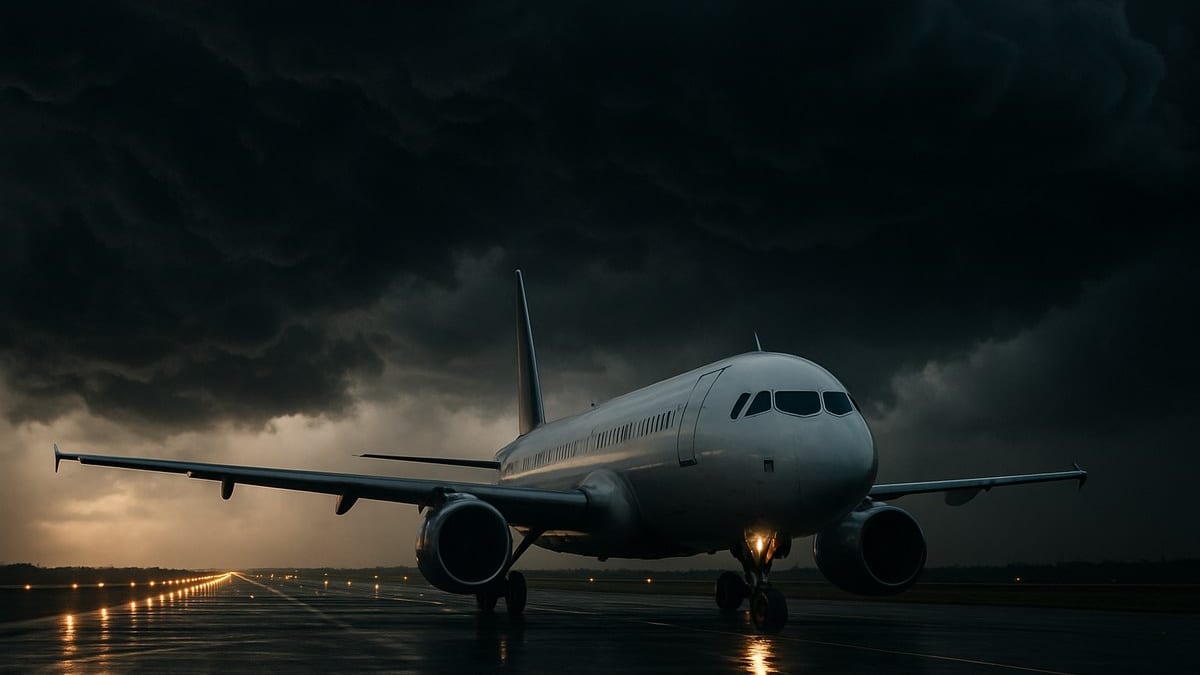
Spring storms sweeping across the Mid-Atlantic and Northeast in early April 2026 have triggered a fresh wave of disruption at Washington Dulles International Airport, with weather-related delays and cancellations tangling domestic connections and long-haul international routes alike.
Get the latest news straight to your inbox!
Storm Cells Converge on a Busy April Travel Window
April’s unsettled weather pattern has delivered a mix of thunderstorms, heavy rain and late season snow to key aviation corridors along the East Coast and in the Midwest, creating difficult operating conditions just as spring travel demand accelerates. Publicly available flight-tracking data and airport status dashboards show that Washington Dulles, a major hub for transatlantic and domestic traffic, has experienced repeated bouts of disruption as storm lines move through the region and upstream hubs struggle to keep schedules intact.
Reports from early April indicate that a series of fast-moving storms on and around April 2 led to temporary holds on arrivals into the Washington area, affecting Dulles along with Reagan National and Baltimore/Washington International. Those pauses, designed to manage traffic volumes during periods of reduced visibility and convective weather, quickly cascaded into missed connections and rolling delays for passengers already in the air or waiting to depart from distant origin cities.
In the days that followed, additional systems brought snow and wintry conditions to airports in New York, Boston and parts of New England, as well as severe storms in the Midwest. Travel outlets and aviation analysts describe a pattern in which weather hundreds of miles away can still ground or delay aircraft scheduled to operate from Dulles, since carriers rely on complex aircraft and crew rotations that span multiple hubs.
By the first full week of April, travel industry summaries were pointing to thousands of delays and hundreds of cancellations nationwide over just a few days, situating the Dulles disruptions within a broader national episode of storm-related travel instability.
Flight Counts Reveal Scale of Disruption at Dulles
Data compiled by flight-compensation and travel-rights services for the period around April 6 suggest that Dulles endured one of its more difficult days of the season, with more than 140 flights affected in a concentrated window. One analysis highlighted at least 17 outright cancellations alongside well over one hundred delayed departures or arrivals, illustrating how even a single day of adverse conditions can significantly constrict capacity at a high-volume hub.
Separate disruption tallies focused on April 6 and April 7 noted that Dulles recorded a cluster of cancellations across several carriers, including large network airlines and international operators. A snapshot of performance on April 6 cited 11 cancellations and more than 80 delays at Dulles alone, as storms and lingering winter weather affected airports from Washington to Boston and further north.
These localized figures formed part of a far larger national picture. Early April roundups of U.S. aviation performance pointed to roughly 460 cancellations and about 5,500 delays across the country over a short span, a level of interference that travel analysts characterized as one of the more severe non-holiday clusters of 2026 so far. Within that context, Dulles functioned as both a victim of regional weather and a conduit through which delays propagated to Canada and Europe.
Travel-focused publications reported that several long-haul flights into and out of Dulles, including services connecting to Amsterdam, Reykjavik, Montreal, Frankfurt and Munich, were either canceled or significantly delayed across the early April period, leaving passengers to rebook, reroute or face extended overnight waits.
Regional Weather and Network Fragility Compound the Impact
Meteorological summaries for late March and early April describe a volatile setup, with a succession of storm fronts, lingering winter systems and severe thunderstorm outbreaks sweeping across central and eastern states. In some locations, rapid snowmelt and heavy rain contributed to localized flooding, further constraining airport operations and ground transport.
Aviation analysts note that such conditions do not affect Dulles in isolation. When thunderstorms or snow disrupt operations at major hubs like Chicago, New York and Boston, the knock-on effects can surface hours later in Washington as aircraft and crews arrive out of position. This dynamic is particularly pronounced in April, when airlines are ramping up seasonal schedules and have less slack in the system to absorb irregular operations.
Recent academic work examining delay propagation across the U.S. aviation network has highlighted how staffing constraints, tight turn times and high utilization of aircraft can magnify the impact of weather that might once have been absorbed with minor schedule adjustments. In practice, even modest ground delays at one end of a route can grow into multi-hour disruptions by the time an aircraft reaches a hub like Dulles, especially when multiple storm systems are active.
Publicly available information from travel advisories and airline waiver programs suggests that carriers anticipated continued instability, extending flexible rebooking options for passengers traveling through Washington and other East Coast airports during several mid to late March and early April storm windows.
Traveler Experience: Long Lines, Missed Connections and Diversions
For passengers on the ground, the April storms translated into long security and check in queues, extended waits at departure gates and, in some cases, diversions to out of the way airports when weather or air traffic constraints prevented timely arrivals into Dulles. Social media posts and traveler forums in late March and early April describe flights that were held in holding patterns above the capital region before being redirected to cities like Cleveland, where passengers waited on board or in terminals for clearance to continue their journeys.
Other accounts reference evening and overnight delays that stretched into several hours as air traffic managers throttled back arrival and departure rates during thunderstorms, and as airlines searched for rested crews to operate aircraft stranded out of position. In a number of cases, travelers reported missing onward international connections from Dulles and being rebooked onto next day services, effectively losing a full day of their itineraries.
Reports indicate that despite the strain, Dulles has continued to move travelers through customs and security relatively efficiently when compared with some peer hubs, with anecdotal snapshots from early April citing manageable wait times at federal inspection stations even amid broader schedule disruption. For many passengers, however, the primary challenge has been uncertainty about when flights would depart, and whether tight layovers would still be viable once thunderstorms or snow bands passed over key waypoints.
Consumer advocates and travel publications have reiterated advice familiar from previous disruption cycles, urging travelers to rely on airline mobile apps, airport displays and third party flight tracking tools to monitor status in near real time, while keeping documentation and receipts for any out of pocket expenses that might be needed in later claims.
What April’s Turbulent Start Signals for the Months Ahead
The early April storms that snarled operations at Washington Dulles arrive at a time when airlines and airports are preparing for what many forecasts describe as another strong year for air travel, with robust demand for both domestic getaways and transatlantic trips. The latest disruption figures suggest that the network remains vulnerable when weather, staffing and infrastructure constraints align, particularly at tightly scheduled hubs.
Airport planning documents and industry commentary point to ongoing infrastructure projects across major U.S. airports, including runway and taxiway improvements intended to enhance capacity and resilience in poor weather. Yet such investments unfold over years, while the type of fast developing thunderstorms and late season snow that affected Dulles in April can materialize over hours.
For travelers using Dulles in the coming weeks, recent patterns indicate that even on days with clear skies over the Washington region, storms elsewhere can still influence departure and arrival times. Travel experts recommend favoring earlier departures, allowing generous connection windows and considering nonstop itineraries where possible to reduce exposure to cascading delays.
As the storm track shifts northward later in the spring and the Atlantic hurricane season approaches, observers will be watching how Dulles and other major hubs adapt operationally. The snarl of April 2026 serves as an early reminder that in a tightly stretched aviation system, weather events in any one corner of the network can rapidly translate into missed meetings, lost vacation time and crowded gate areas thousands of miles away.