

More news on this day
Spring break and business travelers flying through New York’s John F. Kennedy International Airport are facing a new round of delays and cancellations in April 2026, as weather systems and already stretched airline schedules converge on one of the country’s busiest international gateways.
Get the latest news straight to your inbox!
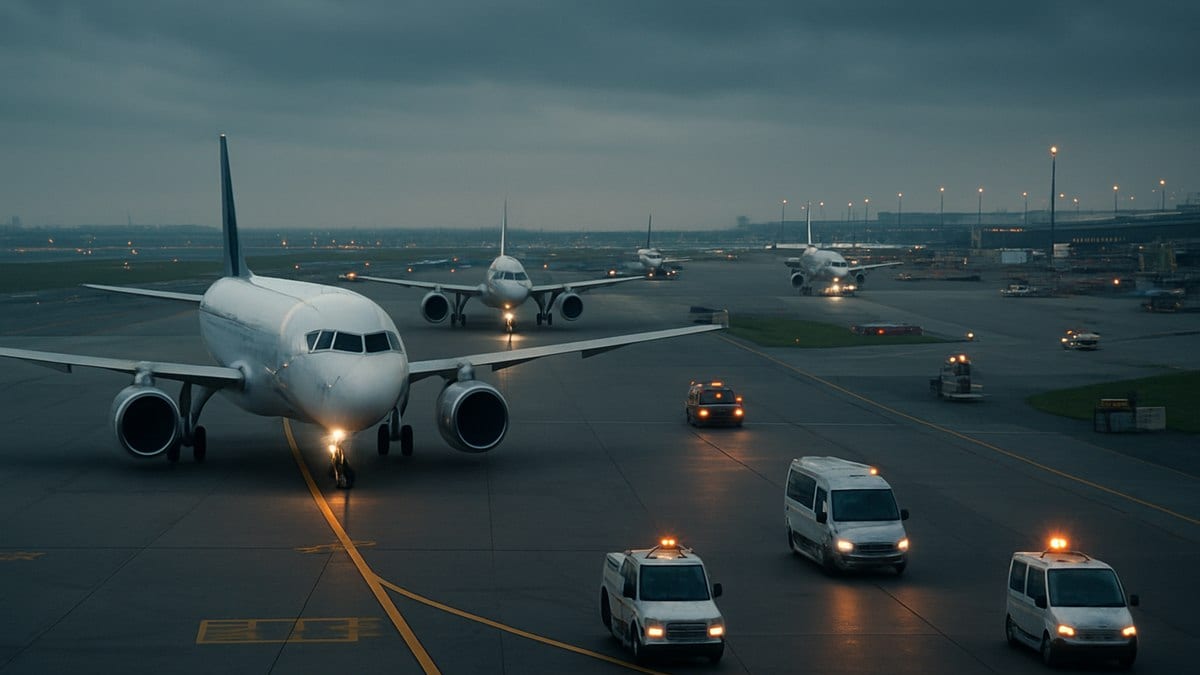
Fresh Disruptions Hit JFK as April Travel Peaks
Operational data compiled on April 10 indicates that JFK is again under strain, with more than one hundred flights delayed and a smaller but still significant number canceled as the day’s schedule unfolds. One industry-focused report on Friday highlighted 127 delayed movements and 12 cancellations involving major carriers including JetBlue, Delta Air Lines, and American Airlines, underscoring how even a relatively modest number of scrubbed flights can ripple across the network.
Publicly available airport-status feeds show that while JFK is not under a formal ground stop on the morning of April 10, average departure and arrival times are being pushed back as airlines work through weather-related constraints and congestion elsewhere in the system. The patchwork nature of the disruption means that some banks of flights are operating close to schedule, while others are experiencing rolling delays that can quickly upend tightly timed connections.
Travel-tracking and passenger-rights services are reporting an elevated volume of disruption across the U.S. East Coast since the start of April, with delays at New York airports featuring prominently. Aggregated figures for early April show thousands of delayed flights and hundreds of cancellations nationwide, driven largely by storm systems and low cloud ceilings that have repeatedly forced traffic-management initiatives along key corridors.
The timing is particularly challenging for travelers. Early April combines lingering spring-break leisure demand with a busy stretch for corporate travel, leaving fewer spare seats when flights are rescheduled or passengers need to be rebooked. That dynamic is amplifying the impact of every weather-related delay at JFK, where many itineraries hinge on a single daily long-haul departure.
Weather and Visibility Tie JFK Into a Wider East Coast Pattern
According to recent national airspace reports covering the first full week of April 2026, the Federal Aviation Administration has been flagging New York, Boston, Philadelphia, and Washington as repeat trouble spots for weather-related disruption. One summary of the latest FAA daily delay report notes that low cloud cover has periodically pushed New York’s major airports, including JFK, into instrument-flight-only conditions, with visibility dropping below normal operating thresholds during peak periods.
The same reports place JFK within a broader pattern of adverse conditions affecting multiple hubs from the Northeast to the Mid-Atlantic and Florida, with Orlando, Tampa, Detroit, Indianapolis, Memphis, Salt Lake City, and Las Vegas also featuring on April delay rolls. As weather systems track along the Eastern Seaboard, control centers have been using tools such as flow-control programs, ground-delay programs, and targeted ground stops to manage congestion, which in turn pushes back departure times out of New York.
Industry bulletins from early April tie some of the worst punctuality problems to a series of thunderstorm outbreaks and rain bands that have swept across the eastern United States. In one example, a major carrier’s advisory dated April 4 cites “Eastern U.S. thunderstorms” as the catalyst for a flexible rebooking policy, acknowledging that these storms are likely to create residual impacts across its network. Because JFK is deeply integrated into transcontinental and transatlantic schedules, any weather-related slowdown elsewhere can quickly cascade into its departure banks.
Recent severe-weather episodes earlier in the year have also reduced the overall resilience of airline schedules heading into April. A historic blizzard in February and a powerful March storm system forced large numbers of cancellations and diversions across the Northeast, and travel analysts note that crews and aircraft are still being repositioned to support the spring schedule. That lag effect leaves less slack in the system when another active weather pattern arrives.
JetBlue, Delta and American Shoulder Much of the Impact
The latest disruption data from April 10 places JetBlue among the hardest-hit operators at JFK, with one travel-industry report attributing more than 50 delays to the carrier in a single day at the airport. Delta and American are also contending with double-digit delays and a handful of cancellations, reflecting their substantial presence at JFK and the complexity of their route networks.
Separate coverage tracking early-April performance across major U.S. airlines points to a wider pattern of operational stress. Analysts describe a “disruption wave” hitting multiple carriers this spring, in which weather is combining with staffing constraints, aircraft routing challenges, and tight turnaround times to produce large numbers of late departures nationwide. In that context, JFK’s April woes are part of a broader struggle by airlines to maintain on-time performance during an increasingly volatile shoulder season.
For travelers, the concentration of delays among a few large carriers at JFK can translate into long lines at rebooking desks, congested customer-service hotlines, and difficulty finding alternative flights on the same day. With many routes now consolidated into fewer daily frequencies compared with pre-pandemic schedules, a single cancellation on a transatlantic or transcontinental route can leave passengers facing overnight stays or multi-stop reroutes through other hubs.
Some consumer-rights organizations note that disruptions on April 5 and April 6 involved more than 200 cancellations and around 3,000 delays across East Coast hubs, including New York City airports, and are encouraging affected passengers to review their options for refunds or alternative transport. While U.S. regulations provide limited automatic compensation compared with some international regimes, publicly available airline policies for weather-related events often allow customers to change dates or routes without additional change fees during specified waiver periods.
Knock-on Effects for International Connections and Global Hubs
JFK’s role as a major international gateway means local delays can quickly spread beyond the United States. Data compiled in recent travel-industry coverage shows that on days with elevated disruption at JFK, large European hubs such as Paris Charles de Gaulle, Madrid Barajas, and Frankfurt have also reported increased numbers of late arrivals and departures linked to transatlantic traffic.
Even when long-haul flights ultimately depart, late pushback from JFK can cause misconnects for onward passengers in Europe or the Middle East, especially when itineraries rely on tight minimum connection times. Airlines may then need to rebook travelers on later flights or provide overnight accommodation, further stretching airport resources at both origin and destination.
On the inbound side, overseas departures bound for New York are sometimes held at their origins when U.S. airspace programs signal likely congestion on arrival. That can result in rolling delays across multiple time zones, as carriers try to avoid excessive holding times once aircraft reach the New York terminal area. Aviation-watchers note that recent FAA planning advisories have repeatedly warned of potential airborne stacking and metering for traffic feeding the New York airspace complex.
This global knock-on effect is particularly visible during the April shoulder season, when transatlantic leisure travel begins to ramp up while corporate demand remains strong. With aircraft utilization already high, carriers have limited spare widebody capacity to deploy when a sequence of JFK operations runs late, magnifying the impact on passengers beyond the United States.
What April 2026 Travelers Through JFK Should Expect Now
Based on patterns observed during the first 10 days of April, travel analysts expect intermittent disruption at JFK to remain a risk throughout the month, especially on days when low clouds, fog, or thunderstorms are in the forecast for the Northeast. National meteorological outlooks discussed in aviation forums suggest a continued run of unsettled spring weather for the region, increasing the likelihood of additional traffic-management programs that slow arrivals and departures into New York.
Passenger-advocacy groups and airline advisories emphasize that travelers with April itineraries through JFK should build extra time into their plans. That includes allowing longer connection windows, favoring morning departures when possible, and monitoring flight status closely in the 24 hours before departure. Some carriers are encouraging customers to sign up for mobile alerts so they can react quickly if a delay or cancellation is posted.
Recent experience from the first week of April shows that disruptions are not limited to a single airline or route, making it difficult for passengers to avoid the impact entirely by switching carriers. However, choosing flights with multiple daily frequencies, especially on domestic legs feeding JFK, can improve the chances of same-day reaccommodation if schedules unravel.
With the busy summer season approaching and weather patterns growing more volatile, April 2026 is offering an early preview of the operational challenges facing JFK and the wider U.S. aviation network. For now, publicly available flight data and travel-industry reports point to a simple reality for anyone passing through New York’s biggest international gateway this month: delays and occasional cancellations are likely to remain part of the journey, even on days when skies over the airport appear relatively calm.