

More news on this day
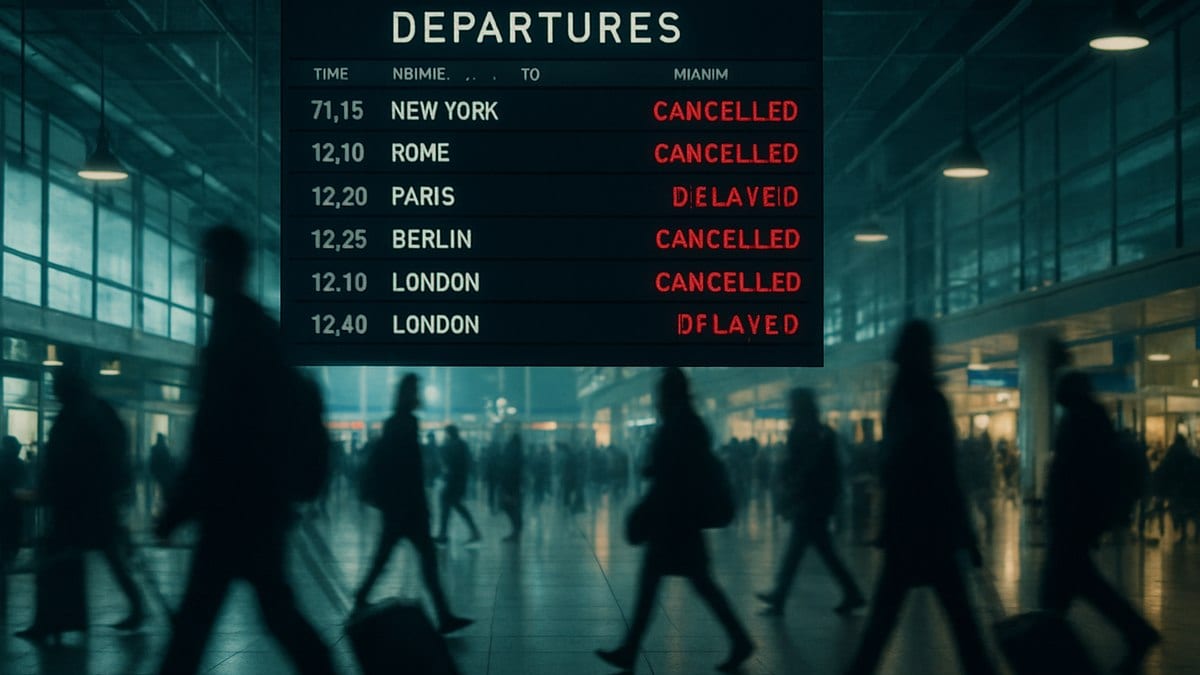
Thousands of passengers across Asia are facing missed connections, overnight airport stays and rapidly rising fares in early April 2026, as a new wave of flight cancellations and multi hour delays radiates across major hubs from Tokyo and Seoul to Guangzhou, Bangkok and Dubai.
Get the latest news straight to your inbox!
Disruptions Mount Across Key Asian Hubs
Publicly available aviation data for the first week of April 2026 shows that flight operations across Asia have entered a period of sustained irregularity, with several days of heavy disruption in quick succession. Tallies compiled from airport departure boards and flight tracking platforms indicate that hundreds of cancellations and several thousand delays have been recorded on multiple days, affecting short haul and long haul services alike.
Recent figures highlighted by specialist travel outlets point to large clusters of disrupted flights at high volume gateways in China, Japan, South Korea, Southeast Asia and the Gulf. One analysis of April 3 activity cited nearly 300 cancellations and close to 4,000 delays across hubs in China, Japan, Indonesia, South Korea and the United Arab Emirates, with the disruption window projected to run into April 6 as airlines struggled to re position aircraft and crews.
By April 5, separate tallies were reporting more than 500 cancellations and over 5,000 delays in a single day across a wider swathe of the region, including China, Japan, South Korea, India, the United Arab Emirates and Indonesia. Airports such as Beijing Capital, Guangzhou, Shenzhen, Jakarta, Delhi and Dubai featured prominently in those logs, suggesting that both domestic and international networks are being strained.
Additional tracking from April 6 and 7 indicates that the strain has not eased, with several hundred further cancellations and thousands of delays across at least six countries. Data points to concentrated pressure on major connectors in China and Southeast Asia, including Guangzhou, Shenzhen, Singapore and Bangkok, where relatively small disruptions in inbound schedules can quickly snowball into missed slots and departure backlogs.
Backlogs and Knock On Effects for Travelers
The immediate impact for travelers has been a surge in missed connections, last minute rebookings and longer journey times on itineraries that cross multiple hubs. Flight tracking analyses describe Asia’s aviation network as operating with little spare capacity in early April, leaving airlines with limited room to absorb weather events, technical issues or airspace bottlenecks before schedules begin to unravel.
Reports focused on specific days in early April describe thousands of passengers stranded or significantly delayed as they attempted to transit through hubs such as Tokyo Haneda and Narita, Seoul Incheon, Hong Kong, Bangkok Suvarnabhumi, Manila and Singapore Changi. When large regional centers in China, including Guangzhou and Shenzhen, experience several hundred delays and dozens of cancellations in a single day, the ripple effects quickly spread to connecting services across East and Southeast Asia.
Travel industry commentary notes that once cancellations reach several hundred per day across multiple countries, recovery typically takes at least 48 to 72 hours. Aircraft and crews must be repositioned, maintenance windows rescheduled and crew duty time limits observed, often forcing airlines to thin out subsequent rotations. This means that the effects of a disruption event on one day can still be visible in departure boards two or three days later, even if underlying causes such as storms or temporary restrictions have eased.
North American and European travelers connecting through Asian hubs have also been caught up in the disruption. Analyses of schedules at Seoul Incheon, for example, show that cancellations affecting both regional narrow body services and long haul wide body flights have reduced available capacity between the United States and parts of East and Southeast Asia, contributing to fare increases estimated in some coverage at 20 to 30 percent on certain routes.
Fuel Shock, Airspace Constraints and Weather Combine
Industry focused publications link the April turbulence to several overlapping structural pressures. A regional fuel crisis linked to the broader geopolitical situation around Iran has been pushing airlines across Asia Pacific into what some analysts describe as a defensive posture since March, with carriers selectively trimming frequencies, consolidating flights and imposing fuel surcharges to protect margins.
Reports from March outlined how one major carrier in the South Pacific moved to cancel around 1,100 flights through early May, while airlines in Northeast Asia, including South Korea’s flag carrier, have been preparing higher fuel surcharges for April. These cost driven schedule cuts reduce the flexibility of networks and mean that when weather or operational issues occur, there are fewer spare aircraft and crews to step in.
At the same time, lingering geopolitical and diplomatic frictions are reshaping traffic flows and adding complexity to route planning. Coverage of the ongoing China Japan diplomatic rift describes substantial cuts to China Japan capacity through March and into April 2026, while airspace constraints linked to Middle East tensions and restrictions around parts of the Indian subcontinent continue to force detours that lengthen flight times and tighten aircraft rotation schedules.
Layered on top of these structural factors are seasonal weather patterns. Early April brings active storm systems across parts of Southeast and East Asia, and several of the worst disruption days this month have coincided with severe thunderstorms over Thailand, the South China coast and adjacent airspace. Flight tracking snapshots for those days point to high delay counts at Bangkok, Hong Kong, Guangzhou and Shenzhen, with knock on effects spreading to secondary airports as airlines hold departures or re route around convective weather.
Pressure Points at Chinese and Southeast Asian Gateways
The latest disruption data underscores how heavily concentrated Asia’s aviation flows have become around a small number of mega hubs, particularly within China and Southeast Asia. Guangzhou and Shenzhen appear near the top of multiple April tallies, with some days showing close to 1,000 combined delays and around 200 cancellations between them. Shanghai Pudong, Hangzhou, Beijing Capital and Beijing Daxing also feature prominently in delay and cancellation tables.
Analysts suggest this concentration magnifies the effect of any local issue, whether a temporary ground stop, reduced air traffic control capacity or a severe weather cell lingering near a departure path. When an airport handling hundreds of daily movements builds up a backlog of delayed departures, tightly timed slot systems leave airlines with few opportunities to catch up, turning what might otherwise be a short lived disruption into a full day of rolling delays.
In Southeast Asia, Bangkok and Singapore have emerged as key barometers of regional stress. Reports note that Bangkok’s primary international airport has seen repeated waves of delays and a smaller but persistent number of cancellations in early April, linked both to storm activity and to wider airspace rerouting that pushes extra traffic through Thai airspace. Singapore Changi, while generally recording fewer outright cancellations, has been contending with mounting departure delays as late arriving aircraft from Japan, India and China destabilize carefully sequenced banks of regional and long haul flights.
Secondary hubs are not immune. Data for early April shows elevated disruption at airports such as Kuala Lumpur and Manila, which serve as important connectors for low cost carriers and regional full service airlines. When these gateways experience delays that ripple back into densely scheduled domestic networks in Malaysia and the Philippines, travelers can face missed onward flights even if their original international sector operated close to time.
Outlook for April 2026 Travelers
Travel analysts following the latest numbers caution that the first week of April may not be an isolated episode. With fuel prices elevated, key airspace corridors constrained and several large carriers already trimming schedules, the broader environment for on time performance in Asia is expected to remain fragile through the remainder of the month.
Publicly available commentary from airline and airport monitoring services suggests that carriers are likely to continue using targeted cancellations to stabilize operations when confronted with new weather systems or sudden restrictions. This approach can help protect remaining flights from extreme delays but increases the risk that travelers will see same day or day before schedule changes on routes that are already heavily booked.
Travel industry guidance circulating in early April urges passengers with itineraries touching Chinese mainland hubs, Bangkok, Singapore, Seoul, Tokyo or Dubai to monitor their bookings closely and build in additional connection time. Observers recommend paying particular attention to itineraries that rely on separate tickets or low cost carrier connections, which may offer less protection in the event of missed onward flights when disruptions ripple across multiple countries.
While it remains unclear whether the intense disruption of early April will repeat at the same scale later in the month, the convergence of fuel, geopolitical and weather pressures suggests that Asia’s flight networks will continue to face elevated operational risk. For travelers, that translates into a higher likelihood of last minute changes, longer journeys and, on some routes, higher fares as constrained capacity struggles to keep pace with robust demand.