

More news on this day
Travelers across Asia are facing another difficult week as a fresh wave of airline disruption leaves passengers stranded from Beijing to Daegu, Jakarta and Tashkent, with 58 flights canceled and at least 361 delayed across major carriers including China Eastern, Batik Air, Korean Air and Uzbekistan Airways.
Get the latest news straight to your inbox!
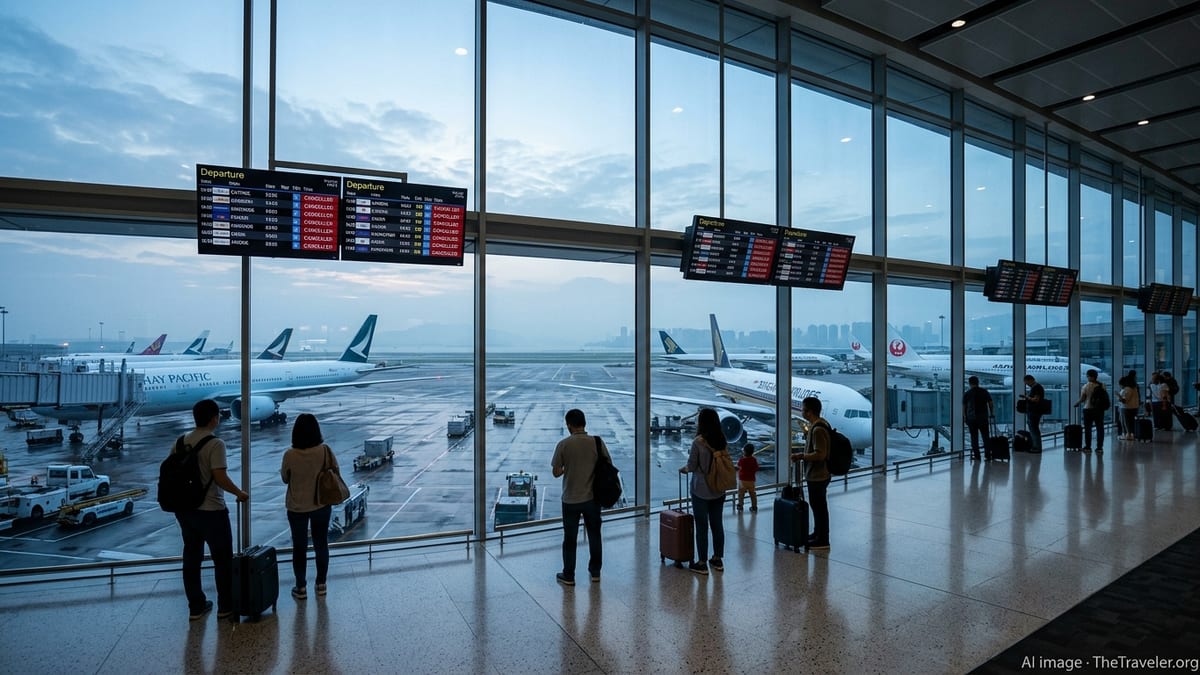
Ripple Effects Across Major Asian Gateways
Aggregated data from flight-tracking dashboards and regional industry coverage for early April 2026 indicate that the latest disruption has spread across several of Asia’s busiest corridors, disrupting itineraries that connect China, South Korea, Central Asia and Southeast Asia. Publicly available data point to 58 cancellations and 361 delays affecting services operated by China Eastern, Batik Air, Korean Air and Uzbekistan Airways, with knock-on effects for codeshare and feeder flights throughout their networks.
Beijing once again sits at the heart of the turbulence, with its dual-hub system handling a dense mix of domestic and international routes. Recent schedule updates for routes linking Beijing with Southeast Asia, including Jakarta, show a tightly packed timetable that leaves little spare capacity when irregular operations occur, amplifying the impact of each cancellation or multi-hour delay on onward journeys.
In South Korea, Daegu and other regional airports are experiencing similar strain as Korean Air and partner carriers juggle aircraft rotations and crew availability. Disruption on flights feeding into Seoul-area hubs increases pressure on the broader system, as missed connections ripple into long-haul departures and arrivals across the Pacific and into Europe.
Further southwest, Jakarta’s Soekarno Hatta International Airport is contending with both local weather variability and congestion across Indonesia’s domestic network. Batik Air’s role as a significant player in the country’s point-to-point and connecting traffic means that delays and cancellations there can quickly trap travelers in longer-than-expected layovers or force last-minute rebookings on alternative operators.
Operational Strain on China Eastern, Korean Air and Regional Partners
China Eastern has featured prominently in several recent disruption tallies across Chinese hubs, where a mix of air traffic flow controls, adverse weather systems and tight turnaround schedules has already resulted in large numbers of delayed services. Industry monitoring over the first days of April suggests that the carrier is again among the most affected in terms of outright cancellations and extended delays on flights touching Beijing and other major Chinese cities.
Korean Air, which straddles both regional and intercontinental markets, faces a different but related set of challenges. Services linking mid-sized Korean cities such as Daegu to Chinese and Southeast Asian destinations depend on finely calibrated aircraft and crew rotations. When irregular operations occur on one leg, it can quickly compromise the aircraft’s ability to operate subsequent flights on time, forcing schedule revisions that cascade through the day.
Uzbekistan Airways, serving Tashkent as a Central Asian gateway, appears in disruption reports on routes that connect to both East Asia and the broader Eurasian region. Delays on these flights complicate connections to long-haul services toward Europe and the Middle East, leaving some passengers stranded overnight or re-routed through alternative hubs with limited spare capacity.
Batik Air’s network, which is heavily concentrated around Indonesia and regional Asia, is particularly sensitive to congestion at Jakarta and regional weather patterns that can affect multiple airports simultaneously. Flight performance analyses and historic on-time performance metrics show that relatively small disruptions can translate into a notable number of delayed departures on days when operations are already running close to capacity.
Passengers Confront Missed Connections and Long Queues
For travelers on the ground, the numbers translate into missed connections, rapidly changing itineraries and long lines at airline counters. Coverage from recent disruption days in China and around the region describes queues stretching across terminal check-in halls and customer service desks as passengers seek rebooking options, hotel vouchers or confirmation that their flights will eventually depart.
In Beijing and other Chinese hubs, transfer passengers heading to Southeast Asia or Central Asia are particularly vulnerable when departure banks experience multiple delays. A late-arriving China Eastern flight feeding into a Batik Air or Uzbekistan Airways connection, for instance, can leave travelers with insufficient time to complete security and immigration procedures before the connecting gate closes, even if the onward flight departs roughly on schedule.
At Daegu and comparable regional airports in Korea, the impact often manifests as missed links into Korean Air’s broader long-haul network. Travelers planning to connect through Seoul for flights to North America or Europe may find themselves rebooked onto next-day departures or rerouted via other Asian hubs if capacity allows, extending journeys by many hours.
In Jakarta, passengers report spending extended periods in crowded departure areas as carriers work through backlogs of delayed flights. Limited availability of alternative services on certain domestic and regional routes can turn what was planned as a short layover into an unplanned overnight stay, especially for those traveling during peak evening departure waves.
Weather, Airspace Constraints and Tight Schedules Behind the Numbers
While each carrier faces its own circumstances, common threads are apparent in the current wave of disruption. Recent regional coverage points to a combination of unsettled weather patterns, temporary airspace restrictions and already tight scheduling practices that collectively leave operators with little room for recovery when one part of the system falters.
In Chinese airspace, where military and civil traffic share constrained corridors, even brief periods of restricted routing can cause significant airborne holding and ground delays, particularly at busy hubs like Beijing. When these constraints coincide with springtime storms or low-visibility conditions, delays pile up and airlines may choose to cancel selected flights to stabilize their operations.
Across Southeast Asia, seasonal thunderstorms and heavy rain around Jakarta and other coastal airports contribute to departure holds and diversions. Batik Air and its competitors must then juggle aircraft and crew repositioning, all while remaining mindful of duty-time limitations that can ground flights when crews reach regulatory maximums.
Central Asia and the Korean Peninsula face their own operational variables, from shifting wind conditions to localized storms that complicate approach and departure profiles. When combined with tight turnarounds and high seat demand, even modest weather-driven disruptions can translate into substantial delay statistics, as reflected in the current count of 361 delayed flights tied to the affected carriers.
What Travelers Can Do as Disruptions Continue
With irregular operations likely to persist in the near term, travel experts and publicly available advisories consistently emphasize a few practical steps for passengers moving through the region. Monitoring flight status through airline applications or official channels remains essential, as same-day schedule changes are becoming increasingly common when carriers attempt to rebalance their networks.
Industry guidance also highlights the importance of allowing extra connection time, especially when itineraries involve transfers between different airlines or separate tickets. Given the recent pattern of multi-hour delays across a variety of routes, minimal layovers that might once have been acceptable now carry a higher risk of missed onward flights.
For those already affected by cancellations or lengthy delays, passenger rights and rebooking options depend heavily on the jurisdiction and ticket type. Some routes are covered by international or local compensation frameworks, while others rely mainly on the carrier’s own policies for meals, accommodation and alternative transport. Travelers are encouraged to review fare conditions and local regulations when planning or adjusting their trips.
As airlines such as China Eastern, Batik Air, Korean Air and Uzbekistan Airways work to restore more stable operations, the latest disruption figures serve as a reminder of how quickly conditions can deteriorate when weather, airspace constraints and high traffic volumes coincide. For now, flexibility, real-time information and generous connection buffers remain the best tools for passengers navigating Beijing, Daegu, Jakarta and other affected hubs across Asia.