

More news on this day
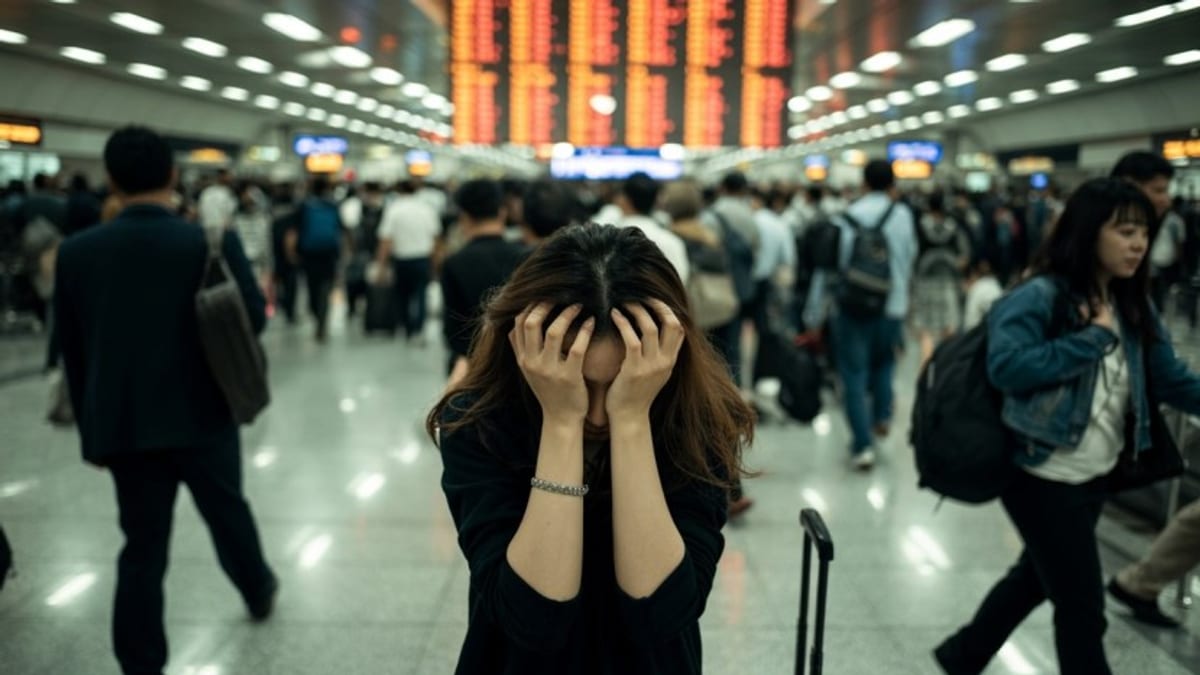
Thousands of travelers across Asia are confronting another day of disruption in early April 2026, as fresh data shows more than 540 newly scheduled flights canceled and over 6,250 delayed across major hubs including Bengaluru, Shanghai, Incheon, Tokyo, Jakarta and Dubai, affecting services by Air China, IndiGo, Korean Air, flydubai and several other carriers.
Get the latest news straight to your inbox!
Regional Hubs Struggle With Wave of New Disruptions
Publicly available aviation tracking data and industry reports for the first week of April indicate a sharp spike in operational problems at key Asian gateways. Cancellations and long delays are being logged across India, China, South Korea, Indonesia, Japan and the United Arab Emirates, with ripple effects felt on both regional and long haul networks.
In India, Bengaluru’s Kempegowda International Airport has emerged as one of the most affected domestic hubs, reflecting a broader pattern of strain on Indian carriers as they recalibrate international schedules amid geopolitical tensions and ongoing airspace constraints. Similar patterns are visible at major Chinese hubs such as Shanghai Pudong, where cancellations and late departures have remained elevated through the first half of the week, impacting Air China and other large mainland operators.
Further northeast, South Korea’s Incheon International Airport and Tokyo area airports are reporting heavy knock on effects as aircraft and crews arrive out of position from disrupted routes in China and Southeast Asia. In Indonesia, Jakarta’s Soekarno Hatta International Airport has also reported rising delay counts, particularly on regional services that connect into Middle East and North Asia banks.
In the Gulf, Dubai International Airport and Dubai World Central are handling complex schedule revisions by flydubai and other regional airlines that are still adjusting services in response to recent Middle East airspace closures. Industry coverage notes that while outright cancellations have eased compared with March, rolling retimings and equipment changes continue to create uncertainty for connecting passengers.
Airlines Adjust Networks Amid Geopolitical and Capacity Pressures
Across the region, airlines such as IndiGo, Air China, Korean Air and flydubai are engaged in ongoing network reshaping in response to a combination of factors, including the 2026 Iran conflict, altered overflight permissions, and capacity bottlenecks at certain hubs. Recent analyses of March and early April schedules show that carriers have been trimming or suspending some routes while adding limited replacement services on others.
In India, publicly available schedule data and business reporting show that carriers experienced an unusually high rate of international cancellations in March as routes to West Asia and Europe were rerouted or paused. This has left lingering imbalances in aircraft rotations and crew availability that are now surfacing in April through additional last minute cuts and extended delays on select sectors from cities such as Bengaluru and Delhi to Gulf and Southeast Asian destinations.
Chinese carriers, including Air China and China Eastern, are contending with their own mix of operational challenges. Recent updates on Chinese airport performance highlight clusters of cancellations and delays at Shanghai, Beijing, Guangzhou and Chengdu, driven in part by weather and congestion and in part by downstream effects of shifting demand patterns on routes to Japan and Southeast Asia. These pressures have left some domestic and regional flights subject to rescheduling at short notice.
In the United Arab Emirates, schedule updates published by Gulf based carriers in recent days show a gradual rebuild of capacity after severe cuts in early March, but with lingering fragility. Flydubai, Emirates and other airlines have continued to advise passengers to check the latest status of flights into and out of Dubai as connections to India, East Asia and Africa are re timed or re routed.
Passenger Experience Marked by Long Queues and Missed Connections
For travelers, the combined effect of more than 540 newly canceled flights and over 6,250 fresh delays across Asian hubs this week has translated into long check in and security queues, crowded rebooking desks and a sharp increase in missed onward connections. Reports from consumer advocacy platforms and airport monitoring dashboards describe passengers facing multi hour waits to be re accommodated, particularly at peak bank times in the mornings and late evenings.
At Bengaluru and other Indian metros, many of the most affected travelers are those connecting from domestic feeders onto international services that have been retimed or canceled close to departure. Missed onward flights to the Gulf, Southeast Asia and Europe have been a recurring theme, with some passengers required to stay overnight in airport hotels or nearby accommodation while waiting for the next available seat.
In East Asia, delays at Shanghai, Incheon and Tokyo have disrupted carefully timed connections onto transpacific and intra Asia networks operated by Korean Air, Japan based carriers and their alliance partners. Longer than usual ground holds and crew rotation issues have contributed to a cascade effect, where an early morning delay in one hub can lead to a full day of knock on disruptions across several cities.
In the Gulf, Dubai’s role as a mega connecting hub means that even a modest number of cancellations or extended delays can affect thousands of travelers in a single day. Many of those currently impacted are transit passengers moving between Europe, Africa and Asia whose itineraries rely on tightly banked connections on carriers such as flydubai and other UAE based airlines.
Data Shows Continuing Volatility Across Early April
Aggregated operational statistics compiled from flight tracking platforms and industry analyses for the first days of April show that cancellation and delay levels across Asia remain significantly above seasonal norms. One recent review of early April performance cited several hundred cancellations and several thousand delays in a single day across China, Japan, South Korea, India, Indonesia and the United Arab Emirates, with those figures rising further as the disruption period extended.
By April 5, separate tallies referenced in specialist aviation coverage pointed to more than 500 cancellations and in excess of 5,000 delays recorded across a wider constellation of airports, including Bengaluru, Shanghai, Incheon, Tokyo, Jakarta and Dubai. Within that broader picture, the latest slice of data covering the most recent 24 hour window highlights at least 540 newly impacted flights that were removed from schedules, alongside more than 6,250 that departed late.
Analysts note that while day to day numbers fluctuate, the persistence of high delay volumes suggests that airlines and airports are still working through an accumulated backlog of schedule changes triggered in March by airspace closures and conflict related disruptions. With some Middle East routes only slowly reopening and others operating on ad hoc or reduced frequencies, aircraft and crew utilization plans remain in flux.
Industry watchers also point out that April marks the start of a busier travel period on many Asia routes, raising the risk that any additional weather, technical or geopolitical shocks could quickly translate into renewed spikes in cancellations and rolling delays for the remainder of the month.
What Travelers Can Do If Their Flight Is Affected
Consumer advocates and travel industry guidance emphasize that passengers booked on flights involving Bengaluru, Shanghai, Incheon, Tokyo, Jakarta or Dubai in the coming days should monitor their itineraries closely. Publicly available advisories from airlines across India, China, South Korea, Indonesia, Japan and the UAE encourage travelers to use mobile apps and email or SMS alerts to keep track of last minute timing changes.
For those whose flights are canceled, current regulations and airline policies generally provide for a choice between rebooking on the next available service or receiving a refund, although specific entitlements vary by jurisdiction and ticket type. Travel rights organizations recommend that customers review the conditions of carriage for their airline and, where applicable, regional passenger protection rules that may offer additional assistance or compensation for long delays.
Travel planning sources also recommend allowing longer connection times on multi sector journeys through heavily affected hubs, particularly when flying on separate tickets or low cost carriers that may not automatically protect onward segments. Booking earlier departures in the day, when operations are often closer to schedule, can also reduce exposure to late running evening waves caused by accumulating delays.
With operational data suggesting that volatility in flight schedules across Asia is likely to continue in the near term, travelers are being advised to build flexibility into their plans, maintain up to date contact details with their airline and consider travel insurance products that include disruption coverage for cancellations and extended delays.