


More news on this day
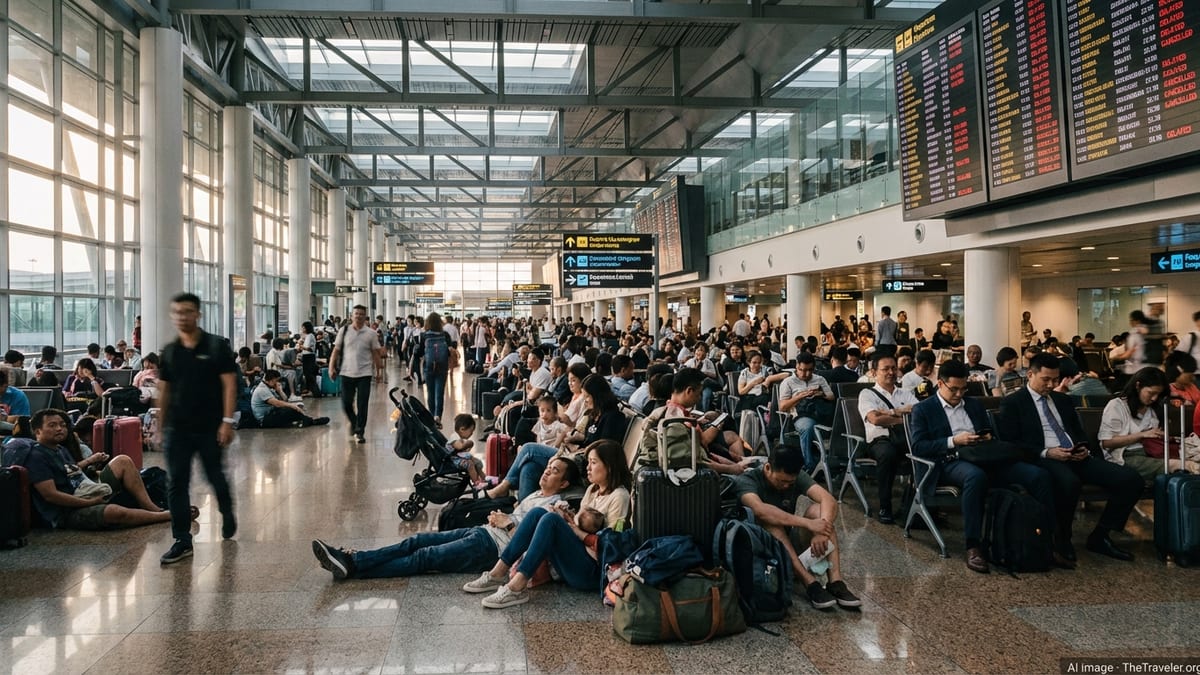
Hundreds of air travelers across China, Indonesia and Japan are facing extensive disruption after a fresh wave of cancellations and delays hit Asian carriers, stranding passengers at major hubs and rippling across regional and long-haul networks.
Get the latest news straight to your inbox!
Wide-Ranging Cancellations and Delays Across Key Asian Hubs
Publicly available flight-tracking data and regional aviation reports indicate that operations for several major Asian airlines have been heavily disrupted, with more than 100 flights canceled and hundreds more delayed in a single day across multiple countries. The impact has been felt most acutely in China, Indonesia and Japan, where large connecting hubs handle significant volumes of regional and long-haul traffic.
Air China, Hainan Airlines, China Eastern and Shanghai Airlines have all recorded clusters of cancellations and rolling delays at key Chinese gateways, including Beijing, Shanghai and Guangzhou. In parallel, Garuda Indonesia and Batik Air have experienced notable operational challenges at Jakarta’s Soekarno-Hatta International Airport, while Japan Airlines and ANA Wings have seen schedules tightened as weather and congestion complicate already busy summer operations.
Across the affected markets, reports point to at least 110 flights canceled and more than 700 delayed in a 24-hour period, leaving passengers facing long lines at service desks, missed connections and overnight stays in airport terminals. The situation has underscored just how quickly pressure on airline and airport systems can cascade into widespread disruption during peak travel periods.
The knock-on effects have stretched beyond domestic services. Disruptions to trunk routes between China, Japan and Southeast Asia have affected itineraries that connect onward to Europe, the Middle East and Australia, leaving some travelers scrambling to rebook multi-leg journeys and reconfigure hotel and tour plans at short notice.
China’s Congested Skies Add Pressure to Domestic and Regional Networks
China’s major carriers have been at the center of much of the disruption, with operational data and independent aviation coverage highlighting sustained pressure on on-time performance. Reports focused on late May and June indicate that China Eastern, Air China and Hainan Airlines, along with affiliates such as Shanghai Airlines, have collectively canceled more than 100 flights in a single day in response to congestion, weather and air-traffic control restrictions.
Although cancellation percentages remain relatively small compared with overall daily schedules, the concentration of affected flights at large hubs has created visible queues, gate changes and last-minute reassignments. Travelers on domestic sectors linking cities such as Beijing, Shanghai, Guangzhou and Chengdu have reported short-notice schedule changes that complicate connections to international departures.
Industry analysis suggests that several Chinese airlines are also grappling with higher operating costs, including fuel and maintenance, while still rebuilding international capacity. As carriers adjust schedules and aircraft rotations, short-notice changes can emerge where loads are lower or routes are under review, heightening uncertainty for passengers who booked months in advance.
Travel forums and passenger accounts in recent days describe repeated re-timings and cancellations on certain routes served by Hainan Airlines and Air China, reinforcing concerns among some long-haul travelers about reliability when transiting Chinese hubs. While many flights continue to operate as planned, the cumulative effect of schedule volatility has eroded confidence for some would-be visitors who are eyeing alternative routings through other Asian gateways.
Indonesia’s Soekarno-Hatta Experiences Repeated Operational Turmoil
In Indonesia, recently published operational tallies from Jakarta’s Soekarno-Hatta International Airport indicate waves of disruption affecting both domestic and international services. Travel-focused outlets have documented days with more than 100 delayed flights and a notable number of cancellations, with Batik Air accounting for a large share of grounded services and Garuda Indonesia, Citilink and other carriers also reporting extended delays.
On some of the most disrupted days, Jakarta’s main hub has logged over a dozen cancellations and more than 100 delays, impacting routes that connect Indonesia to regional destinations such as Singapore, Malaysia, Vietnam, China and Hong Kong. For travelers, that has meant missed same-day connections, compressed layovers and unplanned overnight stays in the capital.
Operational experts cited in regional aviation analysis point to a combination of factors, including tight aircraft utilization, congested airspace, weather-related constraints and ground-handling bottlenecks during peak departure banks. In such conditions, even a small number of early-morning delays can quickly cascade through the schedule, especially for airlines operating dense turnarounds on popular domestic routes.
While Indonesian authorities and airport operators have been working to enhance capacity and streamline flows at Soekarno-Hatta, the current pattern of disruption illustrates the vulnerability of large hubs to short-term shocks. For travelers, the practical consequences include the need to build in more generous connection times and to monitor flight information closely on days when thunderstorms or heavy traffic are expected.
Japan Balances Weather Disruptions and Tense Regional Airspace
In Japan, the latest wave of disruptions has intersected with a challenging start to the summer season. Earlier in June, strong storms linked to an active typhoon system disrupted hundreds of flights across the country, affecting services at major airports including Tokyo and Osaka. Those weather events left many passengers facing cancellations, rebookings and residual delays as airlines worked to reposition aircraft and crews.
Japan Airlines and group affiliates such as J-Air and other regional units, along with All Nippon Airways and related carriers including ANA Wings, have had to adjust schedules in response to both weather and a more complex regional operating environment. Industry-focused outlets report that Japanese airlines have already trimmed some services to China for the coming months, responding to higher airspace charges and geopolitical sensitivities that add cost and complexity to certain routes.
For travelers, this has translated into fewer available frequencies on some Japan–China city pairs and tighter margins in achieving smooth same-day connections to onward long-haul flights. When irregular operations occur, aircraft and crew are less easily swapped between routes, increasing the risk that isolated problems can prompt cancellations rather than shorter delays.
Aviation analysts note that Japanese carriers, which historically rank strongly on punctuality metrics, now face a tougher environment as they juggle volatile weather, longer routings around restricted areas and intense demand from both inbound tourism and outbound Japanese travelers. That combination raises the stakes when severe weather or air-traffic control constraints strike during already-busy travel windows.
What Travelers Can Do When Flights Are Canceled or Delayed
With disruptions affecting multiple carriers and countries on the same day, passenger advocacy groups and travel experts are emphasizing the importance of preparation. Publicly available guidance from regulators and consumer organizations generally advises travelers to monitor airline apps and departure boards regularly, keep contact details updated in reservations and familiarize themselves with carriers’ policies for rebooking and compensation.
When flights are canceled, many airlines in Asia allow free rebooking onto the next available service, subject to seat availability, while some also offer refunds or travel vouchers. However, the specific options vary widely by carrier, ticket type and local regulation, so passengers are encouraged to review the conditions of carriage and any disruption notices posted by airlines.
Travel planners also suggest building additional buffer time into itineraries that rely on tight regional connections, particularly when routing through congested hubs in China, Indonesia or Japan during the summer storm season. Booking longer layovers or overnight stops, while less convenient, can provide a margin of safety when earlier sectors are vulnerable to delays.
As Asian aviation continues to rebuild capacity and adjust to higher costs and changing geopolitical dynamics, intermittent days of disruption are likely to remain a feature of regional travel. For now, passengers stranded at airports from Beijing to Jakarta and Tokyo are a visible reminder of the fragility of complex airline networks when confronted with simultaneous operational, weather and regulatory pressures.