

More news on this day
Hundreds of flight cancellations and thousands of delays are rippling across Asia in early April, with publicly available aviation data indicating 573 flights canceled and 6,324 delayed in a sweeping disruption that is affecting major hubs from Beijing and Jakarta to Jeju City, Taipei and Dubai.
Get the latest news straight to your inbox!
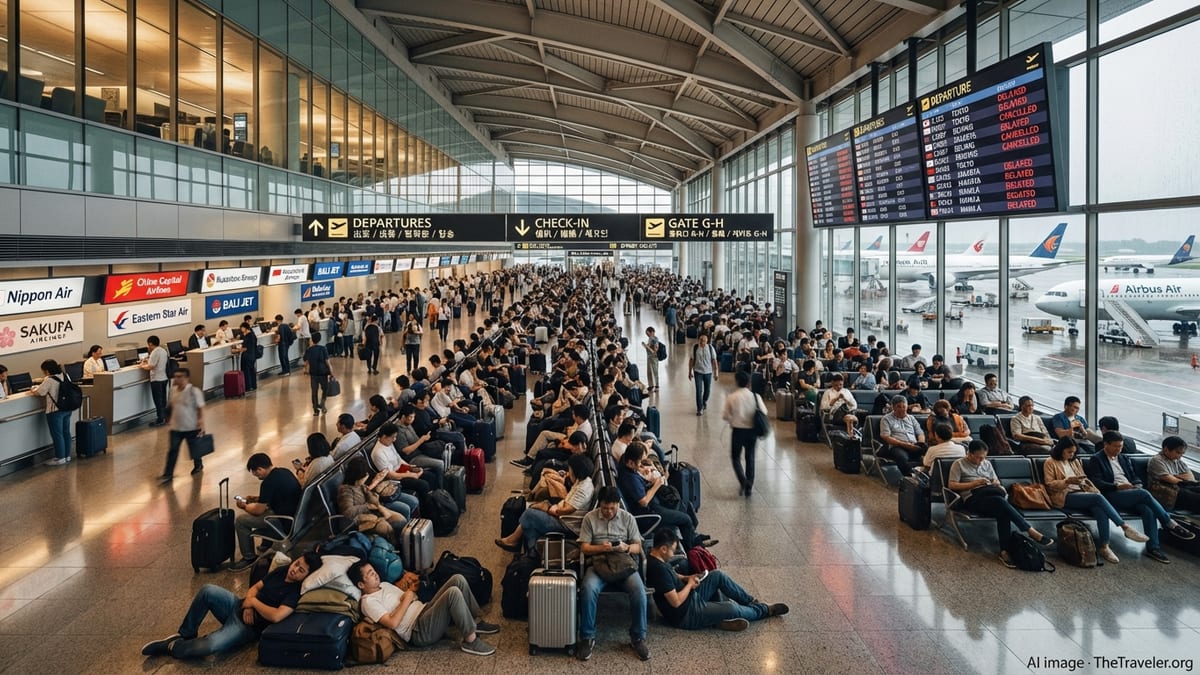
Regional Turmoil From China to the Arabian Gulf
The latest disruption figures appear to build on a pattern of mounting operational stress across Asia’s air corridors, where weather systems, congested airspace and tight airline schedules have repeatedly converged. Published coverage and flight-tracking analysis for early April point to a particularly difficult spell for airports in China, Indonesia, Japan, South Korea, Taiwan and the United Arab Emirates, where cancellations and multi hour delays have become increasingly visible on departure boards.
Beijing’s main airports, along with Jakarta’s Soekarno Hatta and Dubai International, feature prominently in reported cancellation and delay tallies. Previous breakdowns for early April already showed hundreds of disrupted services across these hubs, and the newest composite figures of 573 cancellations and 6,324 delays suggest that irregular operations have continued to roll through the network rather than resolving quickly.
In Northeast Asia, Jeju and Seoul area airports have experienced repeated bouts of disruption in recent weeks, with some services to long haul destinations reduced or retimed. In Southeast Asia, Jakarta has emerged as a recurring chokepoint, where congestion and knock on delays have affected both domestic and international routes, compounding strain on airlines that rely on tightly timed turnarounds.
Further west, Dubai continues to act as both a pressure point and a shock absorber for Asia bound traffic. Publicly available logs show that when schedules falter in Northeast and Southeast Asia, delayed or rerouted aircraft often cascade into Middle Eastern hubs later in the day, pushing connection banks off their planned rhythm and magnifying the disruption.
Major Carriers Caught in Widening Delays
The broad based nature of the latest figures indicates that no single airline is responsible for the disruption. Instead, a mix of full service and low cost carriers is being swept up as delays at one airport cascade into missed slots and crew timing issues at the next. Korean Air, ANA Wings, IndiGo and Saudia are among the carriers appearing in incident summaries for services touching Beijing, Jakarta, Jeju City, Taipei and Dubai.
Reports on recent operational days across Asia describe how Korean Air and other South Korean operators have faced a combination of weather related challenges and network congestion, particularly on routes linking Seoul and Jeju with other regional hubs. At the same time, Japanese regional carriers such as ANA Wings have been navigating busy domestic corridors and high demand periods that leave limited room to absorb unexpected delays.
In South and Southeast Asia, IndiGo’s dense schedule of short haul services means that even relatively minor operational issues can quickly multiply into dozens of delayed flights. Historical episodes involving the airline have highlighted how crew duty limits, aircraft availability and airport congestion can intersect, and current reports suggest similar pressures are again testing on time performance at key Indian and regional hubs.
For Middle Eastern and Gulf based operators such as Saudia, the knock on effects often surface on routes that bridge Asia with the Middle East and beyond. Disruptions in places like Beijing, Jakarta and Taipei can translate into late arriving aircraft and crews for onward sectors, especially when airspace restrictions or weather require longer routing that eats into scheduled recovery time.
Beijing, Jakarta, Jeju and Taipei Under Particular Strain
Several Asian airports stand out in the recent disruption pattern. Beijing’s dual airport system has seen repeated waves of delays and cancellations this spring, with data snapshots showing high numbers of late departures and arrivals within China’s domestic network. These operational challenges do not remain confined to national routes; instead, they often propagate outward to services bound for Northeast Asia, Southeast Asia and the Middle East.
Jakarta’s Soekarno Hatta has also been identified in multiple public analyses as a focal point for delays. Congested runways, tight gate availability and weather variability around key traffic peaks contribute to longer taxi times and rolling schedule creep. When combined with already packed departure banks, this environment can quickly turn manageable minor disruptions into large clusters of delayed flights.
In South Korea, Jeju’s role as a major domestic tourism gateway has left it particularly exposed. Reports from recent operational days show flight boards with extensive lists of delayed and canceled services, especially during periods of adverse weather or holiday demand. These irregularities can, in turn, affect aircraft and crew rotations feeding into other cities, including Seoul and international points.
Taipei’s Taoyuan airport, a critical connection point for North and Southeast Asia, has faced its own scheduling challenges as late running services arrive from mainland China, Japan and Korea. Even when local conditions are relatively stable, inbound delays narrow turnaround windows and limit the ability of airlines to depart on time, adding Taipei to the chain of airports experiencing knock on impacts.
Dubai and Other Hubs Absorb Asia’s Knock On Effects
Dubai International and other Gulf hubs have long acted as intermediaries linking Asia with Europe, Africa and the Americas. During periods of widespread disruption in Asia, these airports often experience a second wave of operational pressure as delayed aircraft and misaligned passenger flows arrive hours behind schedule. Publicly available coverage for early April notes that connection windows on some Asia originating itineraries have narrowed to the point where missed onward flights and forced overnight stays become difficult to avoid.
As schedules slip, airlines are frequently forced to rebook travelers across multiple departures, increasing loads on already busy flights and complicating seat availability. This can trigger a feedback loop in which efforts to accommodate stranded passengers further constrain capacity for those booked on later services who have not yet started their journeys.
Dubai’s role as a cargo and logistics hub also complicates recovery. When passenger flights are delayed or canceled on Asia bound or Asia originating routes, downstream freight movements can be affected, influencing supply chains that rely on rapid air transport. While passenger impacts are the most visible sign of disruption, logistical ripples can linger longer, especially for industries dependent on time sensitive shipments.
Similar dynamics are being reported in other Middle Eastern and South Asian hubs that sit between East Asia and European or African markets. When multiple airports across China, Japan, South Korea, Indonesia and Taiwan experience simultaneous disruption, the connecting points that tie these regions together face heavy operational strain.
Travelers Face Missed Connections and Rising Costs
For travelers, the cumulative effect of 573 cancellations and 6,324 delays across Asia is most visible in missed connections, unexpected overnight stays and a growing sense of unpredictability around departure times. Analyses of recent disruption episodes suggest that even when flights eventually operate, multi hour delays are increasingly common, particularly on routes that touch multiple congested hubs in a single itinerary.
Publicly available pricing data and industry commentary indicate that periods of extended disruption have also coincided with higher average fares on some busy regional and long haul routes. As airlines work to re accommodate passengers from canceled services, remaining capacity tightens, and last minute tickets become more expensive, particularly for travelers attempting to reroute around heavily affected airports.
Guidance from consumer groups and travel platforms generally emphasizes the importance of monitoring flight status applications, allowing extra time for connections and considering more flexible itineraries when routing through hubs such as Beijing, Jakarta, Jeju City, Taipei and Dubai. With Asia’s aviation network operating close to capacity during peak periods, small shocks in one part of the system can quickly reverberate across multiple countries and carriers.
Recent patterns suggest that while the current wave of 573 cancellations and 6,324 delays may ease as weather and operational conditions stabilize, the underlying vulnerabilities remain. Until additional slack is built into schedules, airport infrastructure and staffing levels, travelers across China, Indonesia, Japan, South Korea, Taiwan, the UAE and neighboring markets are likely to continue facing an elevated risk of disruption.