

More news on this day
Asia Pacific airlines opened 2026 with a solid rise in international passenger traffic, reporting more than three per cent year on year growth in January despite the timing impact of Lunar New Year and persistent geopolitical and competitive pressures across the region.
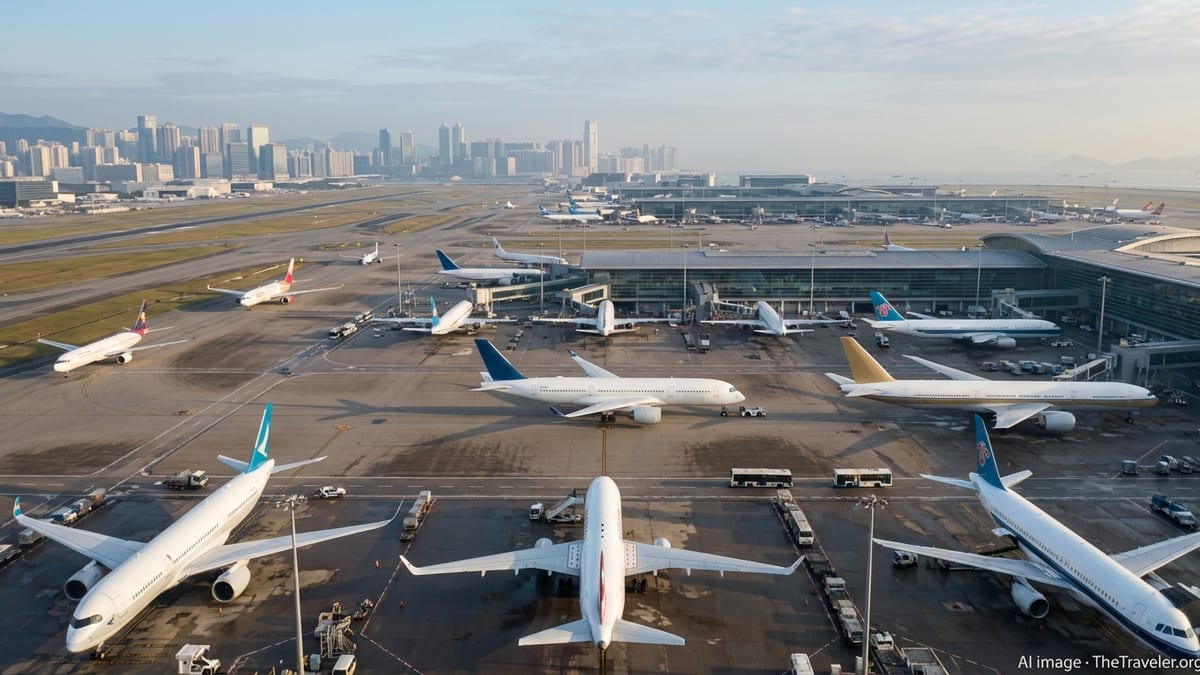
Steady Start to 2026 for Asia Pacific Carriers
Preliminary figures compiled from regional industry data show Asia Pacific airlines carried about 35.5 million international passengers in January 2026, a 3.6 per cent increase compared with the same month in 2025. The expansion came even though January 2025 benefited from a stronger Lunar New Year travel surge, making the latest comparison more demanding.
Analysts note that sustaining growth against that backdrop points to a more durable recovery in underlying demand. Long haul routes to North America and Europe continued to perform particularly well, while short haul intra Asian markets remained broadly supportive, helped by resilient economic activity and a further easing of travel frictions.
Capacity, measured in available seat kilometres, generally tracked demand, with many carriers adding flights on key trunk routes while keeping a close eye on yields. Load factors across the region held close to record levels seen in late 2025, signalling that aircraft are flying fuller and that airlines retain some pricing power at the start of the year.
The performance offers early confirmation of forecasts from global airline bodies that 2026 will bring more stable, if moderate, traffic and revenue growth in Asia Pacific following the rapid catch up of the previous two years.
Lunar New Year Timing Tempers Headline Gains
This year’s Lunar New Year fell in mid February, shifting a significant share of traditional peak holiday travel out of the January reporting window and into February. In contrast, the 2025 festivities were more heavily concentrated in January, inflating the prior year base.
That calendar effect typically drags on year on year comparisons when the holiday period moves later, particularly for leisure focused carriers and cross border routes that depend on family visits and tourism. Despite that headwind, passenger volumes still rose, suggesting stronger demand from business travellers and more even distribution of leisure trips across the first quarter.
Airport statistics from key regional hubs underscore this pattern. Taiwan Taoyuan International Airport, for example, reported handling about 1.7 million passengers over the 11 day Lunar New Year holiday period in February 2026, with several days surpassing pre pandemic records. Those flows will be reflected in next month’s airline traffic tallies rather than in the January data.
Market observers caution that February figures may therefore show an outsized spike compared with last year, before growth normalises again in March and the second quarter. For airline planners, the challenge will be to manage capacity and staffing against these sharp but short lived swings in demand.
Major Asia Pacific Hubs Lead the Recovery
Regional hub carriers continued to play an outsized role in the traffic expansion. Data released this week by Asian aviation outlets show the Cathay Group delivering a particularly strong start to the year, with Cathay Pacific alone carrying about 11 per cent more passengers in January 2026 than a year earlier as it rebuilt long haul and connecting services through Hong Kong.
Low cost affiliate HK Express also reported robust performance, lifting January passenger numbers by around 8 per cent and expanding capacity by 13 per cent, with especially high load factors on routes to South Korea and Thailand. During the Lunar New Year peak travel period in February, HK Express said passenger traffic jumped by 15 per cent year on year, highlighting the ongoing shift toward value focused regional travel.
Elsewhere in Asia Pacific, full service airlines in Singapore, Japan and Australia have been steadily restoring capacity on both regional and intercontinental routes, supported by recovering corporate travel budgets and strong demand from premium leisure passengers. Many have also been upgrading fleets, introducing more fuel efficient widebodies that help contain operating costs and support sustainability commitments.
The combination of strengthened hub networks and growing point to point traffic is gradually restoring Asia Pacific’s role as a bridge between major markets in Europe, the Middle East and the Americas, reinforcing the region’s importance in global aviation flows.
Cargo Uptick Complements Passenger Momentum
Alongside the gains in passenger traffic, air freight demand in Asia Pacific showed early signs of improvement in January. Industry sources report that regional cargo volumes rose modestly compared with a year earlier, building on a gradual recovery that began in the second half of 2025 as global trade conditions stabilised.
Carriers with sizeable belly hold capacity, including Cathay Pacific and other hub airlines, benefited from firm e commerce and high value manufacturing shipments on intra Asian and trans Pacific lanes. Cathay’s cargo business, for instance, handled more than 130,000 tonnes in January, around 5 per cent higher year on year, while expanding available freight tonne kilometres by 3 per cent.
Although yields remain below the exceptional levels reached during the pandemic peak, the combination of higher load factors and better utilisation of mixed passenger and freighter fleets is helping airlines to support overall profitability. For many operators, cargo revenues continue to provide an important buffer against volatility in passenger demand.
Industry economists say the parallel recovery in passenger and cargo segments is a positive sign for Asia Pacific aviation, given the region’s deep integration into global supply chains and its role as a manufacturing and logistics hub.
Outlook: Cautious Optimism Amid Persistent Risks
Looking ahead, airline executives and industry associations remain cautiously optimistic about the outlook for the rest of 2026. Forecasts released late last year by global aviation bodies pointed to continued growth in Asia Pacific traffic, supported by solid regional economic expansion, further reopening of remaining outbound markets, and strong appetite for international travel.
At the same time, the sector continues to face headwinds, including high operating costs, capacity constraints in some markets, and geopolitical tensions that can disrupt airspace availability and travel sentiment. Competitive pressures within Asia Pacific also remain intense, particularly as low cost carriers ramp up fleets and expand into secondary cities.
To navigate this environment, many airlines are focusing on network optimisation, tighter cost control and product differentiation, from premium cabins on long haul routes to ancillary services and loyalty partnerships tailored to price sensitive travellers. Several carriers are also accelerating fleet renewal to improve fuel efficiency and reduce exposure to volatile jet fuel prices.
For now, the January numbers provide a reassuring early marker that Asia Pacific airlines are entering 2026 on firmer footing. Achieving more than three per cent growth in passenger traffic in a month dampened by holiday timing illustrates the depth of demand for travel within and beyond the region, and sets a constructive tone for the year ahead.