

More news on this day
Flight operations at Hartsfield-Jackson Atlanta International Airport were disrupted on April 10 as aviation data showed 177 delays and 34 cancellations affecting major domestic routes across the United States.
Get the latest news straight to your inbox!
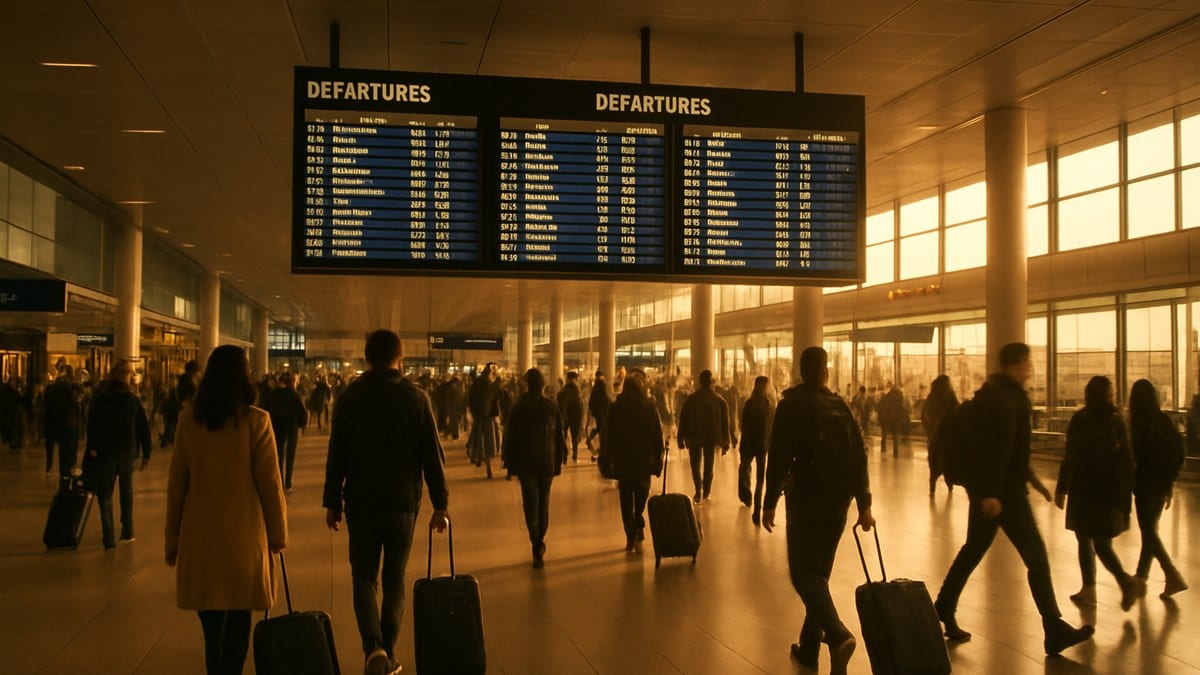
Atlanta Disruptions Ripple Across the National Network
The disruption figures at Atlanta emerged against a backdrop of wider strain on the U.S. aviation system, with nationwide data indicating several thousand delayed departures and more than one hundred cancellations across major hubs. Reports from flight-tracking aggregators highlight Atlanta among the most affected airports, alongside large facilities in Chicago, Denver, New York, Las Vegas, Phoenix, Washington and Houston.
Atlanta’s 177 delayed flights and 34 cancellations concentrated pressure on some of the country’s busiest domestic corridors, including links to New York, Chicago, Dallas, Houston, Los Angeles and Florida destinations. As aircraft and crews failed to arrive on time from earlier segments, knock-on effects spread across carriers’ networks, raising the risk of missed connections and overnight stranding for connecting passengers.
Publicly available information indicates that the disruption was not isolated to any single airline. Large full service carriers and low cost operators alike faced schedule changes at Atlanta, reflecting the airport’s role as a central transfer point for both business and leisure travelers at the height of the spring travel period.
Travel industry coverage notes that when an airport of Atlanta’s scale experiences even a few dozen cancellations, the practical impact can extend far beyond the local market. Flights that originate or connect through the hub often provide aircraft and crew for onward services, so delays on a morning bank of departures can cascade into late-evening operations on transcontinental and regional routes.
Weather, Congestion and Operational Strain
On April 10, local weather observations for Atlanta showed relatively calm conditions, suggesting that the disruptions were more closely tied to systemwide operational factors and upstream weather patterns than to any single storm over the airport itself. Aviation analysts frequently point to a combination of air traffic control programs, crew-rotation limits and residual effects from earlier weather events as key triggers for such midweek disruption spikes.
Recent storms across parts of the Midwest and Mid-Atlantic have already contributed to elevated delay and cancellation levels at other hubs this month, including Washington Dulles and several major Canadian and European airports. As those systems move through, aircraft and crews can end up out of position, forcing carriers to consolidate flights and trim schedules on subsequent days in order to restore balance.
According to industry data and recent reports, national delay and cancellation tallies have remained above typical early spring baselines, with multiple days in April registering more than 3,000 delayed flights across the United States. In that environment, even modest technical issues, short-lived staffing shortfalls or localized air traffic control restrictions can push a busy hub like Atlanta from manageable congestion into noticeable disruption.
Legal and consumer guidance published in recent months underscores that the underlying causes of a delay or cancellation matter for travelers seeking redress. Factors within a carrier’s control, such as mechanical issues or crew scheduling, are treated differently from weather or airspace constraints when passengers pursue refunds, credits or other remedies under airline policies and transportation regulations.
Impact on Airlines and Key Domestic Routes
The pattern of 177 delays and 34 cancellations at Atlanta primarily affected high-frequency domestic routes, where aircraft cycle in and out of the hub multiple times per day. Travel coverage from comparable disruption days in Miami, Chicago and Newark shows that such events often hit shuttle-style city pairs particularly hard, because airlines lean on those connections to reposition aircraft and accommodate rolling rebookings.
At Atlanta, published route maps and recent timetable data indicate dense schedules to major business centers, including New York area airports, Washington, Dallas, Houston and Chicago, as well as to vacation destinations in Florida and the Caribbean. When flights on these routes are delayed or canceled, the immediate effect includes crowds at customer service desks, rebooked itineraries and extended hold times for airline call centers.
Carriers often respond on days like April 10 by waiving change fees on affected routes, consolidating lightly booked departures and rerouting passengers through alternative hubs when space permits. However, when disruption is widespread across several hubs at once, options for rerouting may narrow, leaving some travelers with limited same-day alternatives and forcing overnight stays near airports.
Analysts note that large U.S. airlines now rely on sophisticated operations control centers to triage disruptions, prioritizing flights based on factors such as load, crew duty limits and downstream aircraft utilization. While these tools can reduce total cancellations compared with earlier eras, the experience for individual passengers at a heavily affected hub can still involve long waits and significant uncertainty.
Passenger Experience and Practical Advice
Scenes shared in recent weeks from Atlanta and other major hubs during disruption peaks have shown long lines at check in counters and transportation security checkpoints, with some travelers queueing again at gate podiums and customer service centers following cancellations. In parallel, coverage of growing security wait times has prompted some airlines to integrate live checkpoint data into their mobile apps so that passengers can better plan their arrival at the airport.
Consumer advocates and travel experts generally recommend that passengers transiting busy hubs like Atlanta build extra connection time into their itineraries during periods of unstable weather and high demand, such as early spring. Booking longer layovers, favoring morning departures where possible and monitoring flight status tools before leaving for the airport can reduce the risk of missed connections.
Publicly available guidance from government transportation agencies reminds travelers that, in the United States, airlines are not automatically required to provide meal vouchers or hotel rooms for weather related disruptions, although many carriers do so on a goodwill basis or under their own customer service commitments. For disruptions classified as within an airline’s control, refund and rebooking options are typically more robust, but policies vary significantly by carrier and fare type.
Travel insurance and certain credit card protections can offer an additional layer of support, particularly when delays extend overnight or force travelers to book last minute hotel stays and alternative transportation. Policy terms often specify minimum delay thresholds, so passengers affected by events like the 177 delays and 34 cancellations recorded at Atlanta on April 10 are encouraged to retain boarding passes, receipts and written confirmation of disruption details to support any later claims.
Part of a Broader Pattern of Early 2026 Disruptions
The Atlanta figures are the latest entry in a month marked by heightened aviation disruption in North America and beyond. In recent days, airports from Miami to major Canadian hubs have reported elevated delay and cancellation volumes, while Europe has seen several waves of more than 1,500 delayed flights tied to a mix of weather, congestion and operational bottlenecks.
Travel publications and aviation data services describe a complex environment in early 2026, in which strong passenger demand coincides with lingering staffing constraints, aging fleets and the ongoing modernization of air traffic control systems. This combination has made major hubs more vulnerable to short notice schedule shocks, particularly during active weather patterns in late winter and early spring.
For Atlanta, one of the world’s busiest airports by passenger volume, the 177 delays and 34 cancellations recorded today illustrate how even a single day of disruption can reverberate across the wider U.S. network. As airlines work to absorb the impact and reposition aircraft, some of the operational fallout may continue into the weekend, affecting travelers who never set foot in Georgia but rely on aircraft that passed through its primary hub.
Industry observers suggest that similar disruption days are likely to recur over the coming months unless broader capacity and infrastructure improvements keep pace with demand. For now, passengers planning itineraries through Atlanta and other major hubs are being advised, through publicly available travel guidance, to remain flexible, monitor conditions closely and prepare for the possibility that schedules may change on short notice.