


More news on this day
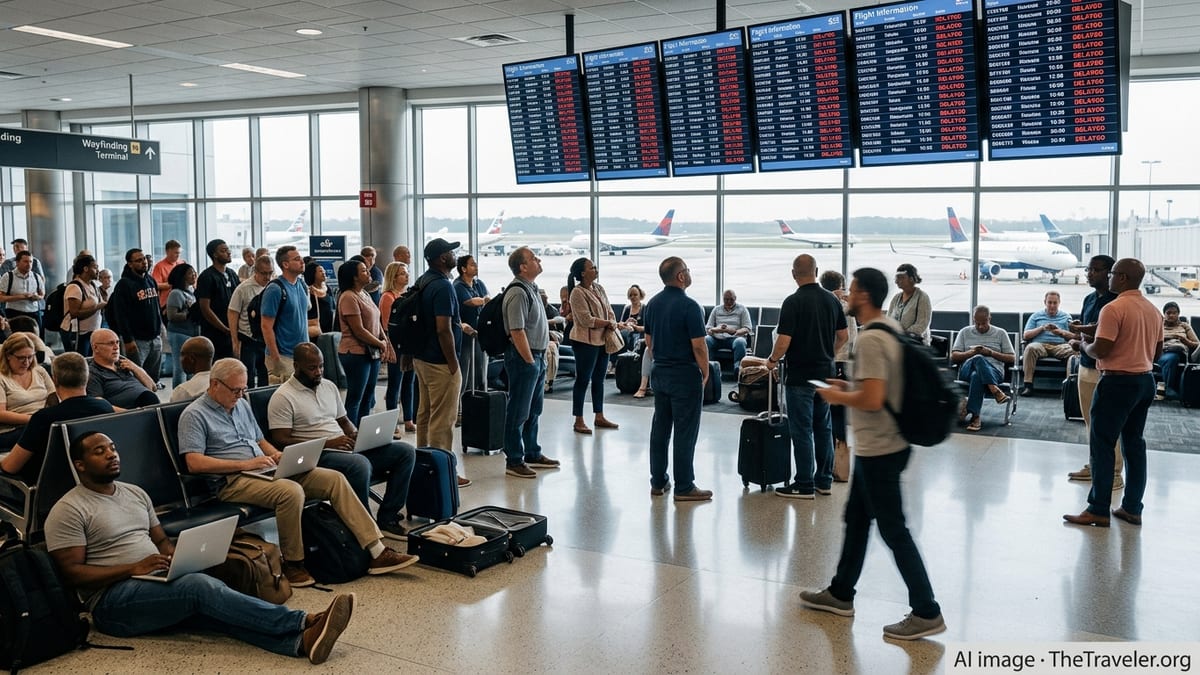
Travelers moving through Hartsfield Jackson Atlanta International Airport are facing a fresh wave of disruption, with about 15 flights cancelled and more than 100 delayed on services operated by American Airlines, Southwest, Frontier and regional carriers, creating knock on effects across North America and parts of Europe.
Get the latest news straight to your inbox!
Cluster of cancellations snarls a key hub
Initial data from airline status boards and flight tracking services on Tuesday indicate a concentrated pocket of cancellations at Atlanta, focused on a mix of domestic departures and inbound services that were scheduled to continue onward to other cities. The roughly 15 scrubbed flights represent only a small fraction of the airport’s daily movements, but their timing and routing means the disruption is being felt far beyond Georgia.
Publicly available schedules for American Airlines, Southwest and ultra low cost carrier Frontier show that all three operate dense networks through Atlanta, particularly on short haul routes that connect into larger hubs in the United States and onward to European gateways. When those feeder services are cancelled or heavily delayed, passengers can miss long haul connections, magnifying the impact of each individual flight that fails to operate.
Reports from recent days also highlight how rolling timetable changes at major US carriers can turn even short delays into extended waits. Travelers have described flights that edge back in 30 to 60 minute increments before ultimately being cancelled late at night or in the early morning, a pattern that can leave passengers stranded at the airport with limited rebooking options.
At Atlanta, these dynamics appear to have converged on a single busy travel day, leaving some travelers racing between concourses to salvage connections while others remain in long lines at customer service desks hoping to secure seats on the next available departure.
Knock on effects across North America and Europe
Although the cancellations are centered at Hartsfield Jackson, the resulting delays are radiating as aircraft and crews fall out of position. Publicly accessible flight status feeds show late running services on multiple American, Southwest and Frontier routes that either pass through Atlanta or rely on aircraft that were due to originate there.
Within North America, the immediate pressure is being felt on popular business and leisure corridors linking Atlanta with the Northeast, Florida, Texas and the Midwest. When an aircraft scheduled to operate an early morning Atlanta departure cannot leave on time, it often arrives late for an afternoon or evening sector elsewhere in the United States, creating what airline analysts frequently describe as a rolling delay pattern.
The disruption is also complicating travel to and from Europe. While Delta is the dominant transatlantic carrier at Atlanta, American and its regional partners, as well as other airlines that rely on connecting passengers from US domestic flights, depend on timely arrivals from cities such as Dallas, Charlotte, Chicago and New York. When those domestic feeders are delayed leaving Atlanta or cannot depart at all, passengers may miss onward connections in New York, Boston, Philadelphia or other European gateways, leading to missed trips, overnight stays and baggage misconnections.
Travel discussion forums in recent weeks have documented how a single day of severe delays at a large hub can produce a multiday backlog for transatlantic services. Travelers have noted that when North American and European weather or staffing problems coincide with domestic disruptions at airports like Atlanta, the resulting network imbalances can take several days to clear.
Weather, staffing and maintenance pressures collide
There is no single confirmed cause behind Tuesday’s disruption, but a combination of factors has been building pressure on airline operations across the United States in June. Public reporting over the past week points to scattered thunderstorms across key southern and eastern corridors, ongoing staffing challenges at both airlines and air traffic control, and a series of high profile maintenance related delays at major carriers.
Posts in airline specific online communities have highlighted an apparent increase in flights held for extended mechanical checks or awaiting spare parts, particularly at American Airlines. Travelers describe aircraft cycling through repeated short delays before ultimately being removed from service, forcing last minute cancellations and leaving limited spare capacity to absorb displaced passengers.
Low cost and ultra low cost airlines, including Frontier, face different but related constraints. Their point to point business models often rely on high aircraft utilization and limited standby fleets, which can make it more difficult to recover when a single aircraft is taken out of rotation. If a jet scheduled to operate multiple legs in a single day cannot depart Atlanta, the impact can cascade across several unrelated city pairs.
Regional carriers flying under the banners of larger airlines, such as those operating American Eagle or other branded feeder services, can also be disproportionately affected. These operators often work with tighter crew bases and more specialized aircraft fleets, which can leave them with fewer options when weather or maintenance issues disrupt the planned sequence of flights.
Travelers face long waits and complex rebooking
For passengers, the operational story translates into long lines, crowded departure halls and difficult choices about whether to wait out a delay or seek alternative routes. Publicly available reports and firsthand accounts from recent disruption events at large US hubs indicate that customer service counters and phone lines can quickly become overwhelmed once a wave of cancellations hits.
Rebooking is particularly challenging at peak summer travel times, when flights across North America and to Europe are already heavily booked. Even when airlines are able to offer same day alternatives, those options may involve multiple connections, overnight layovers or long detours through secondary hubs, adding stress and uncertainty for travelers heading to tight events such as cruises, weddings or business meetings.
Social media posts and discussion boards from this month’s travel period suggest that passengers are increasingly skeptical of rolling delay notifications that push departure times back in small increments. Some travelers now interpret repeated short delays as a sign that a flight may be in deeper trouble, prompting them to proactively seek rerouting before an official cancellation is posted.
Families and less frequent travelers can be especially vulnerable in these situations, as they may be less familiar with tools such as same day confirmed changes, standby lists or reciprocal rebooking on partner airlines. When disruption strikes late at night, hotel availability near the airport can tighten quickly, compounding the logistical challenge.
What flyers can do on days of disruption
While Tuesday’s figures at Atlanta fall well short of the large scale meltdowns seen in recent years, the episode serves as another reminder of how fragile summer flying can be across interconnected airline networks. Travel analysts often note that the United States system is operating close to capacity at many peak times, leaving limited slack when adverse weather, maintenance snarls or staffing gaps emerge.
Consumer advocates typically recommend that travelers build extra buffer time into itineraries that rely on tight connections at major hubs such as Atlanta, especially when onward travel involves transatlantic sectors or important fixed time commitments. Early morning departures are often favored because they are less exposed to the cumulative effect of a day’s worth of delays, though they can still be affected by aircraft and crew positioning problems from the previous night.
Flyers caught up in disruption are also urged in public guidance materials to monitor both their airline’s mobile app and independent flight tracking tools, as occasionally gate information or delay estimates may appear in one channel before another. In severe disruption scenarios, some travelers may find it faster to self rebook through digital channels rather than wait in physical lines at the airport.
With airlines under increasing scrutiny for operational reliability and customer treatment during delays, episodes like Tuesday’s Atlanta disruption are likely to draw continued attention from passengers, regulators and industry observers watching how carriers balance tight schedules with the need for resilience.