


More news on this day
Europe’s latest extreme heatwave is rippling through transport networks and power systems from Italy to Hungary, exposing how quickly tourism, river shipping and energy security can be knocked off balance when temperatures soar and waterways shrink.
Get the latest news straight to your inbox!
Italy’s Heat Emergency Collides With Peak Tourist Season
Italy has entered the height of summer 2026 with much of the country under red-alert heat warnings, just as international visitor numbers return to or surpass pre-pandemic levels. Publicly available information from Italian health and civil protection agencies describes repeated days of temperatures above seasonal norms, particularly in major cities that serve as gateways for foreign tourists.
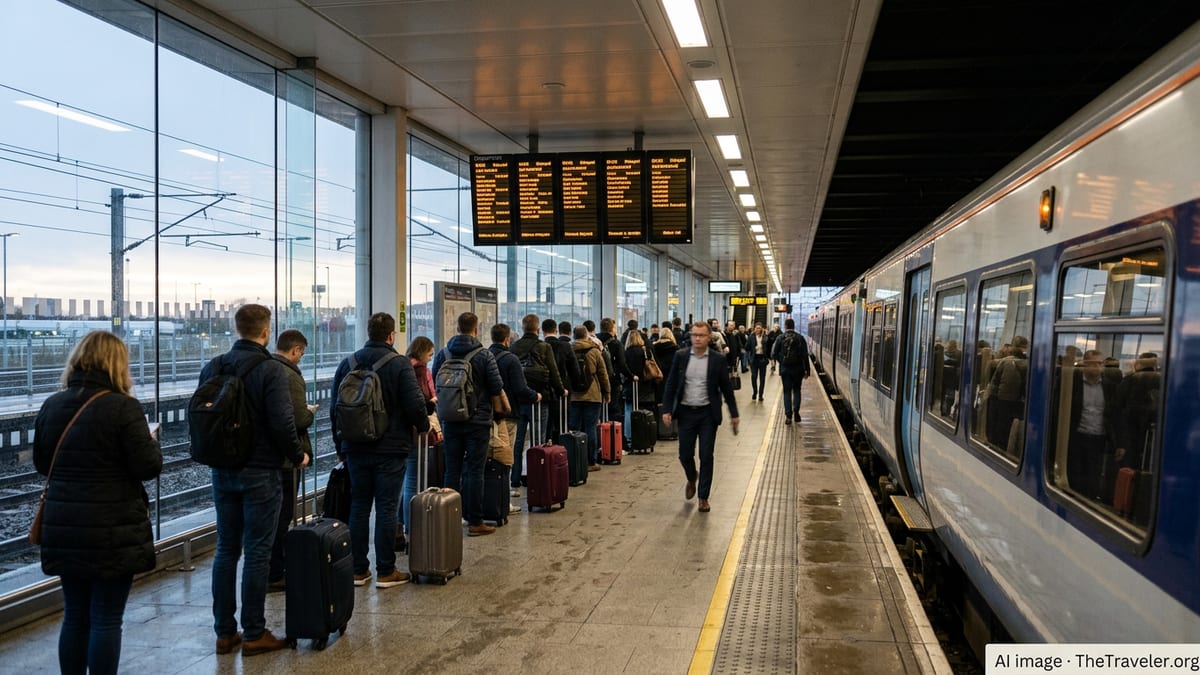
The combination has created acute pressure on urban transport and visitor infrastructure. Reports from national and international outlets describe delayed regional rail services, slower metro frequencies in Rome and Milan during the hottest hours, and localized disruption to tram lines where tracks have buckled or required speed restrictions. Airlines serving Italian hubs have adjusted schedules to focus more departures in the early morning and late evening, with some short-haul services consolidated when airport operations were curtailed by heat.
For travelers, the result is a more fragile system in which minor incidents cascade rapidly. Crowding at stations and airports increases when services run less frequently, while air conditioning failures on older rolling stock have prompted occasional train withdrawals. Tourism industry groups in Italy have urged hotels, tour operators and local authorities to provide clearer advance information on timetable changes, shaded waiting areas and access to drinking water near major transport nodes.
Danube Crisis Puts Hungary at the Center of Europe’s Energy Stress
While Italy battles heat stress on land, Hungary is confronting a parallel emergency on water. Record low levels on the Danube in and around Budapest have sharply reduced the river’s cooling capacity for power infrastructure and brought inland shipping close to a standstill, according to regional news coverage and technical briefings from European agencies.
The Danube’s drop has particular consequences for Hungary’s nuclear-dependent grid. Publicly available information on recent operations at the Paks nuclear plant indicates that output has been curtailed in response to both high air temperatures and the reduced volume of sufficiently cool river water. That in turn has forced a heavier reliance on imports and alternative generation, elevating wholesale prices and refocusing attention on cross-border electricity connections with neighbors including Italy, Slovenia, Croatia and Austria.
River transport is suffering alongside energy infrastructure. Shipping bulletins and regional reporting note that cargo vessels on parts of the Danube now sail with sharply reduced loads or suspend operations altogether to avoid grounding. Passenger services, including popular sightseeing and river-cruise segments, have been trimmed or rerouted around the shallowest stretches, complicating itineraries for international tourists who expected seamless multi-country journeys on the water.
Italy, Hungary and Neighbors Turn to Cross-Border Energy Cooperation
The twin crises of heat-stressed grids in Italy and low river levels in Hungary are accelerating a trend that European policy documents have highlighted for several years: deeper cross-border energy coordination as a buffer against climate-driven shocks. Recent European Commission and regional analyses of energy connectivity point to new and planned electricity interconnectors across Central and Southern Europe that are intended to move power more flexibly between markets when local generation is constrained.
In this context, Italy’s relatively large and diversified power system, with significant gas and renewable capacity, has become an important balancing player for parts of Central Europe during peak demand. Energy-market commentary indicates that, during recent heat spikes, Italy has alternated between importing additional electricity when its own demand surged and exporting surplus power during hours when solar generation was particularly strong and neighboring countries were struggling with constrained nuclear output.
Hungary, facing the combined stress of higher cooling demand and reduced nuclear availability, has leaned more heavily on regional connections that link it westward and southward, including corridors that ultimately tie into Italy’s grid. Analysts of the Central and South Eastern Europe energy market describe this web of interconnectors as an informal safety net in which no country is fully self-sufficient when climate extremes hit. The current heatwave is therefore being viewed as a real-time test of how resilient those links are under sustained strain.
River Transport Squeezed From the Rhine to the Po and Danube
Inland waterways are emerging as one of the most visible symbols of Europe’s changing climate this summer. Hydrological snapshots from research institutions and satellite-based monitoring show abnormally low levels on major rivers including the Rhine, the Po in northern Italy and extensive stretches of the Danube, with sandbanks and historical riverbeds exposed in places that typically remain navigable through August.
For logistics and industry, the consequences are immediate. Trade and transport publications report that barges on the Rhine and Danube have had to cut loads of fuel, raw materials and agricultural products, raising freight costs and introducing fresh uncertainty into supply chains that were counting on river transport as a lower-emission alternative to road and rail. On the Po, already challenged by multi-year drought, shallower channels have constrained local shipping and increased competition for water between irrigation, ecosystems and navigation.
River-cruise tourism, a key niche segment linking Central Europe with the Mediterranean, is also under pressure. Travel operators have begun warning passengers that itineraries may require last-minute modifications, such as replacement bus segments where ships cannot pass shallow sections, or overnighting in alternative ports if scheduled stops are unreachable. Insurance specialists monitoring the sector suggest that the frequency of such disruptions is likely to rise as prolonged heatwaves become more common.
What Travelers and the Tourism Industry Need to Watch Next
With Europe warming faster than the global average, climate and transport researchers increasingly view the current disruption as a preview of more systemic challenges ahead. Recent assessments from European climate services and academic studies on transport resilience conclude that infrastructure built for historical temperature and river-flow ranges is ill-prepared for patterns of recurring, prolonged heat.
For travelers planning journeys through Italy, Hungary and neighboring countries over the coming weeks, the practical implications are clear. Rail and air connections are still running at large scale, but they are more vulnerable to localized interruptions, slower speeds and schedule reshuffles on short notice. River cruises on the Danube and other major waterways remain possible in some segments, yet operators are signaling that flexibility and contingency planning are now essential parts of booking.
Tourism boards and travel companies across Europe are beginning to adapt by revising marketing calendars, promoting shoulder-season visits and encouraging itineraries that avoid the hottest hours of the day. Industry observers note that destination strategies are quietly shifting toward investments in shade, cooling, water access and updated rolling stock, as well as stronger coordination with energy and transport planners.
As Italy collaborates more closely with Hungary and other partners on energy security and climate adaptation, the immediate priority is keeping lights on, trains moving and visitors safe through this latest heatwave. Longer term, the question is how quickly Europe can retrofit its grids, waterways and travel infrastructure so that future summers do not bring the same level of disruption each time temperatures climb.