


More news on this day
The United States has elevated its travel advisory for Belgium to Level 2, urging travelers to exercise increased caution as a combination of security, public safety and regional tensions reshape the risk environment in the heart of Europe.
Get the latest news straight to your inbox!
What the Level 2 Advisory Means for Travelers
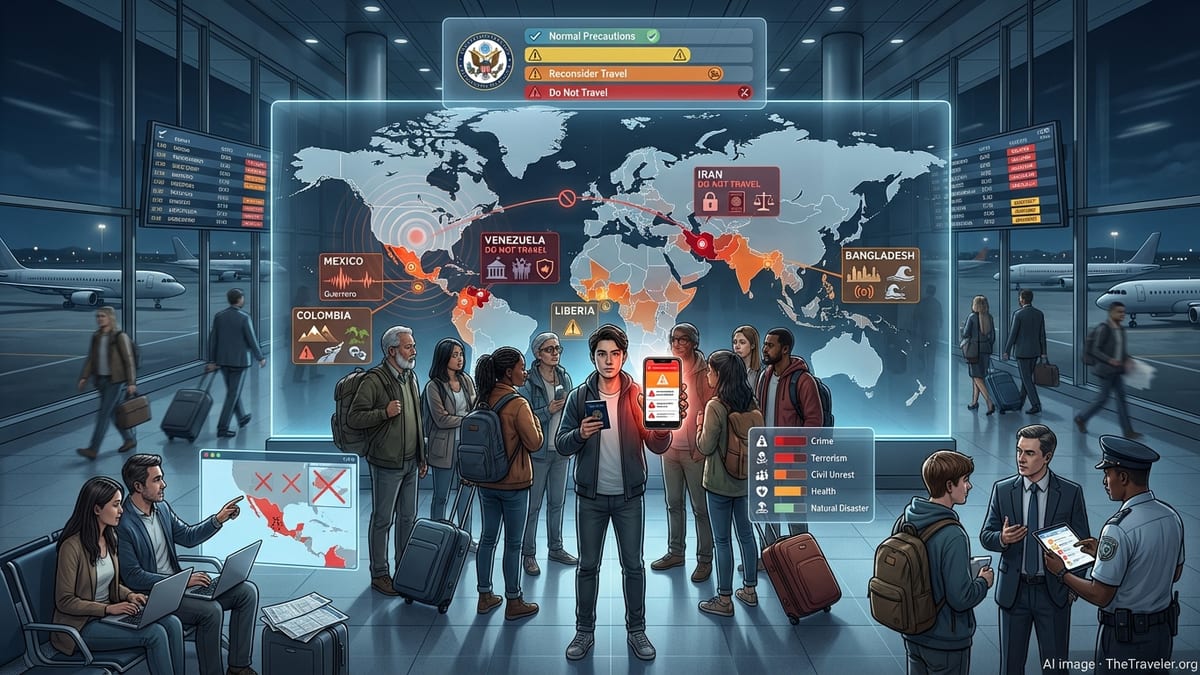
According to publicly available guidance from the U.S. Department of State, a Level 2 advisory signals that travelers should exercise increased caution due to heightened security or safety risks compared with destinations rated at Level 1. While it falls well below the more restrictive Level 3 “Reconsider Travel” and Level 4 “Do Not Travel” categories, it reflects a recognition that incidents affecting public order or security are more plausible than in lower risk destinations.
Under a Level 2 designation, travelers are encouraged to remain more aware of their surroundings, avoid drawing attention to themselves in sensitive areas and stay informed about local conditions. The advisory does not prohibit tourism or routine business trips, and flights, rail services and cross border travel to Belgium continue to operate normally. However, the change serves as a formal reminder that visitors should factor evolving risks into their planning.
The advisory also underscores that risk levels can differ within a country. Major urban centers such as Brussels and Antwerp, with their dense crowds, major transport hubs and symbolic sites, are typically considered more exposed to potential disruption than smaller towns or rural areas. Travelers are therefore advised to adapt their plans and behavior depending on where they intend to spend most of their time.
Security Context in Belgium and Western Europe
Published coverage on security trends in Belgium highlights that the country is navigating a complex mix of challenges that mirror broader patterns across Western Europe. These include concerns about sporadic extremist activity, isolated acts of violence, and politically or socially motivated unrest that can flare around demonstrations and sensitive anniversaries or events.
Belgium’s capital, Brussels, hosts key European Union and NATO institutions, giving the city an outsized geopolitical profile relative to its size. Analysts note that this international role can influence threat assessments, since the presence of high profile diplomatic and governmental targets may factor into risk calculations even when daily life for residents and visitors proceeds largely without interruption.
In recent years, Belgian and European security services have continued to invest in intelligence sharing, surveillance and policing strategies to reduce the likelihood and impact of serious incidents. Publicly available information shows that many events with security implications are managed quickly and often without major disruption to visitors, but they still contribute to an overall environment that prompts governments to advise heightened vigilance rather than complete relaxation.
Key Factors Behind Rising Safety Concerns
Reports indicate that a series of developments has influenced perceptions of risk in Belgium, contributing to the decision to maintain or elevate a Level 2 advisory. These include isolated acts of violence in public spaces, incidents affecting religious or minority communities, and the broader European context of periodic extremist threats. While such events remain relatively rare, they draw significant attention and feed into updated risk assessments.
Observers also point to an undercurrent of social tension that occasionally emerges in protests or demonstrations. These gatherings are frequently peaceful, but some have seen confrontations with police or localized property damage. For travelers, the main concern is not targeted violence but the possibility of being caught unexpectedly in areas where tensions escalate, particularly around government buildings, major squares or transport hubs.
At the same time, Belgium faces many of the same urban safety issues seen across large European cities, such as petty theft, pickpocketing and opportunistic crime in crowded areas. Travel risk analysts emphasize that these everyday concerns often pose a more immediate risk to visitors than lower probability but higher profile security incidents. The Level 2 advisory reflects this blended landscape of conventional urban risks and more exceptional security considerations.
Practical Guidance for Visitors Planning Trips
For travelers with upcoming plans to Belgium, the updated advisory is intended to inform preparation rather than discourage visits. Travel experts recommend that visitors monitor official government advisories from their home country before departure and periodically during their stay, since guidance can evolve in response to new information or events.
In practical terms, exercising increased caution typically involves a series of straightforward habits: staying alert in busy public places, using well lit routes, keeping valuables secure and limiting displays of expensive items in crowded streets or on public transport. Visitors are commonly advised to pay particular attention in and around train stations, tram and metro networks, tourist squares and nightlife districts, where both petty crime and the potential for disruption are more concentrated.
Travelers are also encouraged to familiarize themselves with local emergency numbers, review the locations of their country’s embassies or consulates, and consider registering their trip if such a service is offered by their national authorities. These steps can help ensure that visitors receive timely updates if conditions change and can access assistance more quickly should they need it.
Balancing Everyday Life With Heightened Vigilance
Despite the elevated advisory, daily life in Belgian cities continues largely as normal, with residents commuting, socializing and traveling much as they did before. Tourism to Belgium, driven by attractions ranging from medieval city centers to contemporary arts and culinary scenes, remains active, and major events on the calendar are proceeding with reinforced but routine security arrangements.
Travel analysts note that Level 2 advisories are increasingly common for destinations that combine strong infrastructure and generally stable conditions with a recognition of modern security challenges. In this context, Belgium is grouped with a broad range of countries where visitors are encouraged to remain aware and prepared, but where travel continues to be considered viable for most individuals.
For prospective visitors, the upgraded advisory means that informed planning and situational awareness are more important than ever. By taking basic precautions, monitoring developments and respecting local guidance, travelers can continue to explore Belgium’s cities and regions while aligning their expectations with the evolving security landscape.